



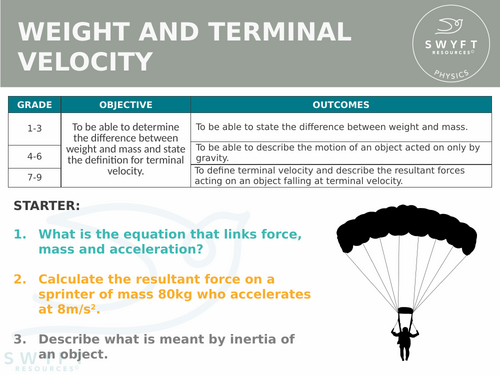



This lesson is designed for the NEW AQA Physics GCSE, particularly the ‘Motion’ SoW.
For more lessons designed to meet specification points for the NEW AQA Trilogy specifications for Biology, Chemistry and Physics please see my shop: https://www.tes.com/teaching-resources/shop/SWiftScience
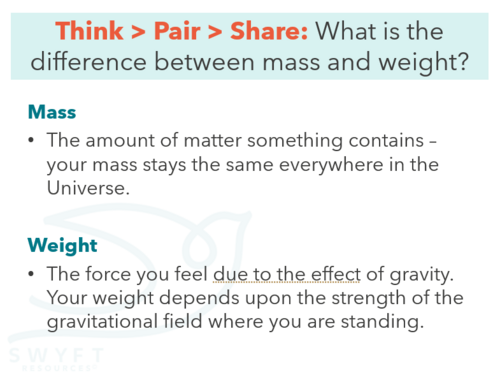
The lesson begins with students ‘Think > Pair > Sharing’ their ideas about the difference between weight and mass. The definitions for each are then revealed, students can make a note of them in their books.
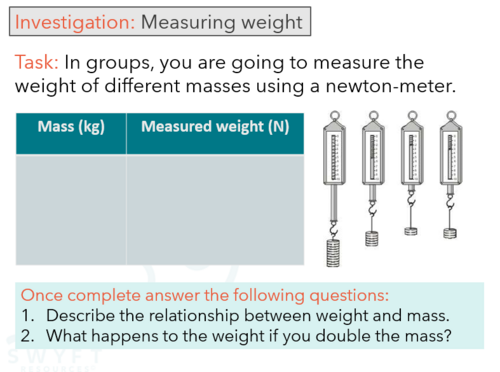
Students will now complete an investigation where they will measure the weight of different masses using a newton-meter, they will have to record their results in a table in their books. Once complete they can consider the relationship between mass and weight.
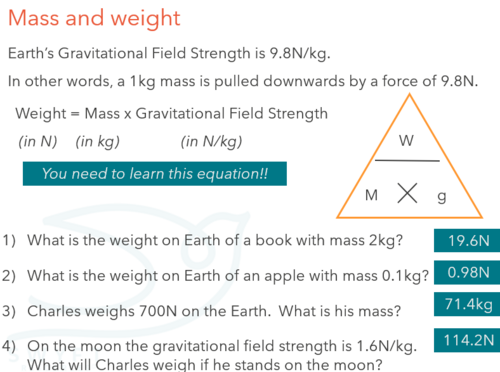
Next, students will be introduced to the equation which links mass, gravitational field strength and weight. Students will then be given a set of short calculation questions to complete, to assess their use of this equation. The answers will then be revealed so students can assess their work.
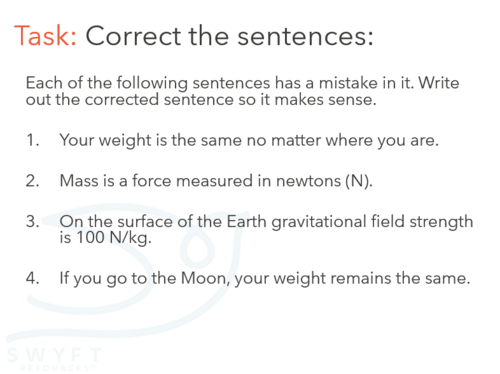
The next activity can act as a mid-lesson plenary to test students understanding of the lesson so far. The activity requires students to correct the sentences so they are correct, the answers are included to their work can be checked.
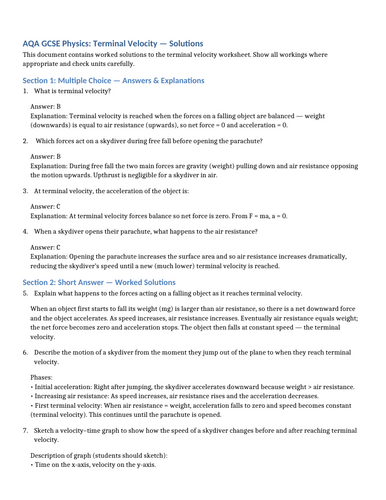
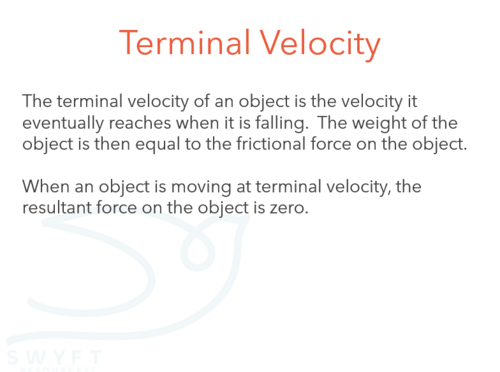
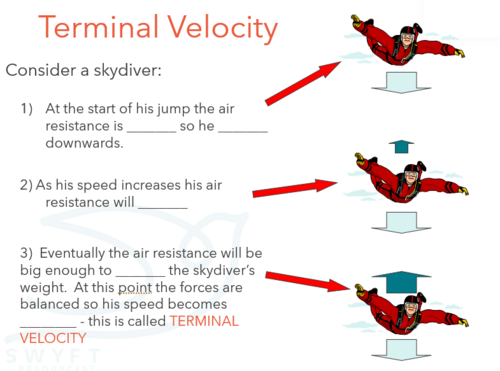
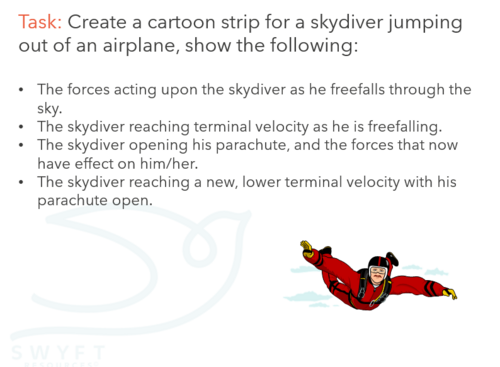
The next part of the lesson will be on Terminal Velocity, students will be given the definition for this term. They will then be shown a cartoon strip depicting a skydiver falling through the sky and then deploying his parachute. Students will need to fill in the blanks on the descriptions of the images to explain what is happening, in terms of forces, at each stage. They can then create their own cartoon strip of this process where they will need to include the following:
- The forces acting upon the skydiver as he freefalls through the sky.
- The skydiver reaching terminal velocity as he is freefalling.
- The skydiver opening his parachute, and the forces that now have effect on him/her.
- The skydiver reaching a new, lower terminal velocity with his parachute open.
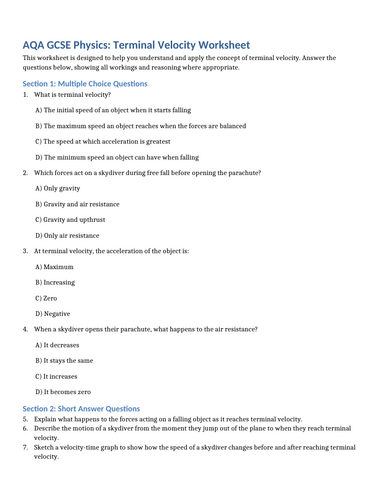
The last slide shows a velocity-time graph for terminal velocity, with each stage of the skydivers fall labelled. Following this task students will complete a set of questions on terminal velocity, the mark scheme is included the task can either be self-assessed or teacher assessed.
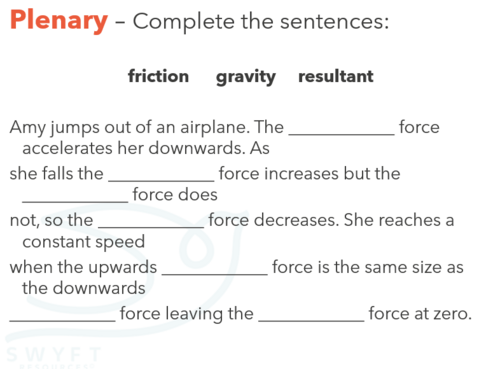
The plenary task is a ‘copy and complete’ task which summarises what students will have learned on terminal velocity.
All resources are included. Thanks for looking, if you have any questions please let me know in the comments section and any feedback would be appreciated.
Get this resource as part of a bundle and save up to 33%
A bundle is a package of resources grouped together to teach a particular topic, or a series of lessons, in one place.
Something went wrong, please try again later.
This resource hasn't been reviewed yet
To ensure quality for our reviews, only customers who have purchased this resource can review it
Report this resourceto let us know if it violates our terms and conditions.
Our customer service team will review your report and will be in touch.
£3.00