



Pollutants – Lesson & Worksheet – Unit 4 – IGCSE Chemistry
Nitrogen Oxides, Sulphur Dioxide, Acid Rain & Catalytic Converters
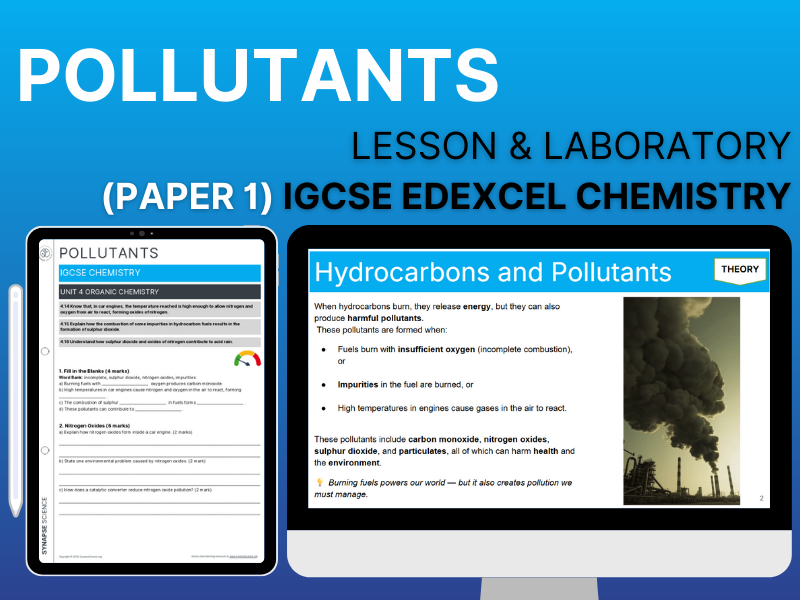
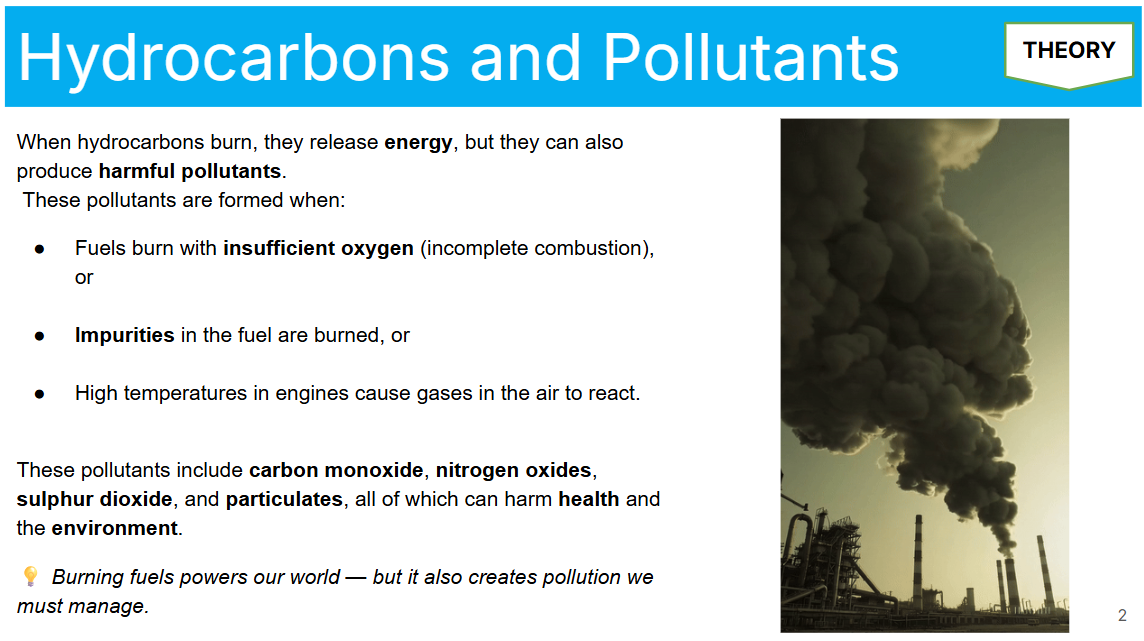
This Synapse Science resource explores the formation of harmful gases during combustion and their environmental impacts. It explains how high engine temperatures form nitrogen oxides, how impurities in fuels produce sulphur dioxide, and how these gases contribute to acid rain.
This resource includes a full lesson and student worksheet, ideal for both classroom teaching and revision.
TOPICS COVERED – SPECIFICATION POINTS
- 4.14: Know that, in car engines, the temperature reached is high enough to allow nitrogen and oxygen from air to react, forming oxides of nitrogen
- 4.15: Explain how the combustion of some impurities in hydrocarbon fuels results in the formation of sulphur dioxide
- 4.16: Understand how sulphur dioxide and oxides of nitrogen contribute to acid rain
WHAT’S INCLUDED
- Editable PowerPoint lesson with key theory and diagrams
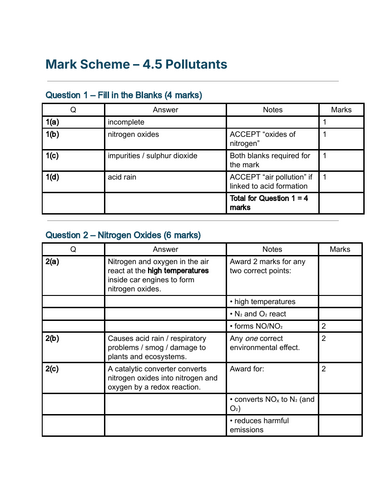
- Printable worksheet with structured questions and application tasks
- Explanation of how catalytic converters reduce nitrogen oxide emissions
- Real-world impacts of acid rain and pollution
- Scaffolded review section ideal for assessment or homework
KEY FEATURES
- Clear layout with step-by-step reactions and atmospheric processes
- Visuals for catalytic converters and pollution effects
- Fully aligned with Unit 4 of Edexcel IGCSE Chemistry (Paper 1)
- Matches Synapse Science format for consistency across the course
KEYWORDS
Edexcel IGCSE Chemistry, Nitrogen Oxides, Sulphur Dioxide, Acid Rain, Pollution, Catalytic Converters, Hydrocarbon Combustion, Synapse Science, Worksheet, Lesson, Unit 4, Environmental Chemistry
Something went wrong, please try again later.
This resource hasn't been reviewed yet
To ensure quality for our reviews, only customers who have purchased this resource can review it
Report this resourceto let us know if it violates our terms and conditions.
Our customer service team will review your report and will be in touch.
£3.00