Interactive timeline of Palestine & IsraelQuick View
QuakerPeaceEducation

Interactive timeline of Palestine & Israel

(1)
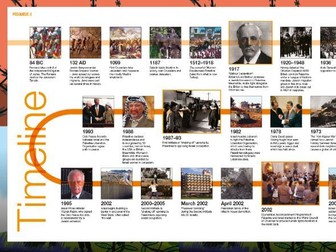
**Lesson 3 of 6 sample lessons from the Razor Wire & Olive Branches pack. The history of conflict in what today is Palestine and Israel is a complicated, but in this lesson helps students can get to grips with it. The main resource here is a timeline, but there are lots of ways for students to engage with it. The activities can help to learn the chronology of key events, but also start to evaluate their significance. More than that, it is a chance to reflect on how identity informs the way we see history. What are our parallel narratives?
Where are Palestine & Israel and who are their people?Quick View
QuakerPeaceEducation

Where are Palestine & Israel and who are their people?

(0)
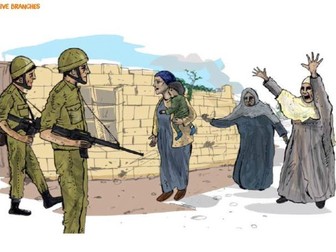
Lesson 1 of 6 sample lessons from the Razor Wire & Olive Branches pack. This lesson uses map activities, sorting exercises and engaging visuals to introduce students to Palestine & Israel and some of the identities of the people who live there. This lesson starts with building up basic knowledge: Where are Palestine and Israel? What are they like? Who lives there? But even these simple questions can be deceptively simple, so learners will begin to explore the complexity of identity. We have also provided resources to assist in challenging Islamophobia and antisemitism as you embark on the topic. There will be more sample lessons to follow. "The Razor Wire and Olive Branch workshop really widened my knowledge on the current issues taking place in Israel and Palestine. " | Abigail, Year 9 This lesson is based on the larger Razor Wire & Olive Branches learning pack (2019), produced by EAPPI. “EAPPI (Ecumenical Accompaniment Programme in Palestine and Israel) brought a complicated international issue into the classroom in a way that made it entirely accessible to our young people.” | Alice Harlan, Year 11 lead The pack draws on the stories and the wealth of eyewitness experience from the human rights monitors of the Ecumenical Accompaniment Programme in Palestine & Israel (EAPPI). The resources are being released online to aid with online learning. Order the full pack from the Quaker bookshop.
Nonviolent change in Palestine & IsraelQuick View
QuakerPeaceEducation

Nonviolent change in Palestine & Israel

(0)
Learners will get to grips with the concept of nonviolence by looking at the choices and actions of Israelis and Palestinians in conflict. This lesson is based on the Razor Wire & Olive Branches learning pack (2019), produced by EAPPI UK & Ireland and Quakers in Britain. The resources are being released to aid with online learning. Order the full pack from the Quaker bookshop.
Peacemaking in Palestine & IsraelQuick View
QuakerPeaceEducation

Peacemaking in Palestine & Israel

(0)
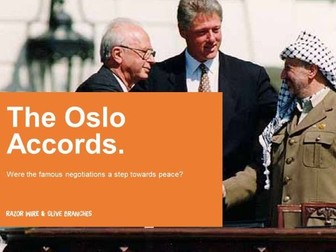
In this lesson, learners will explore and evaluate different peacemaking efforts at the government level and by Palestinians and Israelis at the grassroots. The lesson takes a close look at the history of the Oslo peace process, but also at bottom-up peacebuilders from Palestine & Israel. This is lesson 6/6 based on the Razor Wire & Olive Branches learning pack (2019), produced by EAPPI UK & Ireland and Quakers in Britain. The resources are being released to aid online learning. Order the full pack from the Quaker bookshop.
What role did Britain play in the history of Palestine & Israel?Quick View
QuakerPeaceEducation

What role did Britain play in the history of Palestine & Israel?

(0)
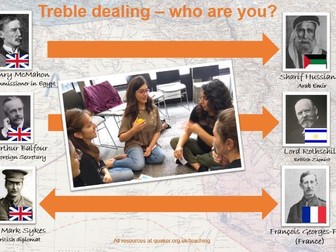
Lesson 2 of 6 sample lessons from the Razor Wire & Olive Branches pack. This lesson uses role play and historic sources to explore Britain’s role in Palestine and what would become modern Israel during World War I. Students will practise their negotiation skills and explore power dynamics through in group work, before looking at this and place this experience in the context of Britain’s historic role as a colonial power in the Middle East. To make it simple, the initial negotiation is about whether and how to share an orange, which represents the land. The lesson then unpacks how the real diplomacy worked out during World War I and after, with Britain giving separate assurances to Arab leaders in Palestine, Jewish leaders and the French government. If you haven’t tried Lesson 1, which introduces the geography of Palestine and Israel, it’s available in our TES store.