

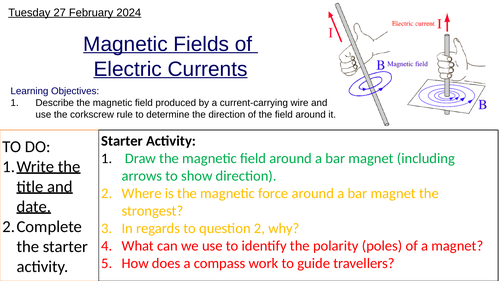


This PowerPoint resource provides a detailed and interactive lesson on the relationship between electric currents and magnetic fields. It is designed for high school physics classes exploring electromagnetism and practical applications of current-induced magnetism.
Key learning objectives:
- Describing the magnetic field produced by a current-carrying wire and understanding its circular shape.
- Using the corkscrew or right-hand-grip rule to determine the direction of the magnetic field around a current-carrying wire.
- Investigating how changes in current, wire configuration, or distance affect the strength and direction of the magnetic field.
Resource features:
The lesson begins with a starter activity that revisits magnetic field properties around a bar magnet, prompting students to draw field lines and discuss magnet polarity. Students then explore the concept of electromagnetism, understanding how current flow creates magnetic fields around wires.
Key topics include:
- Visualizing the magnetic field around a wire using tools like iron filings and compasses.
- Understanding how to increase the strength of the magnetic field by increasing current or forming a solenoid.
- Learning the corkscrew or right-hand-grip rule to determine the magnetic field’s direction and how reversing current affects field orientation.
- Comparing magnetic fields around solenoids and bar magnets to understand similarities and differences.
Interactive tasks include identifying correct diagrams of current direction and magnetic fields, predicting the effects of changes in current, and drawing field lines for solenoids and straight wires. The lesson also emphasizes practical demonstrations, such as creating a solenoid and analyzing its behavior with and without an iron core.
File details:
This editable ‘.pptx’ file aligns with physics curricula and supports both theoretical understanding and hands-on investigation. It includes clear visuals, guided activities, and practical examples, making it an essential resource for teaching electromagnetism and magnetic fields of electric currents.
Something went wrong, please try again later.
This resource hasn't been reviewed yet
To ensure quality for our reviews, only customers who have purchased this resource can review it
Report this resourceto let us know if it violates our terms and conditions.
Our customer service team will review your report and will be in touch.
£2.00