Evening journalQuick View
sancyzacheriyakamal241

Evening journal

(0)
Creating an evening journal can be a wonderful way to unwind and reflect on your day while setting positive intentions for tomorrow. Your current journal format prompts reflection on several key areas, including daily achievements, gratitude, and goals for the next day. This structure encourages mindfulness and personal growth. To maximize its benefits, consider writing a brief summary of your day under “What did I achieve today?” This could include small victories or completed tasks. For “something I learned today,” jot down a new insight or skill you acquired. As you fill in “my affirmation for tomorrow,” try focusing on a positive statement that motivates you, such as “I am capable and ready to handle whatever comes my way.” Lastly, listing what you’re grateful for can shift your mindset to a more positive one, even after a challenging day. Personalize your entries based on your experiences, and over time, you may find that this practice brings greater clarity and peace to your evenings.
Plant tissuesQuick View
sancyzacheriyakamal241

Plant tissues

(0)
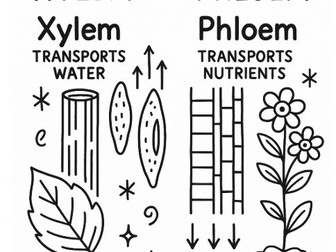
This worksheet helps students learn about different plant tissues, and their adaptations. It contains descriptive questions and short notes. This can be used as assessment task as well. This worksheet is prepared for 9 advanced grade students by following the ministry of education curriculum.
Structure of human earQuick View
sancyzacheriyakamal241

Structure of human ear

(0)
This worksheet is a useful tool for learning and identifying the different parts of the human ear. It is designed to support students in understanding how the ear is structured and how each part plays a role in the hearing process. The worksheet typically includes labeled diagrams and activities that highlight the three main sections of the ear: the outer ear, middle ear, and inner ear. Students can visually recognize parts like the pinna, ear canal, eardrum, ossicles (malleus, incus, and stapes), cochlea, and auditory nerve. Some worksheets may also include matching exercises, fill-in-the-blanks, or coloring tasks to make the learning experience more interactive and engaging. By using this worksheet, students develop a clearer understanding of how sound waves travel through the ear and are converted into signals that the brain can interpret. Overall, it’s a simple yet effective educational resource for both classroom and independent study.
Worksheet on the structure and functions of brainQuick View
sancyzacheriyakamal241

Worksheet on the structure and functions of brain

(0)
This worksheet help students to evaluate their knowledge and understanding on the structure and the functions of brain.Also the critical thinking questions in the worksheet help students to link the lesson with real live and to critically evaluate the concept with real life applications.