AQA GCSE Biology: Microscopes Lesson | Magnification, Resolution, Calculations & Electron MicroscopeQuick View
mclaasens

AQA GCSE Biology: Microscopes Lesson | Magnification, Resolution, Calculations & Electron Microscope

(0)
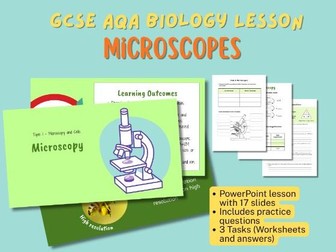
This engaging and fully resourced AQA GCSE Biology microscopes lesson is designed for KS4 students and covers key concepts including magnification, resolution, and electron microscopy. The lesson includes a clear and structured 17-slide PowerPoint, exam-style questions, and 3 differentiated tasks with a worksheet and full answers, making it ideal for both teaching and revision. ** Learning Outcomes** Describe the order of size: cell, nucleus, chromosome, gene Compare magnification and resolution of light and electron microscopes Explain how electron microscopy has improved understanding of organelles Calculate magnification of a light microscope Apply and rearrange the formula A = I / M Convert between units: cm, mm, µm, nm What’s Included 17-slide lesson PowerPoint (clear explanations + visuals) Worked examples and exam-style questions 3 student tasks (including worksheet) Answers provided for easy marking Suitable for in-class teaching, cover lessons, or revision
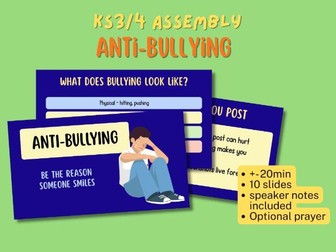
Anti-Bullying Assembly: Be the Reason Someone Smiles (KS3/KS4) – Fully EditableQuick View
mclaasens

Anti-Bullying Assembly: Be the Reason Someone Smiles (KS3/KS4) – Fully Editable

(0)
Anti-Bullying Assembly: Be the Reason Someone Smiles (KS3/KS4) – Fully Editable A powerful and engaging 15-minute assembly designed to help students understand bullying, reflect on their behaviour, and take responsibility for creating a kinder school environment. This ready-to-use resource encourages students to think about the impact of their actions—both in person and online—and challenges them to become upstanders, not bystanders. What’s included: Fully editable PowerPoint presentation Clear, structured speaker notes/script (approx. 20 minutes) All files provided in editable formats for easy adaptation Assembly covers: What bullying is (clear, student-friendly definition) Different types of bullying (including physical, verbal, social, and online) The impact of bullying on individuals “Think Before You Post” – promoting safe and respectful online behaviour The difference between a bystander and an upstander Practical ways students can make a positive difference Why this resource? Engaging and relatable content for KS3 and KS4 Encourages reflection, empathy, and accountability Links directly to PSHE, safeguarding, and whole-school values Minimal preparation required – ready to deliver straight away Flexible for use in assemblies, tutor time, or Anti-Bullying Week Ideal for tutors, pastoral teams, safeguarding leads, and SLT.
Community & Inclusion Assembly (KS3/KS4) – Fully Editable + Catholic Prayer OptionQuick View
mclaasens

Community & Inclusion Assembly (KS3/KS4) – Fully Editable + Catholic Prayer Option

(0)
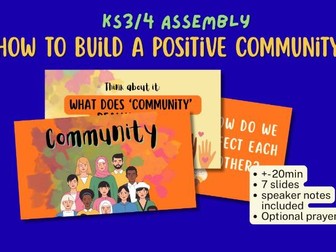
Community & Inclusion Assembly (KS3/KS4) – Fully Editable + Catholic Prayer Option Looking for a meaningful, ready-to-use assembly on community, respect, and inclusion? This 15-20 minute assembly is designed for KS3 and KS4 students and explores the importance of accepting differences and looking out for one another in a school setting. Perfect for whole-school assemblies, tutor time, or PSHE, this resource encourages reflection, empathy, and positive behaviour through an engaging and accessible script. What’s included: Fully editable PowerPoint presentation Detailed speaker notes/script (approx. 15 minutes) Optional Catholic prayer for a reflective ending All files provided in editable formats so you can adapt to your school context Key themes covered: Celebrating diversity and individuality Respecting others, even when we disagree The impact of everyday actions and words Building a supportive and inclusive school community Encouraging students to look out for one another Why this resource? Clear, student-friendly language suitable for mixed-ability groups Minimal prep required – ready to deliver immediately Flexible – easily adapted for secular or faith-based settings Promotes SMSC, PSHE, and whole-school values Ideal for form tutors, heads of year, SLT, or chaplaincy teams.
Positive vs Negative behaviour - KS3/4 AssemblyQuick View
mclaasens

Positive vs Negative behaviour - KS3/4 Assembly

(0)
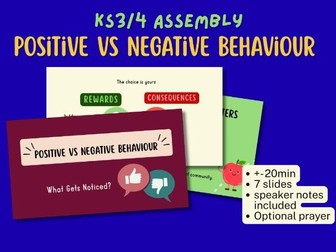
This KS3/KS4 assembly focuses on promoting positive behaviour while addressing challenging conduct in a clear, balanced, and student-friendly way. It reassures the majority of students who consistently meet expectations that their efforts are recognised, while reinforcing that poor behaviour is being addressed through appropriate consequences. The assembly explores the idea of “what gets noticed,” encouraging students to move beyond simply avoiding negative behaviour and instead take an active role in shaping a positive school environment. It highlights the link between everyday choices, personal responsibility, and long-term outcomes such as trust, respect, and opportunity. Includes: Powerpoint slides and speaker notes / transcript. A Catholic prayer is included, making it suitable for use in faith-based settings or can simply be removed as all files are editable. This assembly aims to inspire pupils to “step up” and become positive role models within their year group. Ideal for Heads of Year, pastoral leaders, and form tutors looking to address behaviour while motivating and empowering students.
AQA GCSE Biology: Prokaryotic vs eukaryotic cellsQuick View
mclaasens

AQA GCSE Biology: Prokaryotic vs eukaryotic cells

(0)
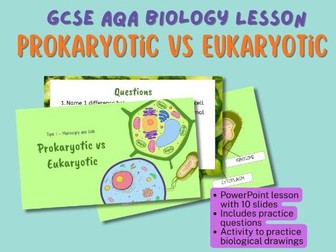
A clear, engaging and exam-focused lesson designed for AQA GCSE Biology, covering the key differences between prokaryotic and eukaryotic cells. This 10-slide PowerPoint introduces students to plant, animal and bacterial cells, helping them confidently identify and classify each as eukaryotic or prokaryotic. The lesson builds understanding step-by-step, with a strong focus on structure, size and key differences required for exam success. Students will: Identify plant, animal and bacterial cells Classify cells as eukaryotic or prokaryotic Label the structure of a bacterial cell Describe key differences in structure and size between eukaryotic and prokaryotic cells The resource also includes practice questions to check understanding and exam-style application, as well as an activity to develop accurate biological drawing skills—perfect for reinforcing practical science techniques. Ideal for GCSE Biology lessons, revision sessions or cover work. Clear, concise and ready to use with no prep required.