A lesson introducing the role of the Environmental Health Officer. Full lesson and fill in the gaps worksheet. Suitable for a one off lesson or part of the Hospitality and Catering Food Safety and Hygiene lesson sequence.
Post Practical Lesson Personal Review. A one hour lesson that can be used after a practical lesson to allow students to reflect on their own performance and the dish they produced.
Job Roles in the Hospitality and Catering Industry
This lesson is designed to help students understand that the Hospitality and catering industry includes many different job roles. Jobs are divided into Front of House (customer‑facing) and Back of House (behind the scenes).
Covers learning that roles exist at different levels:
operative, supervisory, and management.
All Common industry jobs included - waiter, chef, kitchen porter, housekeeper, receptionist, and manager.
Full PowerPoint with tasks such as writing a job advert that helps show understanding of what each role involves.
In these lessons students develop their understanding of snacks suitable for eating on the go, focusing on portability, convenience, sensory qualities, and nutritional value. Learners analyse existing snack products using sensory evaluation and basic nutritional information, enabling them to make informed judgements about food quality and health. Through guided discussion and practical design tasks, students apply their knowledge to design a suitable on‑the‑go snack, demonstrating creativity, independence, and awareness of consumer needs. Opportunities are provided to build subject‑specific vocabulary, evaluate real‑world products, and prepare for practical food production.
This document is a comprehensive glossary of key words and terms used in Hospitality and Catering. Each term is clearly defined and supported with a practical example sentence that shows how the language is used in real workplace or assessment contexts.
The document is valuable for students because it helps them understand and use subject‑specific terminology accurately, which is essential for success in written coursework, practical assessments, and exam responses. Using correct hospitality and catering language enables students to explain food safety, business concepts, and working practices more confidently and professionally. This not only supports higher mark bands in assessments but also prepares students for real industry environments where clear communication and technical vocabulary are expected.
These lessons are from a set that explore different types of catering provision this one with a focus on airline catering. Students learn how food is prepared and served on planes, including the importance of food safety, personal hygiene, cook‑chill, and reheating.
The lessons also explain how altitude affects taste and smell, and why airline meals are designed to be moist, strongly flavoured, and suitable for reheating. Students compare airline tray service with other hospitality settings and apply their knowledge through evaluations, exam‑style questions, and meal design tasks.
All worksheets are included along with five relevant, student friendly recipes that are suitable for one hour lessons.
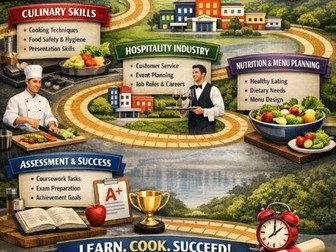
A four year plan for WJEC Level 1/2 Hospitality and Catering that includes lesson focus, AO coverage and dates for future reference and planning. This document also includes a new teacher CPD pack with course details and supporting guidance.
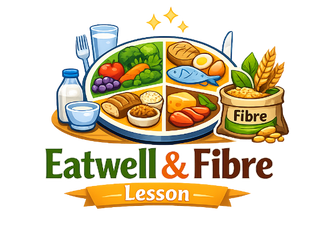
Three lessons that introduce Healthy Eating and the role of Fibre in the diet. All tasks have answers provided and two possible practical lesson recipes are also included, which would extend the learning episodes to five. Could work as a mini topic or cover lessons.
 Quick View

 Quick View
 Quick View
 Quick View
 Quick View
 Quick View
 Quick View
 Quick View
 Quick View
 Quick View
 Quick View