Year 8 Local & Global Citizenship - Ready to Teach ResourceQuick View
cmcdonnell2742

Year 8 Local & Global Citizenship - Ready to Teach Resource

(0)
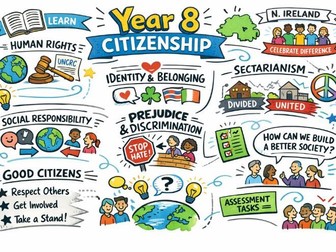
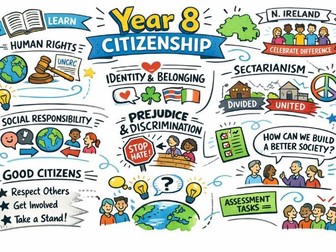
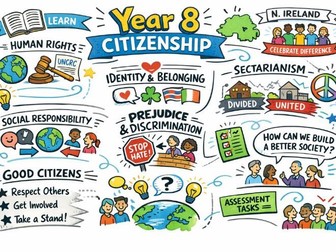
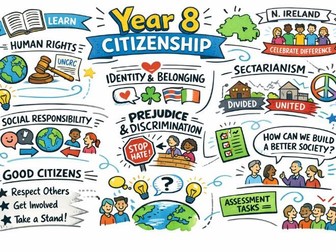
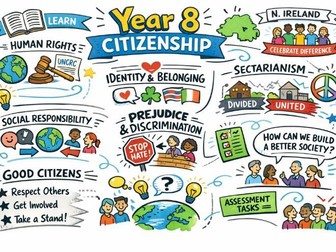
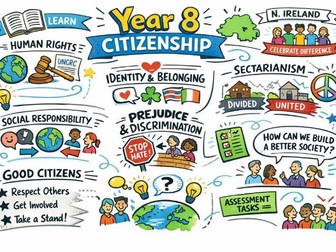
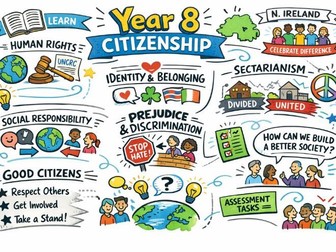
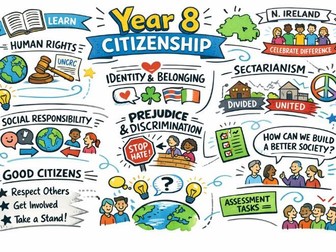
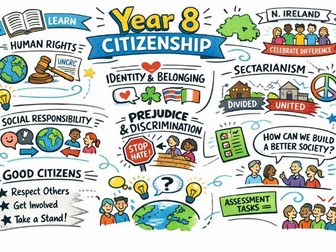
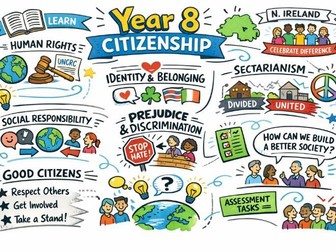
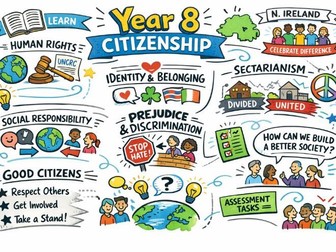
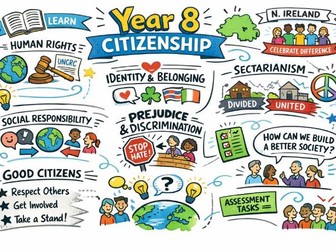
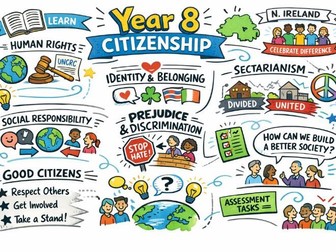
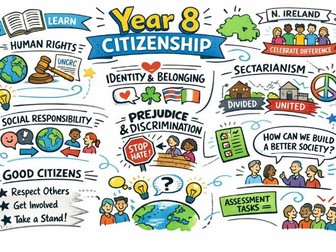
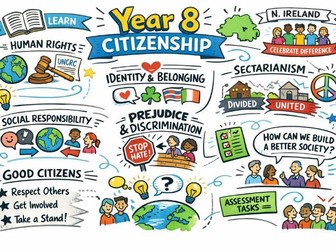
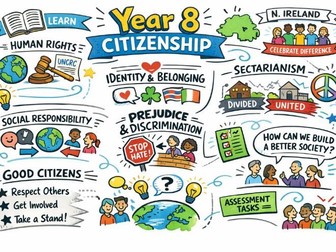
Complete Year 8 Local & Global Citizenship Programme – Full Term (16 Lessons) This comprehensive, ready-to-teach Year 8 Local & Global Citizenship programme provides a full term of expertly structured lessons covering Human Rights, Children’s Rights, Identity, Diversity, Prejudice, Discrimination and Sectarianism, with clear progression throughout. Designed to reduce planning time while maintaining high-quality, meaningful learning, this resource is ideal for both specialist and non-specialist teachers delivering Citizenship / LLW. What’s Included: 16 fully structured lessons (full term coverage) Clear lesson flow: Prepare → Learn → Apply → Review Student worksheets for every lesson Assessment for Learning embedded throughout Extended writing tasks & discussion prompts Two assessed CM-style tasks with success criteria: Human Rights Presentation Diversity Acrostic Poem Self-assessment and reflection tasks in every lesson Literacy support including sentence starters, definitions and key vocabulary Key Topics Covered: What is Local & Global Citizenship? Human Rights & the Universal Declaration of Human Rights Children’s Rights (UNCRC – Provision, Protection, Participation) Social Responsibility Identity & Belonging Diversity in Northern Ireland Celebrating Diversity Prejudice & Discrimination Sectarianism in Northern Ireland Tackling Sectarianism Final reflection on Citizenship and society Why Teachers Will Love This Resource: ✔ Covers a full term – no additional planning required ✔ Keeps pupils structured, focused and engaged ✔ Suitable for mixed-ability classes ✔ Encourages thoughtful discussion without losing classroom control ✔ Excellent for Northern Ireland contexts, but easily adaptable elsewhere ✔ Ideal for observations, inspections or curriculum evidence
What Human Rights Do We Have? – KS3 LLW (Year 8)Quick View
cmcdonnell2742

What Human Rights Do We Have? – KS3 LLW (Year 8)

(0)
An engaging KS3 Citizenship lesson that allows pupils to explore and evaluate the 30 Articles of the Universal Declaration of Human Rights in a meaningful and interactive way. Students are encouraged to think critically, justify opinions and creatively demonstrate understanding. What’s included: Full TEEP‑aligned lesson structure Student‑friendly explanation of human rights Complete list of all 30 UDHR articles Individual and group ranking tasks Creative activity: Human Rights Tree Reflection and self‑assessment tasks Extension opportunities for higher‑ability pupils Perfect for: ✔ Year 8 LLW ✔ Developing critical thinking and discussion skills ✔ Creative Citizenship tasks ✔ Deepening UDHR understanding A highly engaging lesson that encourages pupil voice and thoughtful debate.
Why Do We Need to Protect Human Rights? – KS3 LLW (Year 8)Quick View
cmcdonnell2742

Why Do We Need to Protect Human Rights? – KS3 LLW (Year 8)

(0)
A powerful and thought‑provoking KS3 LLW Citizenship lesson exploring why human rights must be protected, using real historical case studies. This lesson encourages empathy, analysis and persuasive writing while remaining age‑appropriate and carefully structured. What’s included: Full TEEP lesson framework Case studies: Taliban Afghanistan, Nazi Germany, Pol Pot’s Cambodia Guided comprehension and discussion questions Group debate and evidence‑based reasoning Persuasive writing task with sentence starters Reflection and self‑assessment Differentiation and extension built in Perfect for: ✔ Year 8 LLW ✔ Developing persuasive writing ✔ Ethical discussion and debate ✔ Linking history and Citizenship A strong lesson for helping students understand the real‑world consequences of rights being denied.
What is Local and Global Citizenship? – KS3 LLW (Year 8)Quick View
cmcdonnell2742

What is Local and Global Citizenship? – KS3 LLW (Year 8)

(0)
A fully resourced KS3 LLW Citizenship lesson introducing students to Local and Global Citizenship through the four key themes of the Northern Ireland Curriculum. This engaging lesson helps pupils explore what it means to be a good citizen at local, national and global level, with structured opportunities for discussion, debate and reflection. What’s included: Full TEEP‑structured lesson (Prepare → Review) Clear student‑friendly learning outcomes Explanation of the 4 themes of Local & Global Citizenship Collaborative group tasks and ranking activities Values‑based discussion on what makes a good citizen Self‑assessment and reflection tasks Built‑in support boxes and extension tasks Perfect for: ✔ Year 8 LLW ✔ Introduction to Citizenship ✔ Active learning & discussion‑based lessons ✔ NI Curriculum aligned No prep required – print or upload and teach.
What Are Human Rights? – KS3 LLW (Year 8)Quick View
cmcdonnell2742

What Are Human Rights? – KS3 LLW (Year 8)

(0)
A clear and engaging introductory lesson on human rights, designed for KS3 LLW Citizenship and fully aligned to the Northern Ireland Curriculum. Students explore what human rights are, where they come from, and why they matter, using accessible language and carefully scaffolded tasks. What’s included: Fully structured TEEP lesson Background on the Universal Declaration of Human Rights (UDHR) Guided literacy tasks and gap‑fill activities Definition comparison and peer discussion Extended writing task (letter explaining human rights) Self‑assessment and reflection section Differentiation through support boxes and extensions Perfect for: ✔ Year 8 LLW ✔ Introducing human rights for the first time ✔ Literacy‑rich Citizenship lessons ✔ Mixed‑ability classes An excellent foundation lesson that links seamlessly to further UDHR and UNCRC learning.
What Promises Have Governments Made to Children? – KS3 LLW (Year 8)Quick View
cmcdonnell2742

What Promises Have Governments Made to Children? – KS3 LLW (Year 8)

(0)
A highly effective KS3 Citizenship lesson focusing on the United Nations Convention on the Rights of the Child (UNCRC) and governments’ responsibilities towards children. Students explore the three types of children’s rights and apply learning to their own lives in Northern Ireland. What’s included: Full TEEP‑structured lesson Clear explanation of the UNCRC Introduction to Provision, Protection & Participation rights Article sorting and justification tasks Discussion on children’s rights in NI Reflection and self‑assessment Extension tasks using real‑world examples Perfect for: ✔ Year 8 LLW ✔ Teaching children’s rights ✔ UNCRC and active citizenship ✔ Local context learning An excellent lesson for helping pupils understand how global agreements affect them directly.
Celebrating Diversity in Northern Ireland – KS3 LLW (Year 8)Quick View
cmcdonnell2742

Celebrating Diversity in Northern Ireland – KS3 LLW (Year 8)

(0)
A positive, engaging KS3 LLW Citizenship lesson that moves pupils beyond simply recognising diversity, towards actively celebrating it in a Northern Ireland context. This lesson uses discussion, reflection and creativity to help pupils understand why diversity enriches communities and why celebration is more powerful than tolerance alone. What’s included: Fully resourced TEEP‑structured lesson NI‑specific examples of cultural, religious and social diversity Clear exploration of tolerating vs celebrating diversity Group discussion and justification tasks Creative activity: Diversity Patchwork Quilt Persuasive writing and reflection tasks Self‑assessment and extension activities Built‑in support and challenge Perfect for: ✔ Year 8 LLW ✔ Diversity, inclusion and community cohesion ✔ Northern Ireland context learning ✔ Creative and discussion‑based lessons An uplifting lesson that encourages pride in NI’s diversity.
What is Social Responsibility? – KS3 LLW (Year 8)Quick View
cmcdonnell2742

What is Social Responsibility? – KS3 LLW (Year 8)

(0)
A powerful and engaging KS3 LLW Citizenship lesson that explores social responsibility, moral choice and the consequences of staying silent in the face of injustice. Using a thought‑provoking historical poem and real‑world role models, this lesson encourages pupils to reflect on fairness, courage and active citizenship. What’s included: Fully TEEP‑structured lesson (Prepare → Review) Exploration of social responsibility through language and values Analysis of“First They Came…” by Pastor Martin Niemöller Group discussion and ranking of modern injustices Profiles of Malala Yousafzai, Marcus Rashford, Greta Thunberg and Nelson Mandela Definition‑writing task with clear scaffolding Self‑assessment and reflection activities Built‑in support boxes and extension tasks Perfect for: ✔ Year 8 LLW ✔ Citizenship & social justice topics ✔ Developing moral reasoning and discussion skills ✔ Active citizenship learning A high‑impact lesson that really gets pupils thinking — and talking.
What is Identity? – KS3 LLW (Year 8)Quick View
cmcdonnell2742

What is Identity? – KS3 LLW (Year 8)

(0)
A thoughtful and accessible KS3 LLW Citizenship lesson helping pupils explore personal and group identity, belonging and the influences that shape who we are. This lesson supports self‑reflection while encouraging respectful discussion of similarities and differences in a Northern Ireland context. What’s included: Fully resourced TEEP‑aligned lesson Clear explanation of identity and how it can change over time Personal identity spider diagram Ranking task on influences (family, friends, media, school, religion, place) Group and pair discussion activities Exploration of belonging to groups – advantages and disadvantages Reflection and self‑assessment section Differentiation through support boxes and extensions Perfect for: ✔ Year 8 LLW ✔ Identity, belonging and inclusion topics ✔ Building self‑awareness and empathy ✔ Discussion‑based classrooms An excellent foundation lesson for later work on diversity, equality and respect.
How is Northern Ireland Diverse? – KS3 LLW (Year 8)Quick View
cmcdonnell2742

How is Northern Ireland Diverse? – KS3 LLW (Year 8)

(0)
A highly relevant KS3 LLW Citizenship lesson exploring the many forms of diversity in Northern Ireland, using pupils’ own communities and experiences as a starting point. Students investigate diversity beyond religion and ethnicity, developing a more balanced and informed understanding of modern NI society. What’s included: Fully TEEP‑structured lesson Clear definition of diversity with NI‑specific examples Exploration of ethnic, religious, cultural, ability, age and interest diversity Local area and school‑based diversity tasks Group ranking and discussion activities Reflection on whether diversity is a strength or challenge Self‑assessment and extension tasks Perfect for: ✔ Year 8 LLW ✔ Diversity and inclusion units ✔ Local context Citizenship learning ✔ Developing respectful discussion skills A strong lesson for challenging stereotypes and encouraging informed conversation.
The Diversity Poem (Assessment Lesson) – KS3 LLW (Year 8)Quick View
cmcdonnell2742

The Diversity Poem (Assessment Lesson) – KS3 LLW (Year 8)

(0)
A fully structured KS3 LLW assessment lesson designed to support pupils in completing CM Task 2: The Diversity Poem, using an acrostic poem based on the word “DIVERSITY”. This resource carefully scaffolds planning, drafting, peer feedback and reflection to maximise pupil success. What’s included: Fully TEEP‑structured assessment lesson Clear explanation of CM Task 2 success criteria Model acrostic poem example Planning grids for each line of DIVERSITY Peer feedback and improvement prompts Final writing and performance section Self‑assessment and target setting Extension challenge for high‑ability pupils Perfect for: ✔ Year 8 LLW ✔ Controlled/creative assessment tasks ✔ Literacy‑rich Citizenship work ✔ Clear marking and moderation support An excellent assessment resource that supports both creativity and structure.
How Does My School Manage Diversity? – KS3 LLW (Year 8)Quick View
cmcdonnell2742

How Does My School Manage Diversity? – KS3 LLW (Year 8)

(0)
A highly effective KS3 LLW Citizenship lesson that encourages pupils to critically evaluate how inclusive their own school community really is. Students move from identifying diversity to assessing inclusion, using a structured audit and evidence‑based discussion. What’s included: Full TEEP‑aligned lesson plan Clear explanation of what a truly inclusive school looks like School diversity & inclusion audit/report card Pair and group discussion with justification Creative task: School Inclusive Crest Reflection and recommendation‑writing Extension tasks including letter‑writing to leadership Differentiation and scaffolding throughout Perfect for: ✔ Year 8 LLW ✔ Inclusion and school ethos topics ✔ Developing evaluation and justification skills ✔ Student voice and active citizenship An excellent lesson for linking Citizenship learning directly to pupils’ lived experience.
Prejudice and Discrimination – KS3 LLW (Year 8)Quick View
cmcdonnell2742

Prejudice and Discrimination – KS3 LLW (Year 8)

(0)
A clear, age‑appropriate KS3 LLW Citizenship lesson that helps pupils understand the difference between prejudice and discrimination, and how one can lead to the other. Through discussion, scenarios and reflection, pupils explore how assumptions, fear and stereotypes can develop into unfair treatment — and how this cycle can be challenged. What’s included: Fully TEEP‑structured lesson Clear definitions of prejudice and discrimination The cycle of discrimination activity Scenario‑based learning (The Pocahontas Scenario) Group and pair discussion tasks Real‑world example writing Reflection and self‑assessment Differentiation and extension tasks throughout Perfect for: ✔ Year 8 LLW ✔ Introduction to equality and fairness ✔ Building empathy and critical thinking ✔ Discussion‑based Citizenship lessons An essential foundation lesson for later work on sectarianism and community relations.
Tackling Sectarianism – KS3 LLW (Year 8)Quick View
cmcdonnell2742

Tackling Sectarianism – KS3 LLW (Year 8)

(0)
A thoughtful and challenging KS3 LLW Citizenship lesson focused on how sectarianism has been tackled in Northern Ireland — and what more can be done. Pupils evaluate the role of individuals, communities and government, analyse a real NI case study, and develop their own realistic recommendations. What’s included: Fully resourced TEEP‑structured lesson Exploration of individual, community and government action NI case study: Corrymeela Community Group ranking and evaluation tasks Recommendation‑writing task (government adviser role) Devil’s advocate discussion activity Reflection and self‑assessment Extension research tasks Perfect for: ✔ Year 8 LLW ✔ Active citizenship and evaluation skills ✔ Post‑conflict and reconciliation topics ✔ Developing reasoned arguments An excellent lesson for moving pupils from understanding problems to proposing solutions.
What is Sectarianism? – KS3 LLW (Year 8)Quick View
cmcdonnell2742

What is Sectarianism? – KS3 LLW (Year 8)

(0)
A carefully structured KS3 LLW Citizenship lesson introducing pupils to sectarianism in a sensitive, age‑appropriate way, firmly rooted in the Northern Ireland context. Students explore how sectarianism develops through stereotype → prejudice → discrimination, examine its causes, and consider how it has been challenged. What’s included: Full TEEP‑aligned lesson structure Clear, student‑friendly definition of sectarianism Visual explanation of the stereotype–prejudice–discrimination chain Causes of sectarianism in Northern Ireland Group discussion and ranking activities Exploration of how sectarianism has been challenged Reflection and self‑assessment Support boxes and extension tasks Perfect for: ✔ Year 8 LLW ✔ Teaching sensitive NI‑specific topics ✔ Linking prejudice to real‑world issues ✔ Citizenship and community relations units A strong, balanced introduction to a key LLW concept.
What I Understand About Citizenship – KS3 LLW (Year 8)Quick View
cmcdonnell2742

What I Understand About Citizenship – KS3 LLW (Year 8)

(0)
A reflective, creative and purposeful end‑of‑unit KS3 LLW Citizenship lesson designed to help pupils draw together everything they have learned across the Year 8 Local and Global Citizenship programme. This lesson allows students to consolidate key concepts, evaluate their learning, and reflect on their own role in creating a fairer and more inclusive society. What’s included: Fully resourced TEEP‑structured lesson Clear review of all 16 Year 8 Citizenship topics Good society vs bad society word‑sorting activity Group discussion on the most important ingredients of a good society Creative writing task:“My Recipe for a Better Society” Peer feedback and reflection activities End‑of‑year self‑assessment linked to the 4 Citizenship themes Differentiation, support boxes and extension tasks throughout Perfect for: ✔ Year 8 LLW ✔ End‑of‑unit or end‑of‑year reflection ✔ Consolidation and metacognitive learning ✔ Creative, discussion‑based lessons An excellent final lesson that gives pupils ownership of their learning and a clear sense of why Citizenship matters beyond the classroom.
LMI Labour Market InformationQuick View
cmcdonnell2742

LMI Labour Market Information

(0)
This educational text focuses on Northern Ireland’s labour market, highlighting projected job growth in sectors like financial services, life sciences, and digital technologies until 2030. It emphasises the importance of STEM skills, which are in high demand. The text also includes exercises requiring students to analyse job market data from provided resources, to identify sectors with high growth and oversupply. Finally, it guides students to research specific job titles using an online tool, “Careerometer,” to explore salary and job vacancy projections.
Why is Training in the Workplace is important?Quick View
cmcdonnell2742

Why is Training in the Workplace is important?

(0)
The lesson emphasises the importance of workplace training in boosting employee performance, fostering skill development, and improving job satisfaction. It highlights how training ensures safety, compliance, and adaptability to industry changes. By investing in training, organisations enhance productivity, reduce turnover, and create a more engaged, knowledgeable and efficient workforce.
Why Training is Important PPTQuick View
cmcdonnell2742

Why Training is Important PPT

(0)
This PowerPoint lesson highlights the significance of workplace training. It covers how training enhances employee skills. The lesson also emphasises the benefit of training for an employee and an employer, ultimately contributing to the organization’s overall success.
Why Training is importantQuick View
cmcdonnell2742

Why Training is important

(0)
This PowerPoint lesson highlights the significance of workplace training. It covers how training enhances employee skills, boosts productivity. The lesson also emphasises the role of training to benefit the employee and the employer.
Health and Safety in the Workplace: Symbols and their MeaningsQuick View
cmcdonnell2742

Health and Safety in the Workplace: Symbols and their Meanings

(0)
Health and Safety in the Workplace: Symbols and their Meanings is a resource focused on common workplace safety symbols. It emphasises understanding their importance and includes clear definitions for each symbol. A fun “heads and tails” activity encourages small groups to discuss the symbols and match them to their meanings collaboratively.