KS1 PSHE Financial Education Unit of Work | An Introduction to Money | Fully-resourced Lesson PackQuick View
theyounglearnersclub

KS1 PSHE Financial Education Unit of Work | An Introduction to Money | Fully-resourced Lesson Pack

(0)
A fully-resourced unit of 3 PSHE financial education lessons aimed at children in KS1. This unit of lessons introduces children to the concept of money in a clear, age-appropriate and engaging way. Across the three structured lessons, pupils will learn: What is money? How can money be kept safe? How can people earn money? Lessons have been designed to be simple, practical and allow lots of talk about money through Oracy. The unit aligns with PSHE guidance from the PSHE Association and supports early financial awareness and life skills. Included in the download are: 3 fully-planned PSHE lessons with PDF presentations Clear learning objectives for each lesson Child-friendly activities that are easy to use and printable Suitable for whole-class teaching and small groups, as well as for parents to use at home Flexible for adaptation or extension This pack is brought to you by The Young Learners Club. Any feedback is greatly welcomed. This resource is for personal classroom use only. Please do not redistribute, resell or upload elsewhere. More financial education units coming soon!
Primary Money Word Mat with Child-Friendly Definitions | PSHE Financial EducationQuick View
theyounglearnersclub

Primary Money Word Mat with Child-Friendly Definitions | PSHE Financial Education

(0)
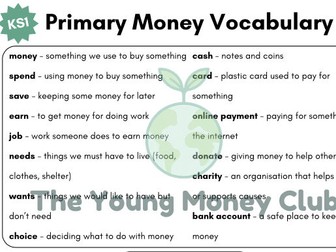
A clear and child-friendly money vocabulary list designed to support financial education in primary schools and align with PSHE learning. This resources includes money-related terms children are expected to encounter in primary PSHE, each explained with simple, age appropriate language. Perfect for: PSHE lessons Displays Supporting written and spoken tasks Teacher reference or planning What’s included: A list of key money vocabulary (KS1) A list of key money vocabulary (KS2) Simple definitions suitable for primary-aged children Key vocabulary includes: spend, save, earn, budget, bank, needs, wants and more.
KS1 KS2 PSHE Needs and Wants Sorting Activity – Financial Education StarterQuick View
theyounglearnersclub

KS1 KS2 PSHE Needs and Wants Sorting Activity – Financial Education Starter

(0)
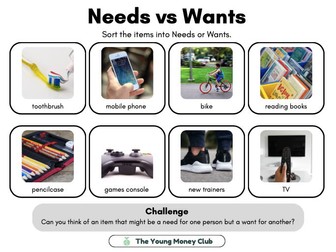
A simple and low-prep PSHE financial education worksheet to help pupils understand the difference between needs and wants. Children sort a range of everyday items into needs, wants or both, encouraging discussion, reasoning and financial awareness. Some items are deliberately open to interpretation, making this a great resource for partner-talk or a whole-class discussion. This resource is ideal for: KS1 & KS2 PSHE lessons focussing on money Introducing financial education and budgeting Cross-curricular links with Maths A starter activity, plenary or a quick standalone lesson What’s included: Needs and wants sorting activity (PDF) Items designed to promote discussion and justification. Curriculum links: PSHE – managing money, making choices, understanding needs and wants. This resource works well as a discussion-led activity and is suitable for a range of abilities, making it a flexible addition to any PSHE or financial education lesson. If you found this resource useful, please consider leaving a review. You may also be interested in my financial education units, coming soon to my TES shop. Images sourced from individual creators via Pixabay (royalty-free). Follow me on Instagram: @_theyoungmoneyclub @theyounglearnersclub
Saving Jars Activity | Teaching Children About Saving Money KS1/KS2 PSHE Worksheet ResourceQuick View
theyounglearnersclub

Saving Jars Activity | Teaching Children About Saving Money KS1/KS2 PSHE Worksheet Resource

(0)
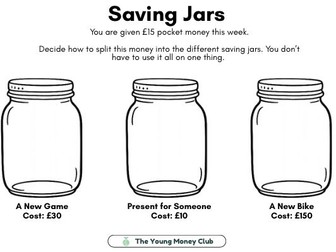
A simple and engaging Saving Jars activity to help children understand what saving money means and why people save for different goals. Children explore realistic saving goals, such as a bike, a gift and new toy they want. This activity encourages discussion about short-term and long-term savings goals and helps children to think about making choices with money. Perfect for: PSHE lessons on money and saving KS1 or lower KS2 financial education Whole-class discussion, small groups or independent work Includes: A saving jar PDF worksheet Child-friendly saving goal options Opportunities for discussion and reasoning No prep required. Just print and use.
Financial Vocabulary Task | Explaining Money Words Simply | Primary PSHEQuick View
theyounglearnersclub

Financial Vocabulary Task | Explaining Money Words Simply | Primary PSHE

(0)
This financial vocabulary task supports children in explaining money-related words using their own language, helping to deepen understanding rather than memorising. Children are given a money word and are asked to: explain what it means in simple terms give an example draw a picture to support their explanation Ideal for: KS1 and KS2 PSHE lessons revisiting financial vocabulary a starter activity assessment, discussion or speaking and listening activities Included: vocabulary explanation sheet sentence starters to support writing space for drawing and examples a blank copy for teachers to add the money word to This resource is easily adaptable for different ages and abilities.
KS2 PSHE Needs and Wants Sorting Activity – Financial Education StarterQuick View
theyounglearnersclub

KS2 PSHE Needs and Wants Sorting Activity – Financial Education Starter

(0)
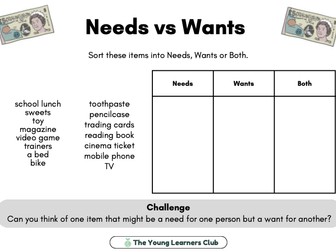
A simple and low-prep PSHE financial education worksheet to help pupils understand the difference between needs and wants. Children sort a range of everyday items into needs, wants or both, encouraging discussion, reasoning and financial awareness. Some items are deliberately open to interpretation, making this a great resource for partner-talk or a whole-class discussion. This resource is ideal for: KS2 PSHE lessons focussing on money Introducing financial education and budgeting Cross-curricular links with Maths A starter activity, plenary or a quick standalone lesson What’s included: Needs and wants sorting activity (PDF) Items designed to promote discussion and justification. Curriculum links: PSHE – managing money, making choices, understanding needs and wants. If you found this resource useful, please leave a review. You may also be interested in my financial education units coming soon to my TES shop.
Victorian Classroom vs Modern Day Classroom - Then and Now Oracy Starter ActivityQuick View
theyounglearnersclub

Victorian Classroom vs Modern Day Classroom - Then and Now Oracy Starter Activity

(0)
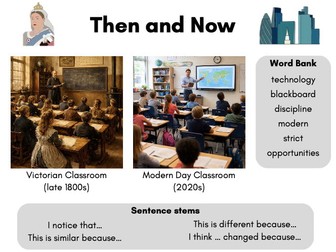
Engage your pupils in rich discussion and historical comparison with this low-prep Then and Now Oracy activity, using two contrasting classroom images: a Victorian classroom and a modern day classroom. This resource is designed as a discussion starter to support speaking and listening, historical enquiry and comparative language. Includes: 2 high quality images (both AI-generated) Sentence stems to support structured talk Carefully selected vocabulary to scaffold Suitable for display, printing or use on slides. Works well as a hook for a lesson or new History unit. While this resource is free to download, the graphics were created by The Young Learners Club and may not be reused or redistributed separately.
Remembrance Day KS2 PowerPoint and Discussion Activity FreeQuick View
theyounglearnersclub

Remembrance Day KS2 PowerPoint and Discussion Activity Free

(0)
A simple and respectful KS2 Remembrance Day PowerPoint and discussion activity, perfect for classroom learning or assemblies. Includes: What Remembrance Day is and why it’s observed; Outlines when it takes place; Introduces the history and symbolism of the poppy; Encourages reflection through a classroom or assembly discussion task; Shows how people remember today. Ideal for introducing Remembrance Day in a calm and age-appropriate way. Available for download in PDF format. While this resource is free to download, the graphics were created by The Young Learners Club and may not be reused or redistributed separately.