The Magic of Light – KS2 Science: Exploring Shadows, Refraction, and RainbowsQuick View
PhysicsResourcess

The Magic of Light – KS2 Science: Exploring Shadows, Refraction, and Rainbows

(0)
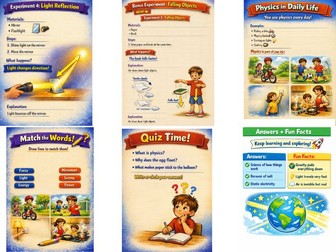
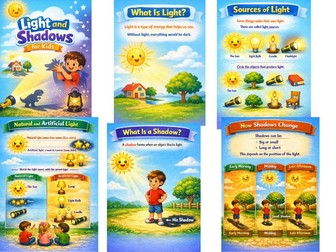
Introduce your KS2 learners (ages 7–11) to the fascinating world of physics with The Magic of Light. This engaging science resource explores light as a form of energy, helping children understand how it enables us to see and interact with the world. Students will investigate how the Sun provides light and warmth, experiment with shadows using flashlights, and discover how refraction makes a pencil look “broken” in water. They will also create rainbows with mirrors and flashlights, and learn about different sources of light — sunlight, lamp light, and fire light. Safety guidance is included to teach responsible use of light, such as avoiding direct sunlight and handling lamps carefully. The book concludes with interactive questions and activities to reinforce learning and encourage curiosity. Key Features: KS2 curriculum-aligned science resource Clear definitions of light as energy Hands-on experiments with shadows, refraction, and rainbows Everyday uses of light (vision, photography, plant growth) Types of light sources (natural and artificial) Safety tips for children End-of-book questions and activities for revision and exploration
Electricity Experiments for Kids | Hands-On STEM Physics (Ages 7–12)Quick View
PhysicsResourcess

Electricity Experiments for Kids | Hands-On STEM Physics (Ages 7–12)

(0)
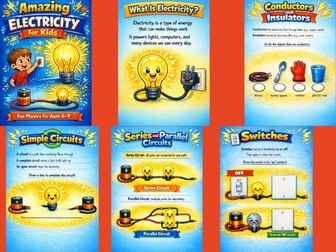
Hands-On Electricity Experiments for Young Scientists! Make physics exciting and easy to understand with this engaging collection of electricity experiments designed for primary students. This resource introduces fundamental scientific concepts through simple, safe, and interactive activities that encourage curiosity, observation, and critical thinking. Perfect for classroom lessons, homeschool learning, STEM centers, or science clubs, these experiments help students explore how electricity works using everyday materials. What’s Included Step-by-step electricity experiments Clear materials and procedure instructions Observation and investigation activities Student-friendly scientific explanations Printable worksheets for active learning Physics Concepts Covered Static electricity Electric charge and attraction Conductors and insulators Scientific observation skills Inquiry-based learning Perfect For Primary Science Lessons STEM Activities Homeschool Curriculum Hands-on Physics Units Science Centers & Lab Activities Age Range Ages 7–12 | Elementary / Primary Level Teacher Benefits No special equipment required Easy classroom setup Engaging student participation Ready-to-print resource Supports inquiry-based science learning Bring physics to life and help students discover the fascinating world of electricity through experimentation and exploration! electricity experiments physics activities STEM science primary science hands on science electricity lesson science experiments kids physics for children STEM worksheets elementary science
The Science of Sound for Kids | Waves & Vibrations Physics Activities | Primary STEM ResourceQuick View
PhysicsResourcess

The Science of Sound for Kids | Waves & Vibrations Physics Activities | Primary STEM Resource

(0)
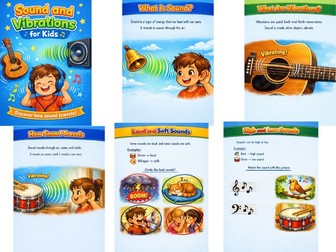
Explore the Science of Sound Through Fun and Simple Physics! Introduce young learners to the fascinating world of sound with this engaging primary science resource designed to make physics easy, interactive, and enjoyable. Students discover how sound is created, how it travels, and how we hear using clear explanations and child-friendly activities. This resource supports inquiry-based learning and helps children understand scientific concepts through observation, discussion, and hands-on exploration. Physics Concepts Covered What sound is Vibrations and sound waves How sound travels through air Loud and soft sounds Types of everyday sounds Sound safety and hearing care What’s Included Easy-to-understand science explanations Illustrated learning pages Interactive questions and activities Student discussion prompts Ready-to-use classroom resource Perfect For Primary Science Lessons STEM Activities Physics Introduction Units Homeschool Learning Science Centers Age Range Ages 6–9 | Primary / Elementary Students Teacher Benefits No preparation required Age-appropriate scientific language Encourages curiosity and critical thinking Supports early physics understanding Help young scientists discover how sound works and inspire a lifelong love of science!
Buoyancy in Action – Fun Physics Experiments for KS2 (Ages 7–11)Quick View
PhysicsResourcess

Buoyancy in Action – Fun Physics Experiments for KS2 (Ages 7–11)

(0)
“Turn physics into play with this engaging buoyancy resource! Children explore why some objects float while others sink through three hands‑on experiments, creative coloring and matching activities, and a clear scientific summary. Designed for KS2 learners, the pack includes step‑by‑step instructions, observation prompts, and interactive tasks that make science simple, visual, and fun. Perfect for classroom lessons, homework, or STEM clubs, this resource helps young learners build confidence while discovering the forces that keep boats, balloons, and even ducks afloat.” Age & Level Age range: 7–11 years Key Stage: KS2 (Primary Science – Physics) Buoyancy experiments Floating and sinking KS2 physics Hands‑on science STEM activities
Gravity in Action – Easy Physics Experiments for Kids (Ages 7–11)Quick View
PhysicsResourcess

Gravity in Action – Easy Physics Experiments for Kids (Ages 7–11)

(0)
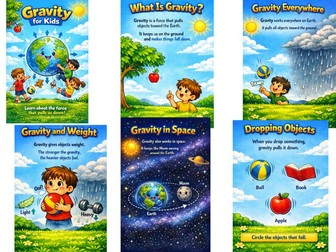
Discover the fascinating force of gravity with fun, hands‑on experiments and creative activities. Perfect for children ages 7–11, this resource makes physics simple and exciting at home or in the classroom. Includes step‑by‑step instructions, coloring pages, and clear scientific explanations to engage young learners. Age & Level Age range: 7–11 years Level: Beginner physics (Primary Science / Key Stage 2) Gravity experiments Physics for kids Science activities Hands‑on learning STEM resources
Chemistry Made Simple for Kids | States of Matter, Atoms, Reactions & More | KS2 ScienceQuick View
PhysicsResourcess

Chemistry Made Simple for Kids | States of Matter, Atoms, Reactions & More | KS2 Science

(0)
Introduce children to the exciting world of chemistry with this colorful and easy-to-understand workbook! “Chemistry Made Simple for Kids” explains key science concepts step by step, with fun activities and experiments that make learning engaging and memorable. This printable PDF includes: What is chemistry? Simple definition with everyday examples (water, soap, chocolate, bubbles) States of matter: solid, liquid, gas — with drawing activity Atoms and molecules: H₂O explained with clear visuals Mixtures and solutions: cereal + milk, sugar in water, salt dissolving activity Chemical reactions: vinegar + baking soda → bubbles Acids and bases: lemon, soap, and pH paper test Kitchen chemistry: slime, milk color swirls, volcano eruption Safety first: goggles, no tasting, always with an adult Final page: “Congratulations! You’re now a little chemist!” with space for the child’s name Designed for: Ages 6–9 (KS2, CE2–CM1) Science lessons, homework packs, and home education EAL and SEND support Teachers, tutors, and parents Format: A4 PDF, ready to print Style: Cartoon-style, child-friendly, and visually clear Learning type: Concept discovery, vocabulary building, and hands-on experiments, chemistry for kids, KS2 science, states of matter worksheet, atoms and molecules activity, chemical reactions for children, acids and bases experiment, kitchen chemistry, printable science worksheets, CE2 science, CM1 physique, home learning science
Simple Machines for Kids | Wheel & Axle, Lever, Pulley, Inclined Plane, Screw, Wedge | KS2 ScienceQuick View
PhysicsResourcess

Simple Machines for Kids | Wheel & Axle, Lever, Pulley, Inclined Plane, Screw, Wedge | KS2 Science

(0)
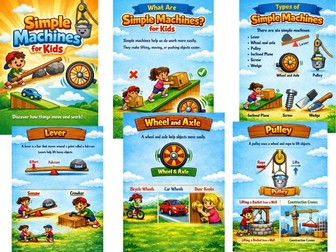
Make science fun and easy with this colorful Simple Machines Presentation! Perfect for KS2, Year 3–4, CE2–CM1, this resource introduces children to the six types of simple machines and shows how they make work easier in everyday life. This printable PDF includes: Clear explanations of the 6 simple machines Real-life examples: bicycle, seesaw, slide, elevator, light bulb, axe Review activity: matching exercise with answers Bold, child-friendly style for classroom or home learning Designed for: Ages 6–9 (KS2, CE2–CM1) Science lessons, homework packs, and home education EAL and SEND support Teachers, tutors, and parents Format: A4 PDF, ready to print Style: Colorful, bold, and engaging Learning type: Concept discovery, vocabulary building, and interactive review ,simple machines for kids, KS2 science, wheel and axle, lever worksheet, inclined plane activity, pulley examples, screw and wedge, science presentation, printable science worksheets, CE2 science, CM1 physique, home learning science
Physics Made Simple for Kids | Forces, Energy, Gravity & More | KS1 ScienceQuick View
PhysicsResourcess

Physics Made Simple for Kids | Forces, Energy, Gravity & More | KS1 Science

(0)
Introduce young learners to the wonders of physics with this engaging and easy-to-understand workbook! “Physics Made Simple for Kids” covers key science concepts in a fun, visual, and age-appropriate way — perfect for KS1, Year 1–2, CP, CE1, and home learning. This printable PDF includes: What is physics? Explained simply Motion and forces: push, pull, and speed Gravity: why things fall and how astronauts jump on the Moon Energy: light, sound, heat, and movement Magnetism: poles, attraction, and Earth as a giant magnet Simple machines: levers, pulleys, wheels, ramps Light and sound: how they travel and help us see and hear Fun facts and examples on every page Final page: “Congratulations! You’re now a little physicist!” Designed for: Ages 5–8 (KS1, CP, CE1) Science centers, homework packs, and home education EAL and SEND support Teachers, tutors, and parents Format: A4 PDF, ready to print Style: Cartoon-style, child-friendly, and visually clear Learning type: Concept discovery, vocabulary building, and visual science ,physics for kids, KS1 science, forces and motion, gravity worksheet, energy for children, magnetism activity, simple machines, light and sound, science workbook, printable science worksheets, CP science, CE1 physique, home learning science
“My Amazing Body – Science Coloring Book for Kids (Human Body Vocabulary in English)”Quick View
PhysicsResourcess

“My Amazing Body – Science Coloring Book for Kids (Human Body Vocabulary in English)”

(0)
Engage your students with a fun and interactive science coloring book! This resource introduces the human body step by step — skeleton, muscles, heart, lungs, brain, digestive system, and senses — with: Simple coloring activities Clear English labels with arrows Short science facts for easy learning Interactive classroom activities A final Certificate of Completion Perfect for science lessons, ESL classes, or cross‑curricular projects. Your students will color, learn, and explore the human body while practicing English vocabulary.
“Alphabet Tracing Worksheets A–Z | Handwriting Practice for Early Learners”Quick View
PhysicsResourcess

“Alphabet Tracing Worksheets A–Z | Handwriting Practice for Early Learners”

(0)
Help your students master the alphabet with this printable tracing pack from A to Z! Each page offers bold uppercase letters to trace, with clean lines and plenty of space for handwriting practice. Ideal for preschool, kindergarten, and Year 1 learners developing fine motor skills and letter recognition. Includes: 26 pages of uppercase letter tracing (A–Z) Simple layout for independent or guided practice Perfect for morning work, literacy centers, or homework , handwriting worksheets, uppercase letters, fine motor skills, early writing, EYFS, KS1, printable literacy activity
Number Tracing Worksheets 1–10 | Fine Motor Skills | EYFS & KS1Quick View
PhysicsResourcess

Number Tracing Worksheets 1–10 | Fine Motor Skills | EYFS & KS1

(0)
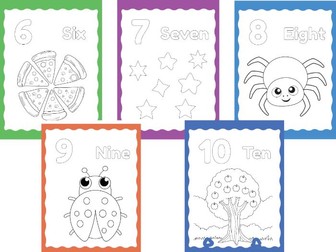
Help young learners master number formation with this engaging set of Number Tracing Worksheets for numbers 1 to 10. Perfect for EYFS, Reception, Kindergarten, and KS1, these pages support fine motor development, number recognition, and early writing skills. Each page includes: Large, traceable numbers with dotted guides Clear number words (e.g. ONE, TWO, THREE…) Repetitive tracing practice to build confidence A cheerful final page: “Congratulations! You traced all the numbers!” Cover page with space for the child’s name Ideal for: Morning work Homework packs Numeracy centers SEND and EAL support Home learning Format: PDF, ready to print (A4 portrait) Style: Simple, child-friendly, and visually clean Age range: 3–6 years
“Animals Around the World – Educational Coloring Book for Kids”Quick View
PhysicsResourcess

“Animals Around the World – Educational Coloring Book for Kids”

(0)
Take your students on a colorful journey across the globe! This printable coloring book introduces children to five fascinating habitats — jungle, polar regions, desert, ocean, and savannah — while helping them identify animals and practice fine motor skills. Each page includes: A short, child-friendly description of the habitat A list of animals to label and color Simple coloring instructions to guide creativity Vocabulary building and early science concepts Perfect for EYFS, KS1, ESL learners, and bilingual classrooms. Use it for morning work, science centers, art time, or homework. No prep required — just print and go!
Finger Math Workbook – Illustrated Addition & Subtraction Practice for KidsQuick View
PhysicsResourcess

Finger Math Workbook – Illustrated Addition & Subtraction Practice for Kids

(0)
Make math fun and interactive with this illustrated workbook! Children learn to add and subtract using their fingers, step by step, through engaging exercises and challenges. Covers simple addition, subtraction, and mixed operations Includes three-term challenges for advanced practice Interactive “connect with an arrow” activities to match problems with answers Designed for primary/elementary learners to build confidence in math without calculators Perfect for teachers, parents, and homeschoolers seeking hands-on math resources that make learning enjoyable.
Finger Math Workbook – Illustrated Subtraction Practice for KidsQuick View
PhysicsResourcess

Finger Math Workbook – Illustrated Subtraction Practice for Kids

(0)
Help young learners master subtraction in a fun and visual way! This illustrated workbook teaches children how to subtract using their fingers, step by step. Clear instructions with finger-based counting Practice exercises from simple subtraction to three-term problems Interactive challenges (connect with arrows, write answers, solve puzzles) Perfect for primary/elementary students learning subtraction without calculators Ideal for teachers, parents, and homeschoolers looking for engaging math resources.
Finger Math Workbook  Illustrated Addition Worksheets for Early LearnersQuick View
PhysicsResourcess

Finger Math Workbook Illustrated Addition Worksheets for Early Learners

(0)
Engaging illustrated math workbook that teaches children how to count and add using their fingers. Includes simple addition, three‑term challenges, and interactive arrow‑matching activities. Perfect for early years and KS1 learners. Finger Math Workbook – Illustrated Addition Worksheets Help children master counting and addition through fun, hands‑on activities! This printable workbook uses finger illustrations to guide learners step by step. Simple Additions – Convert finger numbers into numerals and solve equations. Three‑Term Challenges – Practice extended addition with three groups of fingers. Interactive Activities – Arrow‑matching exercises to connect numbers and answers. Child‑Friendly Design – Clear visuals, large spaces for writing, and playful layout. Curriculum Aligned – Supports early years numeracy and KS1 addition skills. This resource is ideal for teachers, homeschooling parents, and tutors looking for engaging math practice sheets.