Year 10 Science: Photosynthesis and Limiting Factors AssessmentQuick View
magiteacherofficial

Year 10 Science: Photosynthesis and Limiting Factors Assessment

(0)
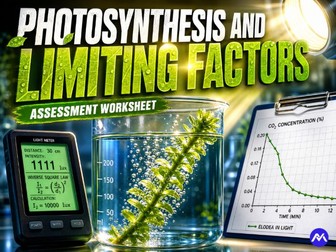
Assessment worksheet for Year 10 Science: Photosynthesis and Limiting Factors. Inverse Square Law calculations. GCSE aligned. . What’s Included . Section A: Knowledge Check: Multiple-choice questions covering chloroplast organelles and the basic definition of limiting factors. Elodea Oxygen Data Table: A specific results table measuring oxygen volume at different distances to identify photosynthetic relationships. Inverse Square Law Calculation: A structured task in Section B using the 1/d² formula to calculate light intensity at 50 cm. CO2 Concentration Graph Interpretation: An evaluative task comparing tomato greenhouse rates at 15°C and 25°C to identify limiting factors. . How to Use It . During the lesson, Deploy: Section A: Knowledge Check. Ensure foundational substantive knowledge of chloroplasts and reactants is secure. As a plenary, Use: Section B Q6 calculations. Practice the mathematical application of the inverse square law to build procedural fluency. For homework, Assign: the CO2 concentration graph interpretation task. Develop AO3 evaluative skills by synthesising experimental evidence. . Curriculum Coverage . GCSE Science (Year 10) — AO1/AO2/AO3 coverage: Interpret experimental data regarding the interplay of limiting factors and carbon dioxide concentration. Key Stage 4 Biology: Understand the inverse square law in relation to light intensity and evaluate experimental evidence with GCSE-level rigour. . File Includes . Editable Word document (.docx) included.
Year 9 Geography: Population Pyramids Knowledge OrganiserQuick View
magiteacherofficial

Year 9 Geography: Population Pyramids Knowledge Organiser

(0)
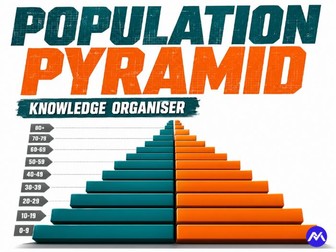
Knowledge organiser resource for Year 9 Geography: Population Pyramids. Interpreting demographic transition stages and ratios. National Curriculum aligned. . What’s Included . Knowledge Organiser Core Facts: Detailed breakdown of population pyramid axes and the role of the national Census within the worksheet. Key Vocabulary List: Definitions for essential Tier 3 terms including birth rate and infant mortality provided in the worksheet. Interpreting Shapes Guide: This revision sheet provides morphological analysis for DTM Stages 2 to 5, comparing expansive LIDC profiles with contractive AC profiles. Dependency and Ratios Analysis: A fact sheet explaining the relationship between the economically active population and young or elderly dependents. . How to Use It . As a starter, Display: the Interpreting Shapes & DTM Stages section of the knowledge organiser. Pupils use the worksheet to identify the silhouette of a Stage 2 country. During the lesson, Use: the Key Vocabulary list. Students must incorporate terms from the worksheet into their written analysis of demographic change. For homework, Assign: the Global Profiles & Anomalies task. Learners research the UAE male bulge to practice identifying demographic irregularities. . Curriculum Coverage . KS3 National Curriculum — Geography (Year 9): Understanding the human processes that influence population structure, including birth rates and life expectancy. Human Geography Targets: Interpreting complex data sets to distinguish between expansive and contractive pyramids and calculating dependency ratios. . File Includes . Editable Word document (.docx) included.

Year 5 Geography: Rivers and the Water Cycle MCQQuick View
magiteacherofficial

Year 5 Geography: Rivers and the Water Cycle MCQ

(0)
A multiple choice quiz resource for Year 5 Geography: Rivers and the Water Cycle. Covers evaporation, condensation and precipitation. National Curriculum aligned. . What’s Included . Student Sheet: A structured page containing a detailed description of the continuous journey of water between land, oceans, and atmosphere. Multiple Choice Questions: Five targeted questions covering energy sources, evaporation, condensation, precipitation, and the cyclical nature of water. Pedagogical Insights: Teacher guidance focusing on Tier 2 academic vocabulary like evaporation and precipitation within a geographical context. Misconception Alert: Specific advice for addressing the common belief that clouds are made of smoke or steam, linked to question three. Teacher’s Guidance: Comprehensive notes including a ‘Think-Pair-Share’ delivery tip to help students trace the journey of a water droplet. . How to Use It . As a starter, Pair: students to use the ‘Think-Pair-Share’ activity to trace a water droplet’s journey before attempting the Multiple Choice Quiz. During the lesson, Deploy: the Student Sheet to help learners identify the change of state from liquid to gas as a continuous process. As a plenary, Use: the Misconception Alert to clarify that clouds are liquid water droplets rather than steam, reinforcing the formative quiz results. . Curriculum Coverage . KS2 National Curriculum — Geography (Year 5): Describe and understand key aspects of physical geography, including the water cycle. Physical Processes: Identify the energy source for the water cycle and define evaporation, condensation, and precipitation as a continuous process. . File Includes . Editable Word document (.docx) included.

Year 9 History: The Treaty of Versailles Role-Play ScriptQuick View
magiteacherofficial

Year 9 History: The Treaty of Versailles Role-Play Script

(0)
Role play script activity for Year 9 History: The Treaty of Versailles. Explore the conflicting demands of the Big Three. National Curriculum aligned. . What’s Included . The Big Three Character Profiles: Detailed backgrounds for Georges Clemenceau, Woodrow Wilson, and David Lloyd George including their core motives. Paris Peace Conference Setting: A descriptive scene-setter placing students in a private drawing room at the Palace of Versailles with maps of Europe. Interactive Script Dialogue: A structured script covering the friction between Wilson’s Fourteen Points and Clemenceau’s demand for German demilitarisation. Article 231 Clause Discussion: Specific dialogue focusing on the ‘War Guilt Clause’ and the proposed 6.6 billion pounds in reparations. Epilogue Section: A concluding summary titled ‘What Happened Next’ to provide historical context on the treaty’s long-term consequences. . How to Use It . During the lesson, Assign: The Big Three Character Profiles to small groups. Pupils must internalise the conflicting motives of Clemenceau and Wilson before reading. During the lesson, Run: The Interactive Script Dialogue as a classroom role play. This helps learners navigate the geopolitical trade-offs of the 1919 negotiations. As a plenary, Challenge: Students to debate the ‘War Guilt Clause’ using the script’s arguments. This develops the disciplinary rigour required to evaluate historical significance. . Curriculum Coverage . KS3 National Curriculum — History (Year 9): Investigate the impact of the First World War and the punitive nature of the 1919 settlement through Article 231. Historical Interpretations and Causation: Analyse how conflicting national interests shaped the modern world and meet attainment targets related to cause and consequence. . File Includes . Editable Word document (.docx) included.

Year 8 Biology:  Cell Division and Mitosis Misconceptions GuideQuick View
magiteacherofficial

Year 8 Biology: Cell Division and Mitosis Misconceptions Guide

(0)
Common misconceptions guide for Year 8 Biology: Cell Division and Mitosis. Master chromosome constancy and DNA replication. National Curriculum aligned. . What’s Included . Misconception Correction Table: Detailed table addressing errors like ‘resting’ interphase and the ‘X’ shape chromosome myth Purpose Pile Activity: A sorting task where students categorise scenarios like skin grafts and pollen production under mitosis or meiosis Pedagogical Fixes: Specific analogies including the ‘Photocopy Room’ for DNA replication and ‘Suitcases’ for chromosome transport Check for Understanding: A two-task assessment focusing on mitosis outcomes in skin cells and the necessity of DNA replication Teacher’s Guidance: Pedagogical insights into the ‘invisible’ nature of replication to support adaptive teaching . How to Use It . As a starter, Display: the ‘Photocopy Room’ analogy. Establish a conceptual shift from viewing interphase as a dormant state to one of intense preparation. During the lesson, Pair: students to complete the ‘Purpose Pile’ sorting activity. Categorise real-world scenarios to distinguish between growth and reproduction. As a plenary, Deploy: the ‘Check for Understanding’ tasks. Identify and correct persistent errors regarding diploid chromosome numbers and genetic identity. . Curriculum Coverage . KS3 National Curriculum — Biology (Year 8): Master substantive knowledge concerning the cell cycle and DNA replication to ensure genetic identity for tissue function. National Curriculum Attainment Targets: Apply understanding of cellular division to life processes, bridging the gap between cell theory and complex inheritance. . File Includes . Editable Word document (.docx) included.

Year 5 Science: Forces and Gravity Extension TaskQuick View
magiteacherofficial

Year 5 Science: Forces and Gravity Extension Task

(0)
Extension task resource for Year 5 Science: Martian descent forces. Calculate parachute surface area to balance mass and air resistance. National Curriculum aligned. . What’s Included . Teacher Guide: Facilitation and support notes on introducing fluid resistance and terminal velocity concepts to high-ability learners. The Mission Briefing: A professional scenario for the Ares-V Colony requiring aeronautical engineering to land medical supplies on Mars. Martian Physics Table: A structured framework for pupils to investigate the non-linear relationship between pod mass and parachute surface area. Ares-V Commander Report: A formal conclusion task where students synthesise their findings on atmospheric resistance into a professional report. . How to Use It . Before writing, Display: The Mission Briefing. Immerse gifted and talented learners in the aeronautical engineer role to establish a professional purpose for the task. During the lesson, Deploy: The Martian Physics Table. Guide students to calculate surface area per gram to identify the relationship between variables in low-density environments. As a plenary, Assign: The Ares-V Commander Report. Challenge pupils to explain why mass and air resistance do not always scale 1:1, promoting disciplinary oracy. . Curriculum Coverage . KS2 National Curriculum — Science (Year 5): Deepen substantive knowledge of the effects of gravity and air resistance through a professional aeronautical lens. Working Scientifically (Key Stage 2): Master attainment targets for the control of variables and data interpretation by calculating ratios and predicting descent speeds. . File Includes . Editable Word document (.docx) included.
Year 6 Biology: Photosynthesis HomeworkQuick View
magiteacherofficial

Year 6 Biology: Photosynthesis Homework

(0)
Homework worksheet for Year 6 Biology: Photosynthesis. Master how plants convert light into glucose via chlorophyll. National Curriculum aligned. . What’s Included . The Leaf Factory Diagram: A labelling activity where pupils identify raw materials like water and carbon dioxide alongside products like glucose. Chlorophyll Explanation Task: A written exercise requiring pupils to describe the role of green pigment in chloroplasts for a younger audience. Stomata Safety Briefing: A creative writing task personifying a carbon dioxide molecule entering the leaf through microscopic pores. Success Criteria Checklist: A self-assessment tool ensuring pupils use scientific terms like ‘glucose’ and ‘stomata’ correctly. Teacher’s Post-Task Briefing: A comprehensive guide for educators including model answers and common misconceptions to flag. . How to Use It . Assign: The Leaf Factory diagram. Consolidate the understanding of plants as biological factories and reduce intrinsic load. Deploy: The Stomata Safety Briefing. Assess conceptual understanding of gas exchange and molecular movement through personification. Use: The Teacher’s Post-Task Briefing. Address the ‘plants eat soil’ myth and review model answers to build procedural fluency. . Curriculum Coverage . KS2 National Curriculum — Biology (Year 6): Pupils learn to identify the products of photosynthesis, specifically how light energy is converted into chemical glucose. Gas Exchange and Stomata: Pupils develop disciplinary knowledge by modelling the movement of carbon dioxide and oxygen through microscopic leaf pores. . File Includes . Editable Word document (.docx) included.
Year 7 Geography: Volcanoes and Tectonic Hazards Lesson PlanQuick View
magiteacherofficial

Year 7 Geography: Volcanoes and Tectonic Hazards Lesson Plan

(0)
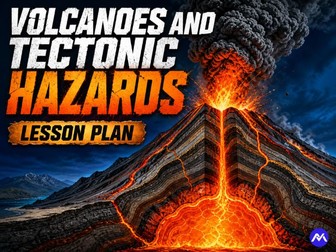
Lesson plan guide for Year 7 Geography: Volcanoes and Tectonic Hazards. Analyse eruption causes and the Eyjafjallajökull case study. National Curriculum aligned. . What’s Included . Eruption Flowchart: A sequencing activity covering the six stages of a destructive boundary eruption from plate movement to pressure release. Impact Sort card sets: A collection of 12 specific volcanic impacts for students to categorise into social, economic, and environmental factors. Venn diagram templates: Graphic organisers designed for student exercise books to facilitate the analysis of overlapping eruption consequences. Eyjafjallajökull case study: A detailed summary of the 2010 eruption focusing on ash clouds and global economic flight cancellations. PEEL paragraph task: A structured writing activity with a sentence starter bank to explain long-term economic impacts on local communities. . How to Use It . Run: the ‘Plate Boundary Recall’ retrieval practice. Students sketch and label a destructive boundary on mini-whiteboards to secure foundational tectonic knowledge. Deploy: the ‘Impact Sort’ card sets. Pupils categorise 12 impacts into a Venn diagram to distinguish between social, economic, and environmental factors. Use: the sentence starter bank for the PEEL paragraph analysis. This scaffolds the explanation of how volcanic eruptions affect a local community’s economy. . Curriculum Coverage . KS3 National Curriculum — Geography (Year 7): Understand how physical processes interact with human environments through the study of global tectonic hazards. KS3 National Curriculum — Geography (Year 7): Evaluate the long-term recovery of LICs versus HICs following volcanic activity using the Eyjafjallajökull 2010 case study. . File Includes . Editable Word document (.docx) included.
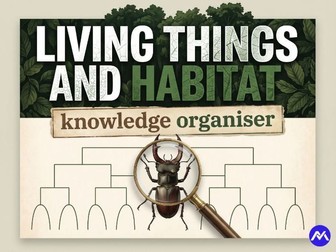
Year 5 Biology: Living Things and Habitat Knowledge OrganiserQuick View
magiteacherofficial

Year 5 Biology: Living Things and Habitat Knowledge Organiser

(0)
Knowledge organiser resource for Year 5 Biology: Living Things and Habitats. Master classification keys and the Five Kingdoms. National Curriculum aligned. . What’s Included . The Five Kingdoms: A detailed breakdown of Animals, Plants, Fungi, Protists, and Monera (bacteria). Vertebrate Classification: Specific traits for Mammals, Birds, Reptiles, Amphibians, and Fish. Invertebrate Phyla: Comparative features of Insects, Arachnids, Molluscs, Annelids, and Crustaceans. Dichotomous Key Guide: A section explaining branching structures and objective ‘Yes/No’ questions for identification. Micro-organisms Overview: Definitions and examples of Fungi and Bacteria, including their nutrient absorption. . How to Use It . Display: the Five Kingdoms section. Establish the foundational taxonomy before pupils attempt to group specific specimens. Use: the Dichotomous Key Guide. Support learners in constructing their own branching diagrams using objective observable features. Assign: the Vertebrate and Invertebrate classification tables. Conduct low-stakes retrieval practice to secure Tier 3 vocabulary. . Curriculum Coverage . KS2 National Curriculum — Biology (Year 5): Group living things in a variety of ways based on their shared characteristics and use classification keys. KS2 National Curriculum — Biology (Year 5): Describe how living things are classified into broad groups according to common observable characteristics including micro-organisms. . File Includes . Editable Word document (.docx) included.
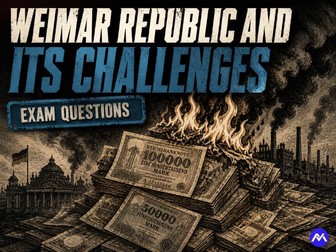
Year 10 History: Weimar Republic and Its Challenges Exam QuestionsQuick View
magiteacherofficial

Year 10 History: Weimar Republic and Its Challenges Exam Questions

(0)
Exam questions worksheet for Year 10 History: Weimar Republic 1919-1923. Analyse the Papiermark exchange rate table. GCSE aligned. . What’s Included . Questions (Student Sheet): A comprehensive set of assessment tasks covering military restrictions and constitutional instability. Papiermark Exchange Rate Table: A detailed data set showing the hyperinflation crisis from January to November 1923 for quantitative analysis. Spartacist Uprising Extract: A contemporary account describing the activities of the Freikorps in Berlin during January 1919. Open Answer Questions: Structured prompts such as Q4 which requires pupils to explain the Weimar Government’s reliance on paramilitary forces. . How to Use It . Display: the Papiermark exchange rate table. This helps pupils conceptualise the scale of economic collapse before attempting the calculation. Deploy: the Spartacist Uprising extract. This allows students to synthesise contemporary accounts into their evaluation of political instability. Assign: the exam practice worksheet. This provides a formal check of understanding regarding the Treaty of Versailles military restrictions. . Curriculum Coverage . GCSE History (Year 10) — AO1/AO2/AO3 coverage: Pupils develop substantive knowledge of the Weimar Republic’s challenges, including the ‘Diktat’ and the Spartacist Uprising. GCSE History (Year 10) — AO1/AO2/AO3 coverage: Learners practice analysis of second-order concepts like causation and change through retrieval and evaluative tasks. . File Includes . Editable Word document (.docx) included.

Year 9 English: Romeo and Juliet HomeworkQuick View
magiteacherofficial

Year 9 English: Romeo and Juliet Homework

(0)
Homework task for Year 9 English: Romeo and Juliet. Analysis of plot sequencing and character roles across five acts. National Curriculum aligned. What’s Included Character Role Table: A structured activity to match Tybalt, Friar Laurence, and others to their pivotal roles like catalyst or intermediary. Domino Effect Sequence: A logical task mapping the cause-and-effect chain from Romeo’s intervention to his banishment from Verona. PEEL Analysis Paragraph: A guided writing task evaluating the significance of Act 3, Scene 1 as the play’s tragic point of no return. Success Criteria Checklist: A self-assessment tool ensuring pupils use academic vocabulary like peripeteia and hubris in their work. Teacher Mark Scheme: A comprehensive briefing including model answers for the domino effect and character identification tasks. How to Use It For homework, Assign: Character Role Table. This ensures students consolidate their understanding of character functions before the next lesson. Before writing, Deploy: Domino Effect Sequence. This helps pupils articulate the tragic trajectory and causal links between key plot events. As a plenary, Use: Success Criteria Checklist. This allows students to self-evaluate their PEEL paragraph against formal academic standards. Curriculum Coverage KS3 National Curriculum — English (Year 9): Evaluate how authors use structure and characterisation to convey meaning in high-quality literary texts. Reading and Analytical Writing: Develop robust substantive knowledge of Shakespeare’s five-act structure and practice the evaluative rigour of GCSE Assessment Objectives. <br> File Includes Editable Word document (.docx) included.
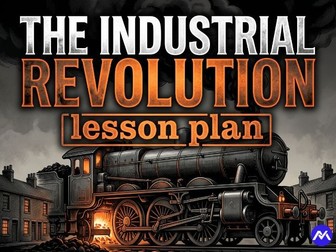
Year 8 History: The Industrial Revolution Lesson PlanQuick View
magiteacherofficial

Year 8 History: The Industrial Revolution Lesson Plan

(0)
Lesson plan guide for Year 8 History: The Industrial Revolution. Analyse the social impact of the factory system. National Curriculum aligned. What’s Included Cottonopolis Map: A visual demonstration of Manchester’s growth and the proximity of factories to coal fields and water sources. Ashley Commission Excerpts: Primary source testimonies from child labourers used to evaluate the ethical implications of the mill system. Chadwick’s Report on Sanitation: A medical primary source describing ‘back-to-back’ housing and the reality of cholera outbreaks. Push-Pull Factor Table: A structured categorisation task for students to identify the causes of rapid urbanisation and rural migration. PEEL Paragraph Task: A scaffolded writing activity focused on whether the Industrial Revolution improved the lives of ordinary people. How to Use It As a starter, Display: the contrasting images of a pre-1750 village and an 1850 town. Identify landscape changes to build a schema of urbanisation. During the lesson, Deploy: the Ashley Commission excerpts and Chadwick’s Report. Synthesise conflicting perspectives of Victorian progress and ethics. As a plenary, Run: the Hinge Question regarding the most significant driver of change. Justify choices to evaluate the complexity of industrial causality. Curriculum Coverage KS3 National Curriculum — History (Year 8): Understand the growth of industrial towns and the impact of the Enclosure Acts through causal reasoning and evidence-based evaluation. KS3 National Curriculum — History (Year 8): Develop disciplinary knowledge to construct coherent historical arguments regarding quality of life and the ethical implications of child labour. File Includes Editable Word document (.docx) included.
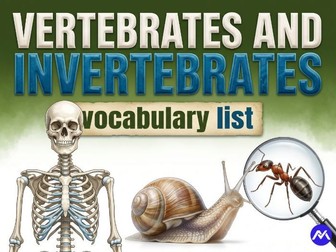
Year 6 Science: Vertebrates and Invertebrates Vocabulary ListQuick View
magiteacherofficial

Year 6 Science: Vertebrates and Invertebrates Vocabulary List

(0)
Vocabulary list resource for Year 6 Science: Vertebrates and Invertebrates. Classify mammals, reptiles, and arthropods. National Curriculum aligned. What’s Included Vertebrate Classification Table: specific definitions for mammals, amphibians, and reptiles with contextual example sentences. Invertebrate Word Bank: specific terminology for arthropods, molluscs, arachnids, and crustaceans to support biological identification. Skeletal Structure Glossary: clear distinctions between endoskeletons and exoskeletons to help pupils understand internal and external support. Biological Process Definitions: scientific explanations for taxonomy, classification, and segmented body structures. How to Use It As a starter, Display: the vertebrate classification table. Pupils use the worksheet to identify shared characteristics of mammals and birds. During the lesson, Use: the arthropod and mollusc word bank. Learners use the worksheet to classify real-world specimens based on observable features. For homework, Assign: the taxonomy definitions. Pupils apply the worksheet to explain the difference between arachnids and crustaceans. Curriculum Coverage KS2 National Curriculum — Science (Year 6): Classify living things including amphibians and reptiles based on specific characteristics. National Curriculum Attainment Targets: Use substantive knowledge of biological groupings to sort organisms into vertebrates and invertebrates. File Includes Editable Word document (.docx) included.
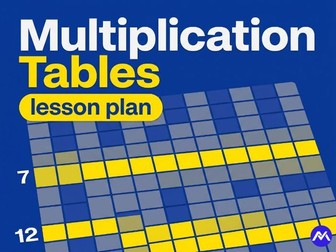
Year 4 Mathematics: Multiplication Tables Lesson PlanQuick View
magiteacherofficial

Year 4 Mathematics: Multiplication Tables Lesson Plan

(0)
Lesson plan guide for Year 4 Mathematics: Multiplication Tables. Recall and use facts for tables up to 12x12. National Curriculum aligned. What’s Included Retrieval Grid: A ‘Beat the Clock’ mini-grid focusing on fluency with 6 and 8 times tables. Factor Flowers: Visual scaffolding activity for the 7 and 12 times tables to bridge abstract facts and products. Comparison Task: A set of inequality statements using <, >, and = symbols to compare multiplication products. Canteen Challenge: A word problem requiring pupils to calculate apple quantities and subtraction using the 8 and 12 times tables. Exit Ticket: A diagnostic true/false question regarding the relationship between 12 x 7 and 6 x 14. How to Use It As a starter, Run: the ‘Beat the Clock’ Retrieval Grid. This primes existing knowledge of the 6 and 8 times tables before introducing new concepts. During the lesson, Display: the 12 x 12 multiplication square. Use it to model the doubling relationship between the 6 and 12 times tables to reduce cognitive load. During the lesson, Deploy: the ‘Factor Flowers’ activity. This provides visual scaffolding for pupils to master the challenging 7 and 12 times tables. Curriculum Coverage KS2 National Curriculum — Mathematics (Year 4): Recall multiplication and division facts for multiplication tables up to 12 × 12. KS2 National Curriculum — Mathematics (Year 4): Use the associative law to solve problems and explain reasoning using domain-specific vocabulary like ‘product’. File Includes Editable Word document (.docx) included.
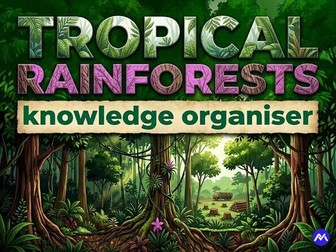
Year 7 Knowledge Organiser: Tropical RainforestsQuick View
magiteacherofficial

Year 7 Knowledge Organiser: Tropical Rainforests

(0)
Knowledge organiser resource for Year 7 Geography: Tropical Rainforests. Covers the Gersmehl Diagram and nutrient cycling. National Curriculum aligned What’s Included Climate and Location Data: Detailed breakdown of convectional rainfall, latitude, and global distribution of major forests like the Amazon. Key Vocabulary Glossary: Definitions for specific adaptations including buttress roots, drip-tips, epiphytes, and lianas. Rainforest Structure Breakdown: A vertical stratification guide covering the emergent layer, canopy, understorey, and forest floor. Nutrient Cycling Analysis: An explanation of the Gersmehl Diagram including biomass, litter, and soil stores with rapid decomposition. Deforestation Impact Summary: A section detailing causes such as cattle ranching and logging alongside environmental consequences. How to Use It Before writing, Display: the Rainforest Structure section. Pupils identify vertical stratification layers to build a mental model of the biome. During the lesson, Use: the Key Vocabulary glossary. Students apply terms like buttress roots and epiphytes when describing plant adaptations. As a starter, Assign: the Nutrient Cycling Gersmehl Diagram. Pupils recall the movement between biomass, litter, and soil stores to check prior learning. Curriculum Coverage KS3 National Curriculum — Geography (Year 7): Understand the physical processes of convectional rainfall and the daily weather cycle in tropical biomes. KS3 National Curriculum — Geography (Year 7): Analyse the causes of deforestation, including cattle ranching and mineral extraction, and their global impacts. File Includes Editable Word document (.docx) included.