OCR GCSE Computer Science J277 Component 1 COMPLETE 52-Lesson Bundle  PPTs + Booklets + AnswersQuick View
Siliconscholor

OCR GCSE Computer Science J277 Component 1 COMPLETE 52-Lesson Bundle PPTs + Booklets + Answers

(0)
Deliver a complete, structured and engaging OCR GCSE Computer Science J277 Component 1 teaching programme with the Silicon Scholar 52-Lesson Mega Bundle. This comprehensive teaching and learning package is designed to support teachers throughout the Component 1 specification, combining professional PowerPoint presentations, structured student booklets and answers in one integrated resource. With 52 carefully organised lessons covering Topics 1.1–1.6, this bundle provides a complete framework for classroom teaching, independent learning, knowledge development and examination preparation. What’s included: 52 structured lesson resources. Professional PowerPoint teaching presentations. Student learning and revision booklets. Topic-specific learning activities. Knowledge-check questions. Exam-style practice questions. Answers and assessment support. Structured specification coverage. Classroom-ready teaching materials. Independent study and revision activities. Complete OCR J277 Component 1 coverage: 1.1: Systems Architecture 1.2: Memory and Storage 1.3: Computer Networks, Connections and Protocols 1.4: Network Security 1.5: Systems Software 1.6: Ethical, Legal, Cultural and Environmental Impacts of Digital Technology Why teachers will love this bundle: A structured 52-lesson teaching programme. Ready-to-use presentation materials. Consistent lesson and booklet structure. Reduced lesson preparation time. Opportunities for regular knowledge assessment. Integrated teaching, practice and revision. Answers to support assessment and feedback. Benefits for students: Clear explanations of challenging concepts. Organised learning and revision materials. Regular opportunities to practise. Stronger subject knowledge and understanding. Improved examination confidence. Structured preparation across all six topics. Who is this resource for? OCR GCSE Computer Science teachers. Secondary school Computer Science departments. GCSE students and independent learners. Private tutors and revision specialists. Schools seeking a structured Component 1 teaching programme. Why Silicon Scholar? Silicon Scholar specialises in professionally developed, specification-focused Computer Science teaching and assessment resources. We bring together teaching presentations, student activities, structured practice and answers to create a coherent learning experience. 52 Lessons. 6 Topics. One Complete Component 1 Teaching Solution. Silicon Scholar – Empowering Computer Science Success. Independent educational resource. Not affiliated with or endorsed by OCR.
OCR GCSE Computer Science J277 Component 1 BUNDLE  Topics 1.1–1.6  Full Notes, Exams & MSQuick View
Siliconscholor

OCR GCSE Computer Science J277 Component 1 BUNDLE Topics 1.1–1.6 Full Notes, Exams & MS

(0)
Prepare for complete OCR GCSE Computer Science J277 Component 1 success with this comprehensive revision and examination bundle from Silicon Scholar. Covering all six specification topics (1.1–1.6), this resource combines detailed revision notes, examination practice and mark schemes to help students develop subject knowledge, improve exam technique and build confidence. What’s included: Comprehensive revision notes for Topics 1.1–1.6. Topic-by-topic specification coverage. Exam-style questions and assessment activities. Component 1 examination practice. Short-answer and extended-response questions. Calculation and problem-solving exercises. Mark schemes for checking answers. Examination preparation and revision support. Opportunities for independent learning and self-assessment. Complete specification coverage: 1.1: Systems Architecture 1.2: Memory and Storage 1.3: Computer Networks, Connections and Protocols 1.4: Network Security 1.5: Systems Software 1.6: Ethical, Legal, Cultural and Environmental Impacts of Digital Technology Key learning benefits: Students will develop the ability to: Understand essential Computer Science concepts. Apply theoretical knowledge to examination scenarios. Solve binary, hexadecimal and storage calculations. Explain networking and cybersecurity principles. Analyse systems software and architecture. Evaluate ethical, legal and environmental issues. Construct accurate, well-developed exam answers. Use mark schemes to identify areas for improvement. Ideal for: OCR GCSE Computer Science J277 students. Students targeting Grades 7–9. Teachers delivering Component 1. GCSE revision and intervention programmes. Private tutors and independent learners. Why Silicon Scholar? Silicon Scholar specialises in professionally developed, structured and examination-focused Computer Science resources. Our materials combine clear subject explanations, purposeful examination practice and assessment guidance to help students progress from understanding to exam mastery. Six Topics. Complete Revision. Confident Examination Preparation. Silicon Scholar – Empowering Computer Science Success. Independent educational resource. Not affiliated with or endorsed by OCR.
OCR GCSE Computer Science J277 Complete Programming Mastery System  Pseudocode & Python  Comp 2Quick View
Siliconscholor

OCR GCSE Computer Science J277 Complete Programming Mastery System Pseudocode & Python Comp 2

(0)
Master programming for OCR GCSE Computer Science J277 Component 2 with the Silicon Scholar COMPLETE Programming Mastery System. This comprehensive programming resource is designed to develop students’ coding confidence, computational thinking and problem-solving abilities through structured pseudocode and Python practice. Whether students are developing their first algorithms or tackling more challenging programming problems, this system provides a structured pathway towards programming proficiency and examination success. What’s included: Comprehensive programming learning and practice materials. Pseudocode exercises and worked examples. Python programming challenges. Algorithm design and development activities. Variables, constants and data types. Input, output and operators. Selection and iteration. Lists, arrays and string manipulation. Procedures and functions. File handling and programming techniques. Testing, validation and verification. Syntax, logic and runtime error identification. Debugging and code correction exercises. Exam-style programming questions. Complete Component 2 specification coverage: 2.1: Algorithms 2.2: Programming Fundamentals 2.3: Producing Robust Programs 2.4: Boolean Logic 2.5: Programming Languages and Integrated Development Environments Programming skills students will develop: Design algorithms using pseudocode. Translate algorithms into Python code. Understand and apply programming constructs. Solve computational problems systematically. Trace and evaluate program execution. Identify and correct programming errors. Write reliable and maintainable programs. Test solutions using appropriate techniques. Develop confidence with examination-style programming questions. Ideal for: OCR GCSE Computer Science J277 students. Students learning Python programming. Beginners developing programming confidence. Students targeting Grades 7–9. Computer Science teachers and tutors. GCSE programming revision and intervention. Why Silicon Scholar? Silicon Scholar specialises in professionally developed, structured and examination-focused Computer Science resources. Our approach combines algorithmic thinking, pseudocode, practical Python coding and systematic assessment to help students progress from understanding programming concepts to solving problems independently. Think in Algorithms. Code in Python. Master Programming. Silicon Scholar – Empowering Computer Science Success. Independent educational resource. Not affiliated with or endorsed by OCR.
OCR GCSE Computer Science J277 COMPLETE Retrieval PracticeQuick View
Siliconscholor

OCR GCSE Computer Science J277 COMPLETE Retrieval Practice

(0)
Strengthen knowledge, improve memory retention and master OCR GCSE Computer Science J277 with the Silicon Scholar COMPLETE Retrieval Practice Resource. Designed to help students move beyond passive revision, this comprehensive resource uses structured retrieval practice to reinforce essential knowledge, identify misconceptions and build long-term understanding across the entire GCSE Computer Science specification. Covering all 11 topics across Components 1 and 2, it provides an organised approach to regular knowledge recall and examination preparation. What’s included: Comprehensive retrieval practice across all 11 topics. Component 1 and Component 2 coverage. Topic-by-topic knowledge recall activities. Short-answer retrieval questions. Key definitions and terminology practice. Concept recall and understanding checks. Programming and algorithm knowledge questions. Regular assessment and self-testing activities. Opportunities to identify knowledge gaps. Structured revision and progress monitoring. Complete specification coverage: Component 1 – Computer Systems 1.1 Systems Architecture 1.2 Memory and Storage 1.3 Computer Networks, Connections and Protocols 1.4 Network Security 1.5 Systems Software 1.6 Ethical, Legal, Cultural and Environmental Impacts Component 2 – Computational Thinking, Algorithms and Programming 2.1 Algorithms 2.2 Programming Fundamentals 2.3 Producing Robust Programs 2.4 Boolean Logic 2.5 Programming Languages and Integrated Development Environments Key student benefits: Strengthen long-term knowledge retention. Improve recall of essential definitions. Identify weaknesses before examinations. Reinforce understanding of challenging concepts. Develop confidence answering knowledge-based questions. Build consistent independent revision habits. Prepare systematically for GCSE examinations. Ideal for: OCR GCSE Computer Science J277 students. Students targeting Grades 7–9. Teachers planning starter and plenary activities. Computer Science departments. Tutors delivering structured intervention. Independent learners preparing for final examinations. Why Silicon Scholar? Silicon Scholar specialises in professionally developed, structured and examination-focused Computer Science teaching and assessment resources. Our approach combines active recall, purposeful practice and systematic assessment to help students turn knowledge into lasting understanding. 11 Topics. 2 Components. One Complete Retrieval Practice System. Silicon Scholar – Empowering Computer Science Success. Independent educational resource. Not affiliated with or endorsed by OCR.
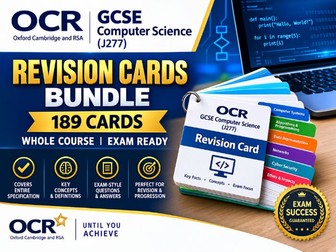
OCR GCSE Computer Science J277 Revision Cards | 189 Flashcards, All 11 Topics, Components 1 & 2Quick View
Siliconscholor

OCR GCSE Computer Science J277 Revision Cards | 189 Flashcards, All 11 Topics, Components 1 & 2

(0)
Master OCR GCSE Computer Science J277 with this comprehensive set of 189 Revision Cards from Silicon Scholar. Covering all 11 specification topics across Component 1 and Component 2, these carefully structured revision cards help students strengthen knowledge, improve recall and prepare effectively for GCSE examinations. Designed for active revision, quick knowledge checks and independent learning, this resource makes complex Computer Science concepts easier to review and remember. What’s included? 189 carefully structured revision cards. Complete coverage of all 11 J277 topics. Component 1 and Component 2 content. Essential definitions and technical terminology. Key concepts and specification knowledge. Short question-and-answer revision prompts. Programming and algorithm knowledge checks. Computer Systems revision. Computational Thinking and Programming revision. Complete specification coverage: Component 1 – Computer Systems 1.1 Systems Architecture 1.2 Memory and Storage 1.3 Computer Networks, Connections and Protocols 1.4 Network Security 1.5 Systems Software 1.6 Ethical, Legal, Cultural and Environmental Impacts Component 2 – Computational Thinking, Algorithms and Programming 2.1 Algorithms 2.2 Programming Fundamentals 2.3 Producing Robust Programs 2.4 Boolean Logic 2.5 Programming Languages and Integrated Development Environments Why use these revision cards? Encourage active recall rather than passive reading. Strengthen long-term knowledge retention. Make daily revision more manageable. Reinforce essential definitions and concepts. Identify knowledge gaps quickly. Support independent study and classroom revision. Build confidence across the complete J277 specification. Ideal for: OCR GCSE Computer Science J277 students. Students targeting Grades 7–9. Teachers planning retrieval practice. Tutors delivering targeted revision. Independent learners preparing for examinations. Why Silicon Scholar? Silicon Scholar specialises in professionally developed, structured and examination-focused Computer Science resources. We believe effective revision should be organised, engaging and purposeful. 189 Cards. 11 Topics. 2 Components. Complete Revision Coverage. Silicon Scholar – Empowering Computer Science Success. Independent educational resource. Not affiliated with or endorsed by OCR.
OCR GCSE Computer Science J277 Complete Revision Pack | All Topics, Exam Questions & PracticeQuick View
Siliconscholor

OCR GCSE Computer Science J277 Complete Revision Pack | All Topics, Exam Questions & Practice

(0)
Prepare for OCR GCSE Computer Science J277 with the Silicon Scholar COMPLETE Revision Pack – a comprehensive resource designed to help students master the full specification, strengthen subject knowledge and build examination confidence. Covering both Component 1 and Component 2, this revision pack brings together essential Computer Science concepts, structured revision activities and exam-focused practice in one organised resource. What’s included: Complete OCR GCSE Computer Science J277 specification coverage. Component 1 and Component 2 revision materials. Topic-by-topic revision and learning activities. Essential terminology and key concept explanations. Exam-style questions and practice exercises. Knowledge recall and understanding checks. Binary, hexadecimal and data representation practice. Algorithm design and pseudocode exercises. Programming and debugging activities. Computational thinking challenges. Examination preparation and targeted revision tasks. Complete specification coverage: Component 1 – Computer Systems 1.1 Systems Architecture 1.2 Memory and Storage 1.3 Computer Networks, Connections and Protocols 1.4 Network Security 1.5 Systems Software 1.6 Ethical, Legal, Cultural and Environmental Impacts Component 2 – Computational Thinking, Algorithms and Programming 2.1 Algorithms 2.2 Programming Fundamentals 2.3 Producing Robust Programs 2.4 Boolean Logic 2.5 Programming Languages and Integrated Development Environments Why students will benefit: Build strong understanding across the entire specification. Organise revision topic by topic. Strengthen theoretical and practical programming knowledge. Apply concepts to examination-style questions. Identify areas requiring further improvement. Develop confidence and effective exam technique. Prepare systematically for final GCSE examinations. Ideal for: OCR GCSE Computer Science J277 students. Students targeting Grades 7–9. Teachers and Computer Science departments. GCSE tutors and revision specialists. Independent learners preparing for examinations. Why Silicon Scholar? Silicon Scholar specialises in professionally developed, structured and examination-focused Computer Science resources. Our goal is to make GCSE revision more organised, purposeful and effective through high-quality learning and assessment materials. One Complete Pack. Two Components. Every J277 Topic. Silicon Scholar – Empowering Computer Science Success. Independent educational resource. Not affiliated with or endorsed by OCR.
OCR GCSE Computer Science J277 Component 1 — Computer Systems  Complete Revision PackQuick View
Siliconscholor

OCR GCSE Computer Science J277 Component 1 — Computer Systems Complete Revision Pack

(0)
Master OCR GCSE Computer Science J277 Component 1 – Computer Systems with this comprehensive revision and examination preparation pack from Silicon Scholar. Designed to help students develop strong subject knowledge, understand challenging concepts and improve examination performance, this resource provides structured revision and targeted practice across the complete Computer Systems specification. What’s included: Comprehensive Component 1 revision materials. Topic-by-topic learning and revision activities. Clear explanations of essential Computer Science concepts. Exam-style questions and practice exercises. Knowledge recall and understanding checks. Technical terminology and key definitions. Calculation and problem-solving activities. Application-based examination questions. Structured revision and exam preparation tasks. Complete specification coverage: 1.1: Systems Architecture 1.2: Memory and Storage 1.3: Computer Networks, Connections and Protocols 1.4: Network Security 1.5: Systems Software 1.6: Ethical, Legal, Cultural and Environmental Impacts of Digital Technology Skills students will develop: Understand computer architecture and processor functionality. Explain memory, storage and data representation. Understand network technologies and communication protocols. Identify cybersecurity threats and protection methods. Explain the purpose of operating systems and utility software. Evaluate the wider impacts of digital technology. Apply knowledge to unfamiliar examination scenarios. Develop accurate and well-structured exam responses. Ideal for: OCR GCSE Computer Science J277 students. Students targeting Grades 7–9. Teachers delivering Component 1. GCSE revision and intervention programmes. Tutors and independent learners. Why Silicon Scholar? Silicon Scholar specialises in professionally developed, structured and examination-focused Computer Science resources. Our materials transform complex Computer Science topics into manageable learning experiences through clear explanations, purposeful practice and systematic revision. Understand Computer Systems. Strengthen Your Knowledge. Master Component 1. Silicon Scholar – Empowering Computer Science Success. Independent educational resource. Not affiliated with or endorsed by OCR.
OCR GCSE Computer Science J277 Complete Exam Success BundleQuick View
Siliconscholor

OCR GCSE Computer Science J277 Complete Exam Success Bundle

(0)
OCR GCSE Computer Science J277 Complete Exam Success Bundle Give your students the knowledge, confidence and exam technique they need to succeed in OCR GCSE Computer Science (J277). The Complete Exam Success Bundle from Silicon Scholar is a comprehensive teaching, revision and exam-preparation resource designed to support students throughout their GCSE Computer Science journey. Bringing together essential revision materials, exam-style practice and assessment resources, this bundle helps students strengthen subject knowledge, identify weaknesses and develop the skills needed to tackle challenging examination questions. What This Bundle Supports Complete Specification Coverage: Supports learning and revision across OCR GCSE Computer Science J277 Components 1 and 2. Knowledge and Understanding: Reinforces key concepts, terminology and technical subject knowledge. Exam-Style Practice: Helps students become familiar with examination question formats and command words. Extended-Response Skills: Develops the ability to construct accurate, detailed and well-explained answers. Problem-Solving and Programming: Supports computational thinking, algorithm design, pseudocode and Python programming. Assessment and Progress: Helps teachers identify misconceptions, monitor progress and target intervention. Independent Revision: Encourages structured revision, retrieval practice and greater learner confidence. Ideal For GCSE Computer Science students preparing for OCR J277 examinations. Teachers delivering OCR GCSE Computer Science. Department-wide revision and assessment programmes. Mock examination preparation and targeted intervention. Homework, independent study and classroom practice. Why Choose Silicon Scholar? Silicon Scholar resources are designed to make Computer Science teaching more structured, engaging and assessment-focused. This bundle provides a practical foundation for building knowledge, improving exam technique and preparing students for success. Prepare smarter. Practise effectively. Achieve more. Please note: This is an independently produced educational resource. It is not affiliated with, endorsed by or approved by OCR.
OCR GCSE Computer Science J277 Component 1 80-Mark Practice Paper, Mark Scheme & Model AnswersQuick View
Siliconscholor

OCR GCSE Computer Science J277 Component 1 80-Mark Practice Paper, Mark Scheme & Model Answers

(0)
Prepare for OCR GCSE Computer Science J277 Component 1 with this comprehensive 80-Mark Practice Paper from Silicon Scholar. Designed to develop examination confidence, test specification knowledge and improve answer quality, this resource provides realistic exam-style practice across all six Component 1 topics, supported by a mark scheme and model answers. What’s included: Complete 80-mark Component 1 practice paper. Exam-style questions covering Topics 1.1–1.6. Short-answer and extended-response questions. Multiple-choice and knowledge-based questions. Binary, hexadecimal and data calculation questions. Application-based problem-solving scenarios. Detailed mark scheme. Model answers with clear explanations. Examination-focused assessment practice. Complete specification coverage: 1.1: Systems Architecture 1.2: Memory and Storage 1.3: Computer Networks, Connections and Protocols 1.4: Network Security 1.5: Systems Software 1.6: Ethical, Legal, Cultural and Environmental Impacts of Digital Technology Skills students will develop: Apply Computer Science knowledge to unfamiliar scenarios. Solve numerical and data representation problems. Explain technical concepts using accurate terminology. Develop structured and well-developed written responses. Understand how marks are awarded. Identify misconceptions and knowledge gaps. Improve examination timing, accuracy and confidence. Ideal for: OCR GCSE Computer Science J277 students. Students targeting Grades 7–9. Teachers preparing classroom mock examinations. Tutors delivering targeted exam preparation. Independent revision and self-assessment. Why Silicon Scholar? Silicon Scholar specialises in professionally developed, structured and examination-focused Computer Science assessment resources. We combine realistic examination practice, detailed marking guidance and model responses to help students understand not only what they know, but how to demonstrate it effectively in an examination. 80 Marks. Six Topics. One Goal: Exam Mastery. Silicon Scholar – Empowering Computer Science Success. Independent educational resource. Not an official OCR examination paper and not affiliated with or endorsed by OCR.
OCR GCSE Computer Science J277 COMPLETE Revision System – All Topics, Exam Practice & MocksQuick View
Siliconscholor

OCR GCSE Computer Science J277 COMPLETE Revision System – All Topics, Exam Practice & Mocks

(0)
Take complete control of OCR GCSE Computer Science J277 revision with the Silicon Scholar COMPLETE Revision System. This comprehensive revision and examination preparation resource is designed to help students master the entire J277 specification, strengthen subject knowledge, identify weaknesses and develop the examination skills needed to achieve their target grades. Combining structured topic revision, exam-style practice and mock examination preparation, this system provides a complete approach to GCSE Computer Science success. What’s included: Comprehensive revision coverage of the complete J277 specification. Component 1: Computer Systems (Topics 1.1–1.6). Component 2: Computational Thinking, Algorithms and Programming (Topics 2.1–2.5). Topic-by-topic revision materials. Exam-style questions and targeted practice. Knowledge checks and assessment activities. Programming and algorithm challenges. Binary, hexadecimal and data representation practice. Debugging and problem-solving exercises. Mock examination papers. Mark schemes and model answers. Structured revision and exam preparation activities. Complete OCR J277 specification coverage: Component 1 – Computer Systems 1.1 Systems Architecture 1.2 Memory and Storage 1.3 Computer Networks, Connections and Protocols 1.4 Network Security 1.5 Systems Software 1.6 Ethical, Legal, Cultural and Environmental Impacts Component 2 – Computational Thinking, Algorithms and Programming 2.1 Algorithms 2.2 Programming Fundamentals 2.3 Producing Robust Programs 2.4 Boolean Logic 2.5 Programming Languages and Integrated Development Environments Key student benefits: Develop a complete understanding of the specification. Strengthen knowledge through structured revision. Improve computational thinking and programming skills. Practise different examination question styles. Identify weaknesses and target areas for improvement. Develop confidence through realistic mock examinations. Improve examination technique and time management. Ideal for: OCR GCSE Computer Science J277 students. Students targeting Grades 7–9. Teachers planning comprehensive revision programmes. Tutors delivering structured GCSE intervention. Independent learners preparing for final examinations. Why Silicon Scholar? Silicon Scholar specialises in professionally developed, structured and examination-focused Computer Science teaching, revision and assessment resources. Our approach brings together knowledge, practice, assessment and improvement to create a complete learning journey. All Topics. Structured Revision. Exam Practice. Mock Examinations. Silicon Scholar – Empowering Computer Science Success. Independent educational resource. Not affiliated with or endorsed by OCR.
OCR GCSE Computer Science J277 Programming Diagnostic  60 Questions  RAG Tracker  AnswersQuick View
Siliconscholor

OCR GCSE Computer Science J277 Programming Diagnostic 60 Questions RAG Tracker Answers

(0)
**OCR GCSE COMPUTER SCIENCE J277 PROGRAMMING DIAGNOSTIC ASSESSMENT ** 60 Questions | RAG Progress Tracker | Complete Answers Identify programming knowledge gaps, assess student understanding and monitor progress with this comprehensive Programming Diagnostic Assessment, designed specifically for OCR GCSE Computer Science J277. Featuring 60 structured diagnostic questions, this resource helps teachers evaluate students’ programming knowledge, identify areas requiring intervention and track improvement using a practical Red, Amber and Green (RAG) progress tracking system. WHAT’S INCLUDED? 60 programming diagnostic questions. Topic-based assessment activities. Pseudocode and programming questions. Algorithm tracing and problem-solving exercises. Programming knowledge assessment. RAG (Red, Amber, Green) progress tracker. Student performance monitoring. Topic-level strengths and weaknesses identification. Complete answers and marking support. KEY ASSESSMENT AREAS Variables and constants. Data types and type conversion. Input and output. Assignment statements. Arithmetic and comparison operators. Boolean logic and expressions. Selection and nested selection. FOR, WHILE and REPEAT UNTIL loops. Nested iteration. Arrays and lists. String manipulation. Procedures and functions. Parameters and return values. Searching and sorting algorithms. File handling. Trace tables and dry running. Debugging and error identification. Pseudocode interpretation and development. RAG TRACKING SYSTEM Use the included RAG tracker to monitor individual student performance and identify areas requiring additional support. RED: Student requires significant support and targeted intervention. AMBER: Student demonstrates partial understanding and needs further practice. GREEN: Student demonstrates secure understanding of the topic. The tracker helps teachers identify learning gaps, prioritise intervention and monitor progress over time. KEY BENEFITS Quickly identifies programming knowledge gaps. Provides a structured 60-question diagnostic assessment. Supports targeted intervention and differentiated teaching. Tracks student progress using a RAG system. Strengthens pseudocode and algorithmic understanding. Helps students develop computational thinking skills. Supports examination preparation and revision. Includes complete answers for efficient marking. IDEAL FOR OCR GCSE Computer Science J277 students. Year 10 and Year 11 learners. Computer Science teachers. Heads of Computer Science Departments. Programming intervention programmes. Baseline and diagnostic assessments. Revision and examination preparation. SILICON SCHOLAR – Quality Resources for Computer Science Education.
OCR GCSE COMPUTER SCIENCE J277 PROGRAMMING CHALLENGE WORKBOOK — 200 PROBLEMSQuick View
Siliconscholor

OCR GCSE COMPUTER SCIENCE J277 PROGRAMMING CHALLENGE WORKBOOK — 200 PROBLEMS

(0)
Product Title OCR GCSE Computer Science J277 Programming Challenge Workbook – 200 Problems Product Description Develop programming confidence and strengthen problem-solving skills with this comprehensive OCR GCSE Computer Science J277 Programming Challenge Workbook, featuring 200 programming problems designed to support students studying Component 2: Computational Thinking, Algorithms and Programming. This workbook provides structured programming practice to help students apply computational thinking, develop logical solutions, write effective code and prepare for GCSE examination-style programming questions. What’s Inside 200 Programming Problems covering a range of GCSE programming concepts and skills. Programming challenges designed to develop logical thinking and computational problem-solving. Practical exercises involving pseudocode and programming concepts. Tasks focusing on selection, iteration and sequence. Problems involving variables, data types, operators and input/output. Challenges covering arrays, lists and string manipulation. Exercises involving procedures, functions and parameters. Algorithm development and implementation tasks. Opportunities to practise debugging, testing and improving solutions. Progressive challenges to develop confidence and programming independence. Key Skills Developed Students will develop their ability to: Break complex problems into smaller, manageable tasks. Design and implement algorithms. Apply programming constructs accurately. Use selection and iteration effectively. Work with data structures and manipulate data. Identify and correct programming errors. Test solutions and evaluate program behaviour. Develop clear, logical and efficient programming solutions. Learning Benefits Provides extensive programming practice. Strengthens computational thinking and algorithmic reasoning. Builds confidence in solving unfamiliar programming problems. Supports preparation for OCR GCSE Computer Science J277 assessments. Encourages independent learning and structured problem-solving. Suitable for classroom activities, homework, revision and extension tasks. Ideal For OCR GCSE Computer Science J277 students (Years 10–11). Computer Science teachers. Classroom programming practice. Homework and independent study. Revision and examination preparation. Programming intervention and enrichment activities. SILICON SCHOLAR – Quality Resources for Computer Science Education.
OCR GCSE Computer Science J277: 30-Day Programming Bootcamp – Python & Pseudocode, 150 Tasks + AnsweQuick View
Siliconscholor

OCR GCSE Computer Science J277: 30-Day Programming Bootcamp – Python & Pseudocode, 150 Tasks + Answe

(0)
OCR GCSE Computer Science J277 Programming Bootcamp 30-Day Python & Pseudocode, 150 Tasks + Answers OCR GCSE COMPUTER SCIENCE (J277) 30-DAY PROGRAMMING BOOTCAMP Python & Pseudocode | 150 Programming Tasks | Complete Answers Ready to transform your GCSE Computer Science programming skills? This intensive 30-Day Programming Bootcamp is designed to help OCR GCSE Computer Science (J277) students build confidence, strengthen problem-solving skills and develop the programming knowledge needed to tackle examination questions successfully. With 150 carefully structured programming tasks and answers, students can progress from fundamental programming concepts to challenging algorithmic problems using Python and pseudocode. WHAT’S INCLUDED? 150 structured programming tasks. A progressive 30-day learning programme. Python coding practice. Pseudocode exercises. Comprehensive answers and solutions. Algorithm design and implementation challenges. Examination-style programming practice. Beginner-to-advanced difficulty progression. TOPICS COVERED Variables, constants and data types. Input, output and operators. Sequence, selection and iteration. IF statements and nested selection. FOR and WHILE loops. String manipulation. Arrays and lists. Subroutines, procedures and functions. Validation and defensive programming. Searching and sorting algorithms. File handling. Testing, debugging and error correction. Computational thinking and algorithm development. THE 30-DAY LEARNING JOURNEY Students follow a structured programme that encourages consistent daily practice, gradually building their programming knowledge and confidence. The activities move from basic coding techniques to more complex programming challenges, encouraging independent thinking and examination readiness. IDEAL FOR OCR GCSE Computer Science (J277) students. Year 10 and Year 11 learners. GCSE programming revision. Classroom teaching and homework. Independent learning and coding practice. Teachers seeking structured programming activities. WHY CHOOSE THIS BOOTCAMP? Rather than simply memorising programming syntax, students learn how to analyse problems, develop algorithms, write code, test solutions and correct errors. The combination of Python and pseudocode helps learners strengthen both practical programming ability and the algorithmic thinking required for GCSE Computer Science. 30 DAYS. 150 TASKS. TWO PROGRAMMING LANGUAGES. ONE GOAL: PROGRAMMING EXCELLENCE! EXAM EXCELLENCE SERIES – Helping students move from coding basics to programming mastery. Curriculum: OCR GCSE Computer Science (J277) Resource type: Programming Workbook / Coding Activities / Revision Resource
OCR GCSE Computer Science J277 Revision & Recap Grids – All Topics | Exam PreparationQuick View
Siliconscholor

OCR GCSE Computer Science J277 Revision & Recap Grids – All Topics | Exam Preparation

(0)
OCR GCSE COMPUTER SCIENCE J277 REVISION & RECAP GRIDS Knowledge Retrieval | Topic Summaries | Exam Preparation Help students consolidate their knowledge, strengthen memory retention and revise key Computer Science concepts with these structured Revision & Recap Grids, designed for the OCR GCSE Computer Science J277 specification. These grids provide an organised and engaging approach to reviewing essential topics, recalling important definitions and identifying areas that require further revision. Ideal for lesson starters, revision sessions, homework and examination preparation. WHAT’S INCLUDED? Structured revision and recap grids. Topic-based knowledge retrieval activities. Key terminology and definition exercises. Short-answer revision prompts. Concept recall and understanding tasks. Specification-focused revision activities. Opportunities for independent and collaborative learning. TOPIC COVERAGE COMPONENT 1 – COMPUTER SYSTEMS 1.1 Systems Architecture. 1.2 Memory and Storage. 1.3 Computer Networks, Connections and Protocols. 1.4 Network Security. 1.5 Systems Software. 1.6 Ethical, Legal, Cultural and Environmental Impacts. COMPONENT 2 – COMPUTATIONAL THINKING, ALGORITHMS AND PROGRAMMING 2.1 Algorithms. 2.2 Programming Fundamentals. 2.3 Producing Robust Programs. 2.4 Boolean Logic. 2.5 Programming Languages and IDEs. KEY BENEFITS Reinforces knowledge across all 11 OCR GCSE J277 topics. Supports active recall and knowledge retention. Encourages independent revision. Helps students identify knowledge gaps. Provides structured revision opportunities. Supports retrieval practice and classroom assessment. Saves teachers valuable preparation time. HOW TO USE THESE GRIDS Lesson Starters: Begin lessons with quick knowledge-retrieval activities. Plenary Tasks: Review key concepts at the end of lessons. Homework: Encourage regular independent revision. Revision Sessions: Consolidate knowledge before examinations. Intervention: Identify and address gaps in student understanding. Group Activities: Encourage collaborative learning and discussion. IDEAL FOR OCR GCSE Computer Science J277 students. Year 10 and Year 11 learners. Computer Science teachers. Classroom revision and recap sessions. Homework and independent study. Mock examination preparation. SILICON SCHOLAR – Quality Resources for Computer Science Education. Make revision more structured, focused and effective with these OCR GCSE Computer Science J277 Revision & Recap Grids.ZAZ
OCR GCSE Computer Science J277 Trace Tables Mastery – Algorithm Tracing & Worked AnswersQuick View
Siliconscholor

OCR GCSE Computer Science J277 Trace Tables Mastery – Algorithm Tracing & Worked Answers

(0)
OCR GCSE COMPUTER SCIENCE J277 TRACE TABLES MASTERY Algorithm Tracing | Dry Running | Variable Tracking | Complete Answers Help students develop confidence and accuracy in algorithm tracing with this comprehensive Trace Tables Mastery resource, designed for the OCR GCSE Computer Science J277 specification. This resource focuses on developing students’ ability to execute algorithms step by step, track variable changes, interpret pseudocode and predict program outputs. Through structured exercises and progressively challenging activities, students will strengthen their computational thinking and problem-solving skills. WHAT’S INCLUDED? Structured trace table practice. Algorithm dry-running exercises. Variable tracking activities. Pseudocode interpretation questions. Selection and iteration challenges. Nested loop tracing exercises. Output prediction activities. Exam-style practice questions. Complete answers and worked solutions. KEY LEARNING AREAS 1. Fundamentals of Trace Tables Understanding trace table structure. Recording variable values. Assignment statements. Tracking inputs and outputs. 2. Selection and Conditions IF and ELSE statements. Nested selection. Comparison operators. Boolean expressions. 3. Iteration and Loops FOR loops. WHILE loops. REPEAT UNTIL loops. Nested loops. 4. Advanced Algorithm Tracing Multiple variable tracking. Arrays and indexed values. String manipulation. Complex pseudocode. Predicting final outputs. KEY BENEFITS Strengthens computational thinking. Improves algorithm tracing accuracy. Develops pseudocode interpretation skills. Builds confidence in dry-running algorithms. Reinforces understanding of selection and iteration. Supports OCR GCSE examination preparation. Encourages independent practice and problem-solving. IDEAL FOR OCR GCSE Computer Science J277 students. Year 10 and Year 11 learners. Computer Science teachers. Classroom teaching and practical exercises. Homework and independent revision. Examination preparation and targeted intervention. SILICON SCHOLAR – Quality Resources for Computer Science Education. Master the logic behind algorithms, improve tracing accuracy and prepare students to tackle OCR GCSE Computer Science questions with confidence.
OCR GCSE Computer Science J277 Complete Question Bank & Revision Flashcards – All 11 TopicsQuick View
Siliconscholor

OCR GCSE Computer Science J277 Complete Question Bank & Revision Flashcards – All 11 Topics

(0)
OCR GCSE COMPUTER SCIENCE J277 QUESTION BANK & REVISION FLASHCARDS All 11 Topics | Component 1 & 2 | Knowledge Recall | Exam Preparation Strengthen students’ subject knowledge, improve memory retention and develop examination confidence with this comprehensive Question Bank and Revision Flashcards resource, designed for the OCR GCSE Computer Science J277 specification. Combining structured question practice with quick-fire revision flashcards, this resource provides an effective way for students to review essential concepts, test their understanding and prepare for their GCSE examinations. WHAT’S INCLUDED? Comprehensive Computer Science question bank. Topic-based revision questions. Revision flashcards covering key concepts. Short-answer and knowledge-recall questions. Essential terminology and definition practice. Quick-fire knowledge-check activities. Examination-focused revision practice. Coverage of both Component 1 and Component 2. COMPLETE SPECIFICATION COVERAGE COMPONENT 1 – COMPUTER SYSTEMS 1.1 Systems Architecture. 1.2 Memory and Storage. 1.3 Computer Networks, Connections and Protocols. 1.4 Network Security. 1.5 Systems Software. 1.6 Ethical, Legal, Cultural and Environmental Impacts. COMPONENT 2 – COMPUTATIONAL THINKING, ALGORITHMS AND PROGRAMMING 2.1 Algorithms. 2.2 Programming Fundamentals. 2.3 Producing Robust Programs. 2.4 Boolean Logic. 2.5 Programming Languages and IDEs. KEY BENEFITS Reinforces knowledge across all 11 OCR GCSE J277 topics. Supports active recall and knowledge retention. Develops understanding of essential Computer Science terminology. Encourages independent revision and self-assessment. Provides flexible question-based learning. Helps students identify areas requiring further revision. Supports examination preparation and classroom assessment. HOW TO USE THIS RESOURCE Flashcard Revision: Test definitions and key concepts. Classroom Starters: Use quick-fire questions to recap previous lessons. Group Activities: Encourage collaborative question-and-answer sessions. Homework: Support regular independent knowledge practice. Revision Sessions: Review topics across both components. Self-Assessment: Identify strengths and knowledge gaps. IDEAL FOR OCR GCSE Computer Science J277 students. Year 10 and Year 11 learners. Computer Science teachers. Classroom revision and knowledge checks. Homework and independent study. Mock examination preparation. SILICON SCHOLAR – Quality Resources for Computer Science Education. Make revision more engaging, structured and effective with a complete question bank and flashcard collection covering OCR GCSE Computer Science J277.
OCR GCSE Computer Science J277: 200 Programming Challenges | Foundation to Grade 9Quick View
Siliconscholor

OCR GCSE Computer Science J277: 200 Programming Challenges | Foundation to Grade 9

(0)
EXAM EXCELLENCE SERIES – OCR GCSE COMPUTER SCIENCE (J277) 200 Original Programming Challenges | Foundation to Grade 9 | Complete Mastery Workbook Take your GCSE Computer Science programming skills to the next level with this comprehensive collection of 200 original programming challenges, carefully structured to develop coding confidence, computational thinking and exam-ready problem-solving skills. Designed for students studying OCR GCSE Computer Science (J277), this workbook provides a progressive learning journey from beginner-level programming to advanced Grade 9 and mastery challenges. WHAT’S INCLUDED? 200 original programming challenges. Progressive difficulty levels from Foundation to Grade 9. Python programming practice. Real-world programming scenarios. Computational thinking and problem-solving activities. Examination-style programming questions. Algorithm development and implementation. Challenging extension and mastery tasks. Opportunities to develop independent coding skills. SKILLS DEVELOPED Students will practise: Variables, data types and operators. Sequence, selection and iteration. Input and output. Arrays and string manipulation. Subprograms, procedures and functions. File handling. Validation and defensive programming. Searching and sorting algorithms. Testing, debugging and error correction. Computational thinking and algorithmic problem-solving. PERFECT FOR: OCR GCSE Computer Science (J277) students. Classroom programming lessons. Homework and independent study. Revision and examination preparation. Programming clubs and enrichment activities. Teachers looking for structured coding practice. WHY CHOOSE THIS WORKBOOK? Unlike ordinary coding worksheets, this challenge collection takes students beyond basic syntax. Each level encourages increasingly sophisticated thinking, helping learners develop the confidence to analyse problems, design algorithms, write efficient code and tackle unfamiliar examination-style programming tasks. EXAM EXCELLENCE SERIES Build confidence. Strengthen coding skills. Master programming. Aim for Grade 9! An excellent resource for students and teachers who want to turn programming practice into programming excellence.
OCR GCSE Computer Science J277 Predicted Exam Papers 2026–2027 with Mark SchemesQuick View
Siliconscholor

OCR GCSE Computer Science J277 Predicted Exam Papers 2026–2027 with Mark Schemes

(0)
OCR GCSE COMPUTER SCIENCE (J277) PREDICTED EXAM PAPERS 2026–2027 Exam Practice | Realistic Questions | Mark Schemes | Exam Preparation Give your students the confidence and preparation they need to approach their OCR GCSE Computer Science examinations with confidence! This comprehensive predicted exam paper resource is designed to support students studying OCR GCSE Computer Science (J277) as they prepare for their 2026–2027 examinations. Featuring carefully developed, original examination-style questions, this resource provides valuable opportunities to practise key concepts, improve exam technique and identify areas requiring further revision. WHAT’S INCLUDED? Original predicted examination-style papers. Questions covering OCR GCSE Computer Science J277. A range of Foundation, intermediate and challenging questions. Structured exam practice across key syllabus areas. Detailed mark schemes and suggested answers. Application-based and scenario-driven questions. Problem-solving and computational thinking activities. Opportunities for independent revision and self-assessment. TOPICS COVERED PAPER 1: COMPUTER SYSTEMS Systems architecture. Memory and storage. Computer networks, connections and protocols. Network security. Systems software. Ethical, legal, cultural and environmental impacts of digital technology. PAPER 2: COMPUTATIONAL THINKING, ALGORITHMS AND PROGRAMMING Algorithms and computational thinking. Programming fundamentals. Data types and structures. Boolean logic. Translators and facilities of languages. IDEs. Programming and problem-solving techniques. WHY USE THESE PREDICTED PAPERS? Develop familiarity with examination-style questions. Practise applying knowledge to unfamiliar scenarios. Strengthen subject knowledge and exam technique. Identify strengths and areas for improvement. Build confidence before the examinations. Support structured classroom revision and independent study. IDEAL FOR OCR GCSE Computer Science (J277) students. Year 10 and Year 11 learners. GCSE examination revision. Teachers planning mock examinations. Classroom assessment and homework. Independent exam preparation. EXAM EXCELLENCE SERIES Practise strategically. Revise confidently. Achieve excellence. Important: These are independently produced predicted examination-style practice papers. They are not official OCR examination papers and are not endorsed by OCR. The questions are not guaranteed to appear in future examinations. Exam board: OCR Qualification: GCSE Computer Science Specification: J277 Academic years: 2026–2027
OCR GCSE Computer Science J277 Pseudocode Mastery – 100 Tasks, Reference Language & AnswersQuick View
Siliconscholor

OCR GCSE Computer Science J277 Pseudocode Mastery – 100 Tasks, Reference Language & Answers

(0)
EXAM EXCELLENCE SERIES Pseudocode Mastery OCR GCSE Computer Science J277 Develop students’ pseudocode skills and strengthen their ability to understand, write, trace and interpret algorithms with this comprehensive Pseudocode Mastery Workbook, designed specifically for OCR GCSE Computer Science (J277). Featuring 100 carefully structured tasks, this resource helps students build confidence in computational thinking, algorithm design and exam-style pseudocode questions. What’s Included? 100 pseudocode practice tasks. OCR GCSE Computer Science J277 specification alignment. OCR pseudocode reference language. Structured exercises covering essential programming concepts. Algorithm writing and interpretation activities. Practice with variables, selection, iteration and data structures. Complete answers to support independent learning and assessment. Key Learning Areas Variables and data types. Input and output. Assignment statements. Sequence, selection and iteration. FOR, WHILE and REPEAT UNTIL loops. IF, ELSE and nested selection. Arrays and string manipulation. Procedures and functions. Boolean expressions and operators. Algorithm tracing and problem-solving. Why Choose This Resource? Develops confidence in writing exam-standard pseudocode. Strengthens logical and computational thinking. Provides extensive opportunities for independent practice. Helps students identify and correct programming errors. Supports examination preparation and classroom assessment. Includes answers for effective self-assessment. Ideal For OCR GCSE Computer Science J277 students. Years 10 and 11 Computer Science teachers. Classroom practice and homework. Revision and examination preparation. Intervention and independent study. EXAM EXCELLENCE SERIES Give students the practice they need to master pseudocode, develop algorithmic thinking and approach OCR GCSE Computer Science examinations with confidence. Silicon Scholar – Supporting Excellence in Computer Science Education.
OCR GCSE Computer Science J277 Network Security Mastery – Topic 1.4 Questions & AnswersQuick View
Siliconscholor

OCR GCSE Computer Science J277 Network Security Mastery – Topic 1.4 Questions & Answers

(0)
OCR GCSE COMPUTER SCIENCE — J277 NETWORK SECURITY MASTERY Topic 1.4 – Threats, Prevention & Answers Prepare students for OCR GCSE Computer Science examinations with this focused Network Security Mastery resource, covering Topic 1.4: Network Security. Designed to develop students’ understanding of cybersecurity threats, network vulnerabilities and effective prevention methods, this resource provides structured learning and practice opportunities to strengthen examination knowledge. What’s Included? Comprehensive Topic 1.4 revision material. Network security practice questions. Cybersecurity threats and attack methods. Prevention and protection techniques. Exam-focused questions. Complete answers and marking support. Key Learning Areas Malware and malicious software. Viruses, worms and Trojan horses. Phishing and social engineering. Brute-force attacks. Denial-of-Service (DoS) attacks. Data interception and theft. SQL injection. Firewalls and network protection. Encryption and secure communication. User access levels and authentication. Penetration testing and security measures. Key Benefits Strengthens understanding of network security concepts. Develops cybersecurity awareness. Reinforces essential examination terminology. Provides opportunities for independent practice. Helps students identify and understand security threats. Supports effective revision and exam preparation. Ideal For OCR GCSE Computer Science J277 students. Year 10 and Year 11 learners. Computer Science teachers. Classroom assessments and revision. Homework and independent study. Examination preparation. Silicon Scholar – Quality Resources for Computer Science Education. Help your students master network security concepts and build the knowledge needed to tackle OCR GCSE Computer Science examinations with confidence.
OCR GCSE J277 Programming Languages & IDEs – Compiler vs Interpreter PPT & WorksheetQuick View
Siliconscholor

OCR GCSE J277 Programming Languages & IDEs – Compiler vs Interpreter PPT & Worksheet

(0)
OCR GCSE COMPUTER SCIENCE J277 PROGRAMMING LANGUAGES & IDEs Compiler vs Interpreter | Complete Teaching & Assessment Pack Deliver an engaging and specification-focused lesson on Programming Languages and Integrated Development Environments (IDEs) with this complete OCR GCSE Computer Science J277 teaching resource. Designed to help students understand programming language translators, compare compilers and interpreters, and explore the essential features of an IDE. WHAT’S INCLUDED? PowerPoint Presentation: Structured teaching slides explaining all key concepts. Student Worksheet: Topic-focused exercises and written activities. MCQ Assessment: Multiple-choice questions to test student understanding. Complete Answer Key: Answers for teachers, marking and independent revision. KEY LEARNING CONTENT 1. Programming Languages High-level and low-level languages. Machine code and assembly language. Source code and object code. 2. Programming Language Translators What is a compiler? What is an interpreter? Compiler vs interpreter comparison. Advantages and disadvantages. Differences in translation and execution. 3. Integrated Development Environments (IDEs) Purpose and functionality of an IDE. Code editors. Error diagnostics. Run-time environments. Translators. Auto-completion and auto-indentation. KEY BENEFITS Supports effective classroom instruction. Simplifies complex programming concepts. Reinforces OCR GCSE J277 specification knowledge. Develops analytical and comparison skills. Provides opportunities for independent practice. Includes assessment questions with answers. Saves valuable teacher preparation time. IDEAL FOR OCR GCSE Computer Science J277 students. Year 10 and Year 11 learners. Computer Science teachers. Classroom teaching and revision. Homework and independent learning. End-of-topic assessments. SILICON SCHOLAR Quality Resources for Computer Science Education. Equip your students with the knowledge and confidence to understand programming languages, translators and IDEs while preparing effectively for their OCR GCSE Computer Science examinations.