 Quick View
Loot Boxes, In-Game Spending & Skins: Gaming or Gambling? | KS3 PSHE Money & Online Safety Lesson
KS3 PSHE lesson: how loot boxes and in-game currencies work, when gaming becomes gambling, and how to set limits. PPTX, worksheet, answers.
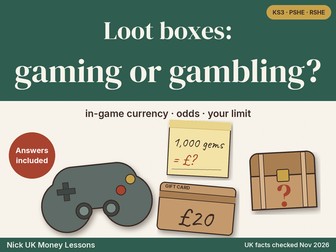
One ready-to-teach KS3 lesson on the money side of gaming: how loot boxes and in-game currencies hide the real price, what “2% chance” actually means for your wallet, and where the line between gaming and gambling sits in GB law. It’s built for the new RSHE line on gambling-like content, with no lecturing and no shaming of gamers. Nobody is asked what they spend or play: the game (Skyforge Arena), the students and every price are made up.
What’s inside
12 editable PowerPoint slides with speaker notes: gem-bundle starter, key words, Jay’s £20 gift card, odds and expected cost, the law, why it can still feel like gambling, protections, a made-up shop screen and a private limit plan
3-page B&W worksheet (PDF + DOCX): pence-per-gem table, key-word match, chest maths, an odds table, a gaming-or-gambling sort, “spot the pressure” and an exit ticket
Full answer sheet: every price, expected cost and probability worked out
2-page teacher notes: timings, a 30-minute cut, differentiation, sensitivity and safeguarding guidance, curriculum map and a UK fact-check box with sources
50–55 minutes, with a 30-minute cut marked
Students will
Convert in-game currency into real pounds (2,800 gems for £19.99 → one 300-gem chest is worth £2.14)
Work out the expected cost of a “rare” item at a stated 2% chance, and explain why it’s an average, not a guarantee (after 50 chests about 1 in 3 still don’t have it)
Tell an in-game purchase, a loot box and gambling apart, using the “can it be cashed out?” test
Spot pressure tactics (countdowns, “best value” stickers, gem-only prices) and safety features (drop rates, parental approval)
Name the protections that exist and set their own private spending and time limit
Maps to the DfE RSHE statutory guidance (in effect from 1 Sep 2026): risks of gambling-like content within gaming, including the accumulation of debt. Also supports PSHE economic wellbeing (managing risk in financial decisions) and KS3 Maths (unit pricing, probability).
UK facts checked Nov 2026 (DCMS, Gambling Commission, industry principles, PEGI): most loot boxes aren’t gambling under the Gambling Act 2005 because prizes can’t be cashed out; skins betting on unlicensed sites is illegal gambling; the 2023 industry principles are voluntary, not law; and PEGI’s 2026 rating changes (new games with paid random items are rated PEGI 16). Sources are listed in the teacher notes. No real games, platforms or stores are named.
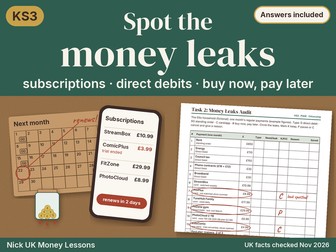
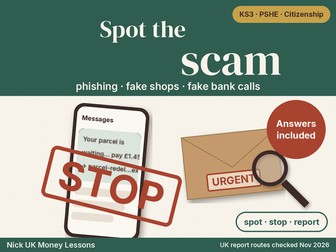
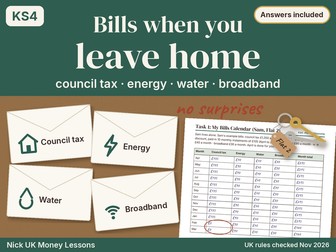
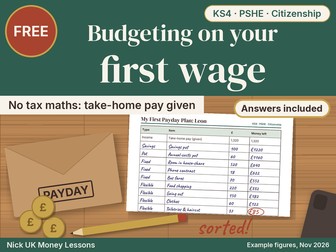
Also in this series: Christmas money & New Year savings goals (KS3) · Returns, refunds & gift cards (KS3) · Christmas on a budget (KS3) · Spot the scam (KS3) · Best value? Unit prices (KS3) · Spot the money leaks (KS3) · Bills when you leave home (KS4) · Budgeting on your first wage (KS4, free).
Educational resource, not financial advice. Example figures, Nov 2026.