Explaining structure in the creation of a character, in this case Scrooge - using the acronym : CATS and two quotes from the beginning and end of the text, A Christmas carol. Further - utilising comparatives to compare the two.
Character - how a character changes from the beginning to the end of the set text using language analysis
Analepsis - how a character changes using flashbacks and flashforwards (prolepsis)from the beginning to the end of the set text
Tension - how tension is used in the creation of a character from the beginning to the end of the set text
Setting - how the setting is used to develop the characterisation at the beginning and end of the set text
Every question covered on paper 1 and 2 together with the necessity to use SQIFIT and CODES and CAMPERRS
SQIFIT
statement
quotation
inference x 3
feel - how does it make the reader feel
imagine - what does it make the reader imagine
Think - why does the writer use it
CODES
colons
one word sentences
dashes
ellipses
sentence structure
camperrs
colours - exotic
alliteration
metaphor
personification
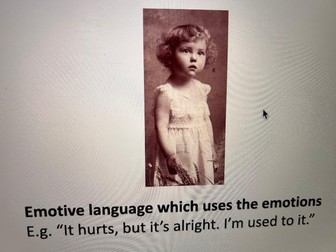
emotive language
rhetorical question
repetition
simile
A fun and visual chart to help students to learn the necessary labels for language analysis in both language and literature GCSE. If students don’t use the correct linguistic feature label they go down a level so it’s IMPERATIVE they are taught them thoroughly.
What the examiner is looking for - as an examiner I understand what is needed as a professional teacher and examiner.
So in this lesson we look at an exam question.
Then we look at another question and give a synopsis of how to approach it hitting all the necessary marking criteria.
The necessary thought process is given.
This needs repeated with other exam questions until the technique is understood and followed automatically by students.
List of sophisticated vocab to learn and use
Power points of 2 ways to improve your creative writing
The majority of English literature students know their set texts - some even learn quotes - but do not achieve as well as they should in the exam.It’s not just about answering the question…it’s more than that… and planning is everything.
But there is so much for students to remember so I created an acronym that ticks all the examiners’ marking criteria and is pivotal for students’ essay planning.
Context
Language analysis
Argument x 5
Structure
Interpretation
or CLASI.
A brief synopsis of key tragedy terminology together with structural terminology as a starter and with explanatory terms that will boost marks in the exams and show further reading around the subject.
 Quick View

 Quick View
 Quick View
 Quick View
 Quick View
 Quick View
 Quick View