Imaginative instructions to make a fairy potion to be used alongside sensory play, instructional writing, capacity challenges or more! I have included ingredients such as bicarb, vinegar, sprinkles etc that can be purchased easily at the supermarket. Great for EYFS or KS1. Open ended resource. Editable.
I have uploaded my own planning for this classic story by Allan and Janet Ahlberg, which took abut two weeks, and a handful of resources.
Lots of focus on retelling the story as per the Talk for Writing model of teaching, moving from imitate, to innovate to invent.
We supplemented this with roleplay and hotseating in Drama
We did lots of great cross curricular stuff inclusing burglar self portraits too and also organised a Police visit.
Children are to choose their character and decide on adjectives to describe aspects of their character - complete worksheet to plan their character description, which they will write in sentences next lesson.
There are three versions of this worksheet:
*Think of 6 adjectives
**Think of 8 adjectives
(OR, you could ask your children to think of 3 nouns and 3 adjectives / 4 nouns and 4 adjectives that go together)
***Write one adjective and noun pair into a sentence (if anyone is ready for sentence writing)
I loved this lesser known story and it sat perfectly within our superheroes topic.
I’ve added my creative writing planning, using talk for writing as a basis for our teaching style, and some of the links, ppts and worksheets that I used.
The link to the story to buy on Amazon is in my planning.
This was supplemented by lots of role-play and hot-seating in drama lessons
Here is my planning from when my class did Superhero Hotel by Abie Longstaff. They absolutely LOVED it and the cycle of planning went really well. You could split some of the lessons down further. We use the Talk for Writing approach at our school. More time could have been taken on retelling the story if you wanted to add more lessons at the beginning for role-play and hotseating.
I have provided some of my worksheets and resources too.
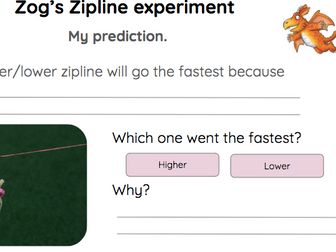
I’ve also added in a worksheet that we used in topic / Science for zipline experiments.
A powerpoint to support the input for a lesson creating their own wild things. Powerpoint is designed to support discussion about textures and to promote drawing skills.
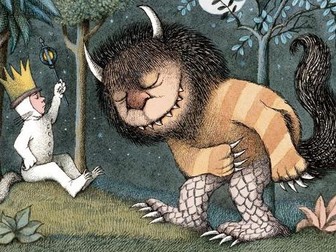
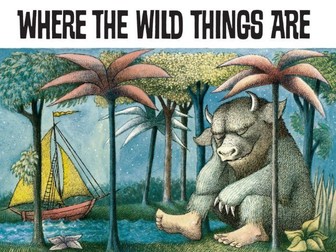
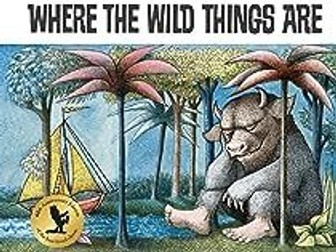
I have provided my planning for my Literacy / creative writing / Talk for Writing focus on Where the Wild Things Are. This was for Year 1 but it could be easily adapted for Year 2.
I have added some worksheets / editable resources
I have also added the ppt from my art lesson and some examples of their drawings.
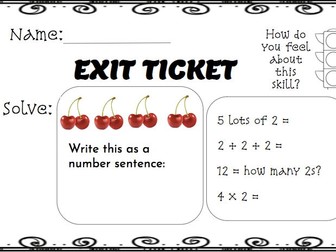
I find it really helpful to provide my early finishers with an exit ticket to allow them to assess their own understanding and to give them something to do that is related to the objective. I have attached a range of exit tickets that I have made for various Year 1 maths lessons, as editable Powerpoints! Have fun creating your own too! Can be adapted for any year group!
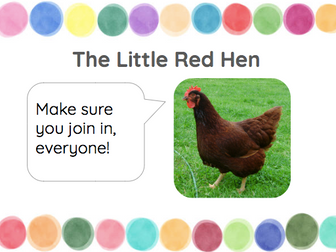
I have used these resources as part of our work on the Little Red Hen - usually carried out in the autumn term of Year 1, but would be fab for Reception Class or Year 2 if differentiated.
I use the Talk for Writing method to teach the story using the Powerpoint and we learn this off by heart. We map the story ourselves on the flipchart, or the children do their own version.
Once the children can imitate the story we move onto innovation. I have created innovation worksheets for them to come up with their own ideas for the main character, setting, the corn and the secondary characters.
When story mapping our innovated ideas I usually give them this scaffolded story map to help them with the structure whilst they slot in their own ideas.
The series of lessons can end here or can be followed by a big write. I would usually allow three lessons for the big write - beginning, problem/solution, ending - and model each part.
I have also added the resources for making bread during topic lessons, plus writing frames that can be used in Literacy to support this.
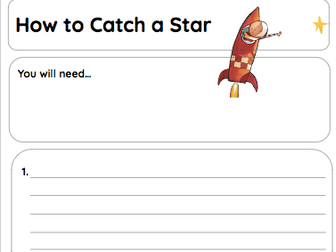
Revisit the story of How to Catch a Star using the story map to retell. Discuss ideas for catching a star! Explain that today they are going to write these as special instructions.
Read letter from ‘the boy’ asking us to help him catch the star - see letter
Revisit features of instructions - instructional language/imperative verbs, sequential/in order, can use numbers, laid out clearly, in the present tense
Show Talk for Writing gestures for time openers such as ‘first’.
Model on flipchart.
Model also how you can go back and ‘check’ your work - write a sentence with some mistakes. Read it back together and edit with a purple pen.
Provide word bank for all - openers, verbs , nouns
Provide this numbered, boxed instruction template
*Provide a choice of instruction openers for them to choose from and order
***Differentiated by OUTCOME
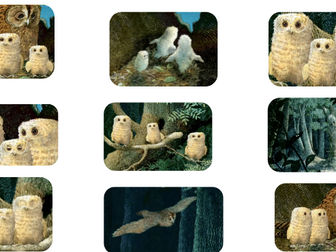
Here are some of the resources I use whilst I cover Owl Babies in my English lessons with Year 1. We use the Talk for Writing method to learn / imitate / retell the story.
I have attached the script I use to assist me when not telling from the book with the gestures used to support in brackets.
I have attached a ppt used to help retell the story and a cut and stick sequcning activity.
I usually follow this lesson with a speech bubble lesson.
I have used these lessons in the autumn term of Year 1.
Here are six literacy lessons designed to fit around the story of Where the Wild Things Are. We use Talk for Writing so I will be encouraging lots of ‘imitation’ from the children during this block but our focus is on innovating our own characters, writing a letter to Max, describing story settings (using similes), using verbs to describe the wild rumpus and explorring Max’s feelings.
This is aimed at Year 1 but could be adapted for Year 2.
I have also added Twinkl links.
I have also added an idea for an Art lesson.
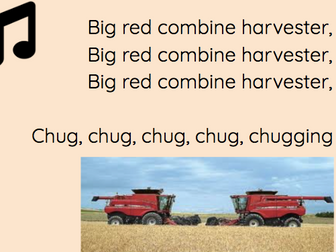
Lyrics for Big Red Combine Harvester on a ppt - used as part of our work surrounding harvest time / Harvest Festival.
I have used these to teach the song but also printed the pages 4xA4 and carried out sequencing activities with them in both EYFS and KS1, differentiated of course.
You can edit if you sing a different version.
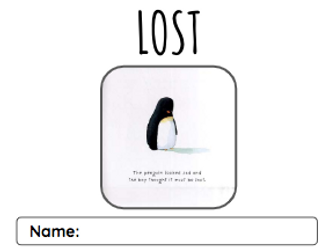
To use alongside work on this classic Oliver Jeffers book. Included:
One document contains:
A letter from the penguin
Lost poster template
Template for brainstorming adjectives to use
The other contains:
A template to write a diary by ‘the boy’
Word mat to support
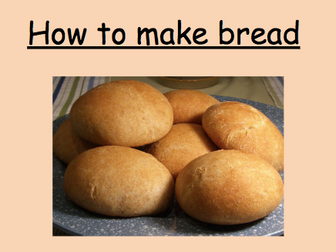
I have used these resources in a number of ways with both EYFS and KS1. Great to introduce the idea of making bread before a cooking activity, can follow by sequencing and/or instructional writing.
I also tend to talk Talk for Writing gestures to help the children learn the sequence by heart.
Great as part of a Little Red Hen topic.
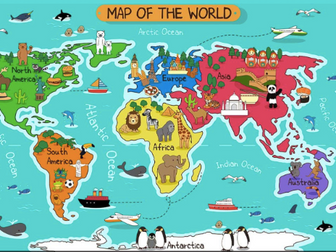
I use the animals to help the children grasp the concept of ‘around the world’, then we look at our place in the world. I usually follow this with a craft to home in on their place in the world.
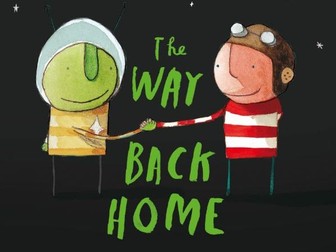
Here are some resources I have used as part of a series of lessons looking at the story The Way Back Home, by Oliver Jeffers. We follow a creative curriculum and use the Talk for Writing (Pie Corbett) method as our basis for Literacy teaching.
I have included (in the order I taught it):
Lesson planning for a series of lessons with differentiated objectives
A ‘questions for the boy’ worksheet - we talked about how the story raised more Qs than it answered and looked at how to write a question. We made question word wands (I used Twinkl for the words) and looked at question marks. The children thought of a question, or some questions, for ‘the boy’
A letter from ‘the boy’ - The boy wrote back! He challenged us to help us think of a way to fix his spacecraft.
Instructions template
Instructions wordmat - split into imperative verbs and nouns
A settings Powerpoint, with adjectives
Building a zip wire to help Zog fly:
Read the story of Zog.
He was very resilient wasn’t he?
He did struggle to fly though, didn’t he? What ways can you think of to help someone fly? Hear ideas and write on the board. Zip wire, that’s a good idea!
Today we are going to make a zip wire to help our Zog fly! We will use some characters to test it!
Children are to choose a character from the small world basket.
Watch zipwire videos for inspiration.
Recap the forces associated that we have covered in science.
What are the variables here and which forces will effect the speed of the zipwire? What could change how well the zip wire works? Hear ideas:
The type of string/ribbon used - friction
Whether it is windy, whether we push it - thrust
Whether it is on an incline - gravity
What variable shall we change? Let’s change the incline - what do they think will happen and why e.g. “I think the highest one will go fastest because it has more gravity.”
Ask children to fill in their prediction
Allow children to make their own zipline character by using a pipe cleaner, threading it through a straw to attach it to the character and then tying it around the character
Allow children to make a zipline in groups and try it out
Test it together to compare against our prediction


 Quick View