ELSA referral formQuick View
ul3m

ELSA referral form

(0)
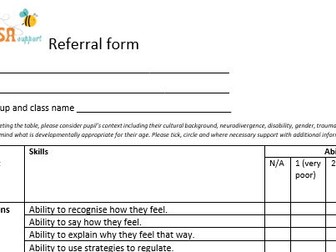
The ELSA referral form is designed to gather feedback from staff, helping to identify the most appropriate focus areas for ELSA sessions and determine the urgency of each referral. ELSA (Emotional Literacy Support Assistant) is a school-based intervention designed to support the emotional wellbeing and social development of children and young people. ELSA sessions are tailored to the individual needs of each pupil and typically focus on areas such as: Recognising and managing emotions Building self-esteem and confidence Developing friendships and social skills Managing anxiety, stress, and worries Coping with loss, bereavement, or family changes Improving emotional regulation and resilience Developing problem-solving and communication skills
parent feedback fromQuick View
ul3m

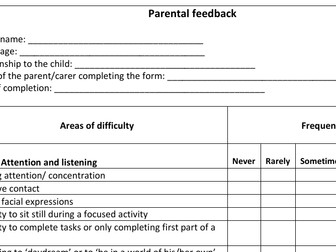
parent feedback from

(0)
This form enables parents/carers to share information about the frequency and types of difficulties their child may be experiencing. This information supports the school in assessing the child’s needs, evaluating the appropriate level of support, and planning effective interventions.
ELSA post sessions evaluation formQuick View
ul3m

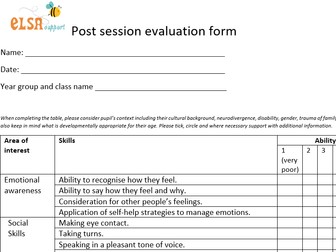
ELSA post sessions evaluation form

(0)
This form is used to gather staff views on the child’s progress following their ELSA sessions. It helps evaluate the effectiveness of the intervention, measure the impact on the child’s emotional wellbeing and development, and inform decisions about any further support or next steps. ELSA (Emotional Literacy Support Assistant) is a school-based intervention designed to support the emotional wellbeing and social development of children and young people.ELSA sessions are tailored to the individual needs of each pupil and typically focus on areas such as: Recognising and managing emotions Building self-esteem and confidence Developing friendships and social skills Managing anxiety, stress, and worries Coping with loss, bereavement, or family changes Improving emotional regulation and resilience Developing problem-solving and communication skills
Transition to secondary school pupil's voiceQuick View
ul3m

Transition to secondary school pupil's voice

(0)
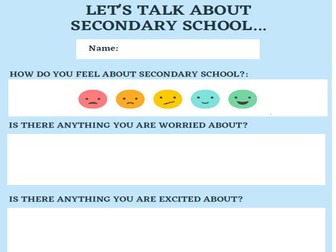
This form provides pupils with an opportunity to express their thoughts, concerns, strengths, and questions regarding their transition to secondary school. The information collected supports staff in identifying individual needs and planning appropriate transition support.
Feedback checklists for teachers/ supporting adultsQuick View
ul3m

Feedback checklists for teachers/ supporting adults

(0)
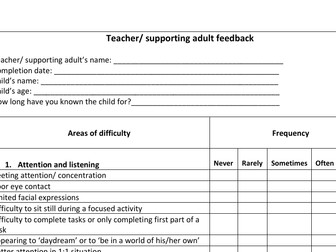
This form enables teachers and supporting staff to provide feedback on the specific areas of difficulty observed for the child. The information collected helps the school develop a better understanding of the child’s needs and supports the planning and delivery of appropriate interventions and support.