Keep your classroom art station neat, accessible, and visually engaging with Gradient Colouring Pencil Pot Labels. Featuring clean, tonal colour swatches, these labels make it effortless for students to sort and return pencils to their matching pots, promoting independence and seamless classroom organisation.
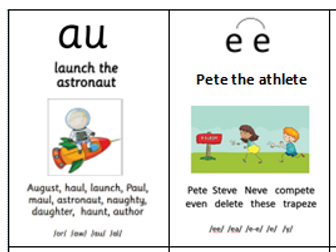
These cards have been really helpful for me. I created them using some larger posters I had and condensed them down to a smaller more usable card size.
They are compliant with RWI and have words that contain each sound and an easy to remember phrase.
Take your early years phonics outdoors with this differentiated Autumn Sound Hunt resource pack, designed to develop foundational listening and attention skills through environmental sounds.
Featuring clear Widgit symbols and three progressively challenging activity sheets, this pack supports adaptive teaching across both Nursery and Reception cohorts, as well as pupils with SEND or EAL.
Adaptive Progression Across Three Levels:
Level 1 – Sound Identification (Nursery / Early Listeners): Features nine clear autumn visual prompts (car, leaf, grass, trees, twigs, people, mud, birds, rain) so younger children can point to, circle, or tick the sounds they notice during a listening walk.
Level 2 – Sound Discrimination & Vocabulary (Late Nursery / Early Reception): Builds on the nine core sounds by introducing a “What does it sound like?” section with Widgit descriptors (loud, quiet, high pitch, low pitch, crunch, squelch, snap, splash), encouraging children to describe and compare what they hear.
Level 3 – Independent Recording & Mark-Making (Reception): Challenges learners to draw four sounds they hear in a blank grid, using a visual word bank at the bottom to support drawing, initial sound identification, or early word-writing.
Key Learning Opportunities:
Phase 1 Phonics (Environmental Sounds): Trains children to tune into, discriminate between, and talk about everyday outdoor sounds—a vital precursor to hearing phonemes in words.
Communication & Language: Expands descriptive vocabulary and encourages active listening during outdoor exploration or forest school sessions.
Fine Motor & Early Literacy: Supports pencil control, representational drawing, and early labelling skills as pupils progress through the sheets.
Bring your “People Who Help Us” topic to life with this printable Emergency Responder Badge, designed specifically for Reception / EYFS learners (aged 4–5).
Ideal for adult-led focus groups, enhanced continuous provision, or role-play areas, this simple and engaging template encourages young learners to step into the shoes of community helpers while practising essential early literacy, numeracy, and fine motor skills.
Create a warm, welcoming start to the school day with this visual Morning Greetings display set, designed to support smooth classroom transitions and positive relationship-building as children arrive in the morning.
Featuring an eye-catching “Choose a morning greeting!” chalkboard header alongside clear Widgit symbol cards (Dance, High five, Wave, and Hug), this resource empowers every child to greet their teacher or teaching assistant in a way that feels comfortable and fun for them.
Key Benefits & Learning Opportunities:
Building Positive Relationships (PSED): Starting the day with a one-to-one interaction fosters warmth, trust, and a strong sense of belonging between adults and pupils.
Smooth Morning Transitions: Establishing a predictable, engaging arrival routine helps ease separation anxiety and settles children calmly into the classroom environment.
Pupil Agency & Personal Boundaries: Offering a choice of greetings—ranging from a non-contact Wave to a High five, Hug, or Dance—supports emotional regulation and respects individual comfort levels and personal boundaries.
Inclusive Visual Communication: Supported by clear Widgit symbols and simple text, the cards are accessible to all learners, including pre-readers, EAL pupils, and children with SEND. Display the header and greeting cards at child height beside your classroom door so children can point to or tap their chosen greeting as they walk in each morning.
Bring Julia Donaldson’s Stick Man into your literacy lessons with this adaptive Missing Person Poster and Widgit Adjectives pack, designed to support character description across a range of early writing abilities.
Featuring a bold, eye-catching “MISSING” poster template alongside a 12-word Widgit adjective grid covering physical appearance (short, brown, leafy, thin, wooden, small, rough) and personality/emotions (brave, loving, smiley, sad, worried), this resource ensures every child can participate meaningfully in character analysis.
Adaptive Teaching & Differentiation:
Accessible Support (Cut & Stick): For emergent writers, SEND pupils, or learners who find handwriting a barrier to showing their understanding, the Widgit cards can be cut out and stuck directly onto the poster beneath “HE IS…”. This allows children to focus on comprehension, vocabulary selection, and fine motor scissor skills without cognitive overload.
Core & Challenge (Independent Writing): Use the Widgit sheet as a desktop word mat to challenge more confident writers to write Stick Man’s name on the line beneath his portrait and independently write chosen adjectives—or full descriptive sentences—under “HE IS…”.
Key Learning Opportunities:
Character Description & Vocabulary: Encourages children to distinguish between what Stick Man looks like on the outside and how he feels or behaves throughout the story.
Fine Motor & Mark-Making: The large portrait frame invites pupils to draw Stick Man carefully, while cutting, sticking, or writing builds essential pencil and scissor control.
Inclusive Communication: Clear Widgit symbols paired with high-frequency adjectives make descriptive vocabulary accessible to pre-readers, EAL learners, and pupils with SEND.


 Quick View