

 Quick View
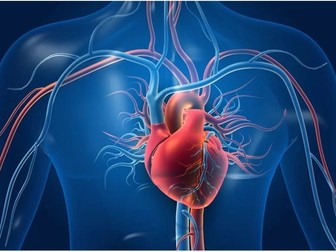
Exchange and transport in animals
Full topic
8 fully resourced lessons on Exchange and transport in animals. This easy to teach topic includes very easy to follow lesson structures in line with current pedagogy. There are two practicals in this topic and revision resources.
For GCSE Edexcel
Lessons:
1: Exchange surfaces
2: Alveoli and gas exchange
3: Components of blood and blood vessels
4: Structure and function of heart and associated blood vessels
5: Heart dissection
6: Cardiac output
7: Respiration core practical
8: Respiration core practical write up
Revision materials and knowledge test
 Quick View
Scratch: building a zombie game
Powerpoints and scratch files showing clearly how to code a zombie game in scratch.
Two powerpoints showing how to first of all make a scratch game then how to add extras e.g. make it two player
Links to the youtube videos which were adapted into teachable powerpoints.
These lessons are very engaging for KS2, KS3/ KS4 and useful for game design.
Students will learn:
Use drawing tools
Be able to identify and use:
Events
Loops
Selection
Variables
Use problem solving skills to:
Create code in Scratch to control sprites
Develop code in Scratch – independently if possible
undefined
Transport across membranes, IB 1.4 Membrane transpor
Fantastic revision document for transport across membranes.
Includes:
Two sided A3 revision poster with scaffolded questions.
Information sheets to accompany the poster.
Powerpoint with PPQs and Markscheme
Learning Outcomes:
Understand that particles move across membranes by simple diffusion, facilitated diffusion, osmosis and active transport.
Understand the fluidity of membranes allows materials to be taken into cells by endocytosis or released by exocytosis.
Understand that vesicles move materials within cells.
Apply the structure and function of sodium–potassium pumps for active transport and potassium channels for facilitated diffusion in axons.
Apply understanding of osmolarity to tissues or organs to be used in medical procedures must be bathed in a solution with the same osmolarity as the cytoplasm to prevent osmosis.
Plan to an experiment to estimate the osmolarity of tissues by bathing samples in hypotonic and hypertonic solutions.
Learning Objective: Understand how membranes control the composition of cells by active and passive transport
 Quick View
Density
Density 2 lessons
First lesson focusing on regular shaped objects and calculations for density
Second lesson with Archimedes story and focusing on finding the density of irregular shaped objects
 Quick View
Geology (rocks!)
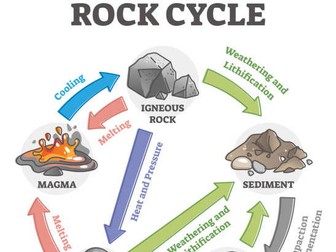
Entire topic for KS3 geology/ rock topic
This resource contains 9 lessons including:
structure of the earth
Sedimentary rocks
Igneous and metamorphic rocks
Rock identification (practical)
Rock cycle
Carbon cycle
Fossils
Revision
Exam questions
Contents page
 Quick View
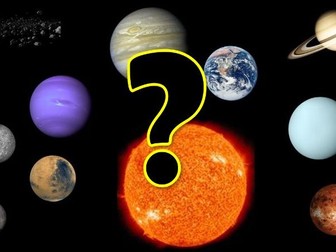
Space: Solar System
Incredibly engaging solar system lesson for KS3.
Star wars themed with music, animations and fantastic resources.
Learning outcomes:
STATE the names of planets and other structures in the solar system
DESCRIBE the nature of orbits and major structures in the solar system
EXPLAIN the different nature of planets in the solar system
EXPLAIN how planets and the asteroid belt formed
Resources:
Powerpoint
A3 solar system to write on
Circus information
Card sort
Research task
 Quick View
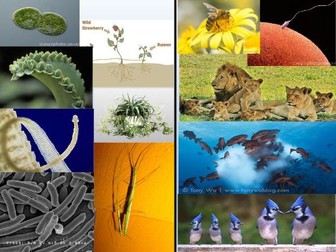
Asexual and sexual reproduction
Full lesson on asexual and sexual reproduction for Cambridge iGCSE.
Learning outcomes:
Recall examples of organisms that reproduce sexually and asexually
Define the two types of reproduction
Compare the advantages and disadvantages of each type of reproduction
Resources:
Powerpoint
Worksheets for lower, middle and higher ability students
 Quick View
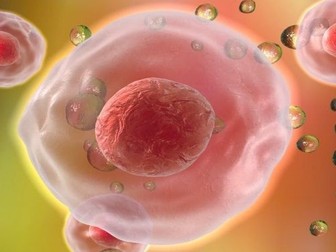
Cells KS4 edexcel Topic 1 lesson 1
Edexcel topic 1: Eukaryotic and prokaryotic cells
This resource includes:
Powerpoint
Worksheet
Exam paper questions
 Quick View
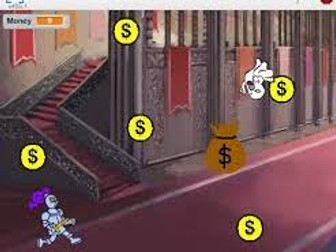
Scratch: Avoid the objects game
Full introduction lesson to for KS3/2.
Using this powerpoint students will make a scratch game to avoid the objects.
Resources:
Powerpoint
finished game
Learning objectives:
Be able to identify and use:
Events
Loops
Selection
Variables
Use problem solving skills to:
Create code in Scratch to control sprites
Develop code in Scratch – independently if possible
Specialised cells
Resource for Edexcel Topic 1 biology
Specialised cells
Powerpoint
Worksheet
exam questions
Past paper
HIV and AIDS
Short lesson on HIV and AIDS
Contains:
Powerpoint
worksheets for higher middle and lower ability students
Learning outcomes:
Describe the methods of transmitting HIV.
State that human immunodeficiency virus (HIV) infection may lead to acquired immune deficiency syndrome (AIDS).
Compare prevention and treatment options.