19 Days of Elf Adventures in the classQuick View
IoanaD

19 Days of Elf Adventures in the class

(0)
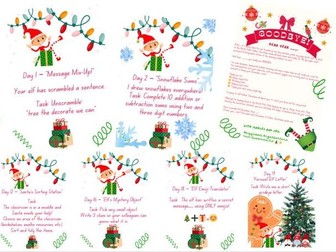
This festive set includes an Elf Arrival Letter, a Goodbye Letter, and 19 days of magical classroom tasks designed to bring fun, motivation and seasonal excitement to a Year 4 class. The arrival letter welcomes pupils to a month of elf-led challenges, sparking curiosity and setting a positive, joyful tone. The goodbye letter provides a warm, encouraging send-off from the elf, celebrating the children’s effort, kindness and learning throughout December. The 19 daily tasks are short, engaging, curriculum-friendly activities ranging from maths puzzles and reading challenges to creative writing, problem solving, and classroom teamwork — each designed to add a sprinkle of Christmas magic to everyday learning. Perfect for creating a sense of wonder and giving pupils something to look forward to each day.

FOX_Margaret_Wild_planning_LOs_pptlessonsQuick View
IoanaD

FOX_Margaret_Wild_planning_LOs_pptlessons

(0)
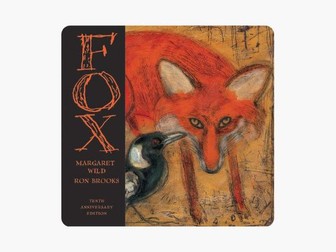
In this resource you can find 3 weeks planning with LOs and success criteria, power point lessons and differentiated worksheets of the book FOX by Margaret Wild and Ron Brooks.
Figure me out! First day at school activity.Quick View
IoanaD

Figure me out! First day at school activity.

(0)
You could let them create a profile of themselves, describing some fun facts using arithmetic. Children have to figure out the person by calculating the facts. Then they have to guess who that person is.
FRACTIONS Year3Quick View
IoanaD

FRACTIONS Year3

(0)
To find and use fractions of numbers. To divide whole objects into equal parts and to identify those parts as fractions. To identify tenths. To recognise and count in tenths.
Year 4 Narrative Writing – Ice Palace by Robert SwindellsQuick View
IoanaD

Year 4 Narrative Writing – Ice Palace by Robert Swindells

(0)
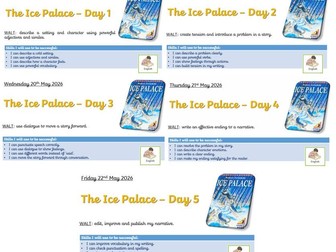
This resource is a 5-day Year 4 narrative writing unit based on Ice Palace by Robert Swindells. It includes fully planned teaching slides with clear Learning Objectives, child-friendly success criteria, modelled examples and independent writing tasks. The planning follows Rosenshine’s Principles of Instruction, using retrieval practice, modelling, scaffolding, guided practice and small-step teaching to support pupils in developing narrative writing skills such as description, dialogue, suspense, paragraphing, and editing. The unit is designed to develop pupils’ narrative writing skills through engaging lessons focused on: describing settings and characters, building suspense and atmosphere, using dialogue, organising ideas into paragraphs, and editing/improving writing. Each day follows a structured teaching sequence with: model examples (WAGOLLs), vocabulary support, speaking and planning opportunities, guided practice, independent writing tasks, and opportunities for editing and publishing. The success criteria are tailored for Year 4 pupils and encourage children to write with the reader in mind, using exciting vocabulary, varied sentence starters, accurate punctuation, and descriptive techniques to make their writing engaging. The resource is ideal for: whole-class English teaching, guided writing sessions, narrative writing units, moderation evidence, and supporting progression across a week-long “Big Write” sequence.