Differentiated Missing Numbers to 20  Plus RPS Sheets Nature themeQuick View
emdex

Differentiated Missing Numbers to 20 Plus RPS Sheets Nature theme

(0)
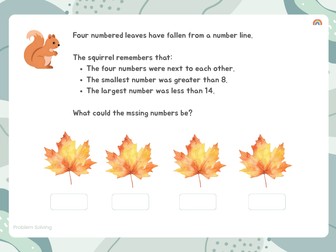
Differentiated Missing Number Activities to 20 – Nature‑Themed , EYFS, Year 1 & Year 2 Boost number confidence with this differentiated missing‑number resource to 20, designed with a calming nature theme to support early maths learning across EYFS, Year 1 and Year 2. Perfect for teaching number order, counting forwards and backwards, and place value, this pack blends structured practice with rich reasoning and problem‑solving tasks. What’s included Differentiated missing‑number tables (to 20) Ideal for whole‑class teaching or targeted interventions. Children complete number sequences with increasing challenge, supporting progression from simple counting to deeper number understanding. Reasoning questions Characters such as Bess Bee make mistakes that pupils must spot and explain. These tasks encourage mathematical talk, justification and identifying misconceptions — key mastery skills in KS1. Problem‑solving challenges Gardeners, squirrels and nature‑themed clues help children work out missing numbers using logic and inference. Great for developing systematic thinking and strengthening number sense. Calm, EYFS‑friendly nature visuals Flowers, bees and leaves create an inviting environment that supports focus without overstimulation — ideal for Reception and lower‑ability Year 1 learners. Perfect for: Year 1 place value and number order EYFS counting and early number sense Year 2 fluency, reasoning and mastery consolidation Independent tasks, morning work, continuous provision, small‑group interventions or homework. This resource offers clear progression, built‑in differentiation, and engaging reasoning prompts
Nature missing numbers to 20, 50 and 100 worksheetsQuick View
emdex

Nature missing numbers to 20, 50 and 100 worksheets

(0)
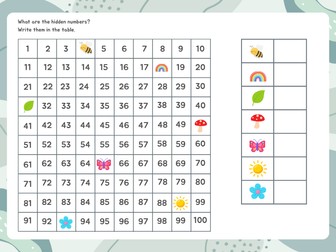
Missing Numbers to 20, 50 and 100 – Reception, Year 1 and Year 2 Maths Make practising counting, number recognition and number sequences engaging with these colourful, nature-themed missing number activities. Children identify hidden numbers within sequences and record their answers in a table. With activities covering numbers to 20, 50 and 100, there are different levels of challenge to support differentiation. Ideal for: Reception and Year 1 maths Missing number and number sequence practice Counting and number recognition Number order and number sense Maths continuous provision Independent or small-group work Intervention and catch-up Maths consolidation Greater depth challenge Use for independent practice, maths stations, early morning work, intervention or assessment. A simple, low-preparation resource to help children develop confidence with counting, number sequences and identifying missing numbers. Why teachers will love it ✔ Colourful, child-friendly nature-themed design ✔ Easy to print and use ✔ Minimal preparation required ✔ Suitable for Reception, Year 1 and Year 2 ✔ Useful for whole-class, small-group or independent work ✔ Flexible enough for continuous provision, intervention or consolidation ✔ Provides different levels of challenge without requiring completely different activities A simple and engaging way to give children repeated practice with counting, number recognition, number sequences and identifying missing numbers.
Sound Out CVC Words Phase 2 Phonics, 3 Levels of supportQuick View
emdex

Sound Out CVC Words Phase 2 Phonics, 3 Levels of support

(0)
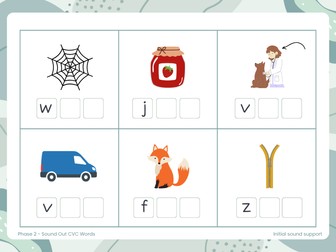
Make Phase 2 CVC word practice simple, differentiated and engaging! This versatile phonics resource includes three levels of support, from independent CVC word practice, to initial sound support, to initial and final sound support. 5 pages for each level, 15 pages in total. With clear pictures and a calm, neutral green design, it’s ideal for whole-class teaching, small-group phonics, interventions, independent practice or homework.
High‑Quality Interactions, Early Years Observation Prompts,  I Noticed...Quick View
emdex

High‑Quality Interactions, Early Years Observation Prompts, I Noticed...

(0)
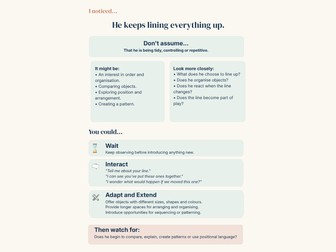
A simple, powerful EYFS tool designed to strengthen high‑quality interactions, support professional noticing, and deepen practitioner understanding of children’s learning behaviours. This resource provides clear “I noticed…” prompts that help adults tune into children’s play, language, and engagement — making observations more meaningful, more consistent, and more closely aligned with the EYFS ethos. There are observation prompts - a wide range. Each one is designed to support professional noticing, reflective practice, and high‑quality interactions Suitable for CPD, staff training, induction, and everyday EYFS observation work Perfect for: Early Years teachers Nursery practitioners Childminders Students and trainees Settings developing a shared language around observation and interaction Use it during free‑flow play, continuous provision, outdoor learning, or small‑group work to support: Professional noticing Sensitive interactions Accurate formative assessment Reflective practice Staff training and induction The prompts are designed to be quick, accessible, and immediately usable, helping adults capture what matters most: children’s thinking, exploration, and early learning behaviours. This resource is ideal for settings wanting to: Build confidence in observation Strengthen adult‑child interactions Support new staff or trainees Develop a consistent approach to noticing and responding to learning Embed reflective practice across the team Clear, simple, and rooted in EYFS principles — this is a practical tool that lifts the quality of everyday interactions.
Instructions Year 1 wkQuick View
emdex

Instructions Year 1 wk

(17)
Lesson plan from Autumn term 1. Instructions starting with using bossy words (imperative verbs) building up to writing sentences on washing hands. Notebook file to go with LP.
Ancient Greece English resources    Comprehension, SPaG, Design a mask, Word searchesQuick View
emdex

Ancient Greece English resources Comprehension, SPaG, Design a mask, Word searches

(0)
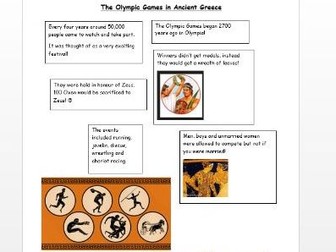
A selection of different resources that are useful when teaching Ancient Greece as a topic. Most appropriate to Lower KS2 but would be useful for any class studying Ancient Greece! Includes: *** SPaG conjunctions** activity using characters from the Greek myths *** Comprehension and/or fact book ** activity all about the Olympic Games Be the teacher improving our writing activity designed to get children thinking about what to include in their writing and look out for spelling mistakes. Greek myth word search Greek gods word search Design a Greek mask activity for use alongside a DT project or as a one off with link below to useful images
Early Years/Foundation Stage       Doubling story powerpointQuick View
emdex

Early Years/Foundation Stage Doubling story powerpoint

(0)
This is a lovely number story called The Two of Everything by Lily Toy Hong. I have created a ppt version of the story. It tells the tale of Mr and Mrs Haktak who find a magical pot in which everything they put in is doubled! It is a great introduction to doubling especially in Early Years or Year 1. Ask the children to work out how many objects will come out of the pot as you read through the story. They will pick up the idea quickly! If you can, have a simple bag/sack that could be used alongside and ask the children to help you to work out what double would be if the sack was magic like the pot in the story!
Early Years Foundation Stage maths resources             Simple subtraction           Monster themeQuick View
emdex

Early Years Foundation Stage maths resources Simple subtraction Monster theme

(0)
3 worksheets to support simple subtraction for Foundation Stage Lovely practical worksheets ‘1 less than monster’ and ‘subtraction monster’ require teeth. These can be made by an adult or ask the child to practise their cutting skills and cut out triangles. Teeth are placed in the monsters mouth and then the child subtracts or takes 1 away to find the answer. It’s fun to model this on the whiteboard first by drawing a simple monster with an empty mouth and then sticking teeth on and writing a number sentence on the board or saying one. Pick a child to be the dentist and take out a tooth. Coundown monster - children fill in the sheet and practise number formation. I have drawn dots for numbers for LA in the past and changed the landscape of the sheet.