How can one pair of jeans change the world?Quick View
Frannyb92

How can one pair of jeans change the world?

(0)
How can one pair of jeans connect the whole world? This engaging, enquiry-based lesson introduces students to the global fashion industry and explores how clothing links countries through trade, manufacturing and transport. Students investigate the journey of a pair of jeans, discover how different countries contribute to their production, and develop a deeper understanding of globalisation through real-world examples. The lesson includes a variety of interactive activities, including key word retrieval, prediction tasks, video analysis, map work and a fully scaffolded investigation into the global journey of a pair of jeans. Designed to encourage geographical thinking, students explain why clothing is produced in different countries and how the fashion industry demonstrates an increasingly interconnected world.
What is globalisation?Quick View
Frannyb92

What is globalisation?

(0)
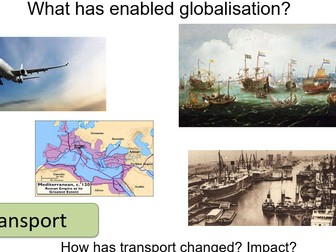
Engage students with this interactive and enquiry-based lesson introducing the concept of globalisation. Through discussion, video, comprehension activities and real-world examples, students investigate what globalisation is, how it connects people and places, and the transport and technological developments that have enabled it. Students explore everyday examples of globalisation, analyse historical innovations such as steam engines, railways, jet engines and containerisation, and develop their own geographical definition using evidence gathered throughout the lesson.
The water cycleQuick View
Frannyb92

The water cycle

(0)
A complete lesson introducing the water cycle for AQA GCSE Geography and KS3. The lesson takes students through the main stores and transfers in the water cycle using clear diagrams, retrieval activities and opportunities to apply their knowledge. The PowerPoint includes a range of activities to keep students engaged, with a focus on understanding key processes and using geographical vocabulary accurately. It also includes opportunities for retrieval and exam-style practice to help prepare students for GCSE questions.
Introduction to riversQuick View
Frannyb92

Introduction to rivers

(0)
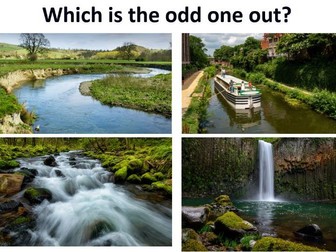
This lesson is an introduction to rivers starting with ‘what is a river?’. Students are asked to predict what they think will happen as a river winds its way down to the sea. The lesson ends with a global river activity which gets students to map some of the world’s rivers.
Do TNCs help or exploit India?Quick View
Frannyb92

Do TNCs help or exploit India?

(0)
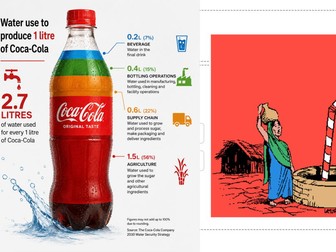
Engage your students with this fully resourced, enquiry-based lesson exploring why Transnational Corporations (TNCs) choose to invest in India. Using the real-world case study of Coca-Cola, students investigate the social, economic and environmental impacts of globalisation before reaching a balanced, evidence-based judgement. Perfect for KS3 and GCSE Geography, this resource includes an editable PowerPoint, printable worksheet, retrieval starter, comprehension tasks, decision-making activities, information carousel, literacy support and an extended exam-style judgement task. Ideal for lessons on Globalisation, Development, India, Changing Economies, TNCs and sustainability.
Glacial erosionQuick View
Frannyb92

Glacial erosion

(0)
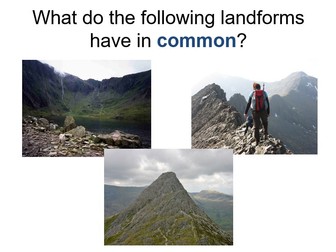
This is a lesson for years 7-9 about glacial erosion. It includes information on corries, pyramidal peaks and aretes. Students are encouraged to be curious, discuss and think critically about glacial landforms.
India's changing populationQuick View
Frannyb92

India's changing population

(0)
This engaging enquiry lesson explores whether India’s growing population is a problem or an opportunity. Designed for Year 8 (KS3) Geography, pupils analyse population data, construct and interpret a population graph, evaluate evidence from a contemporary case study, and investigate the opportunities and challenges created by India’s youthful population. Throughout the lesson, students develop key geographical skills including data interpretation, evidence retrieval, ranking and justification, before reaching a balanced judgement using the enquiry question: “Is India’s growing population a problem or an opportunity?”
Why does the Indian monsoon happen and why is it so important?Quick View
Frannyb92

Why does the Indian monsoon happen and why is it so important?

(0)
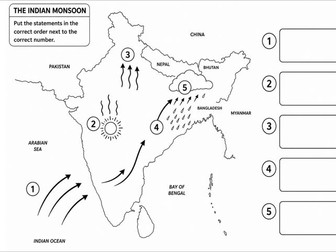
An engaging KS3 Geography lesson exploring the causes of the Indian monsoon and its social, economic and environmental impacts on people. The lesson includes a range of AfL activities, retrieval practice, challenge tasks, and opportunities to check for understanding throughout. Designed to promote critical thinking and develop students’ ability to explain geographical processes and evaluate their consequences.
Introduction to AsiaQuick View
Frannyb92

Introduction to Asia

(0)
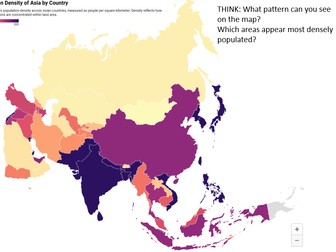
This introductory lesson focuses on Asia and serves as a foundation for future learning about India. Students begin with a walk-around-the-room information gathering activity, collecting key facts about the continent from a range of stations. They then complete a written reflection task, summarising and explaining what they have learned about Asia. The lesson concludes with a series of engaging and enjoyable plenary activities designed to reinforce learning and assess understanding in a fun and interactive way.
Why is Happisburgh eroding so fast?Quick View
Frannyb92

Why is Happisburgh eroding so fast?

(0)
A lesson exploring the unique factors that make Happisburgh susceptible to erosion through a walk around the room activity or teacher-led task. It leads onto a discussion about stakeholders and ends with a re-cap of the lesson. Worksheet included so that students can collect information.
Demographic Transition ModelQuick View
Frannyb92

Demographic Transition Model

(0)
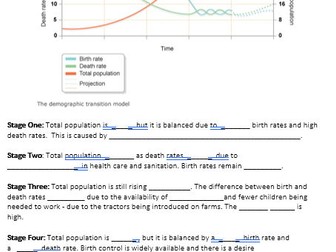
udents are introduced to the Demographic Transition Model and how it explains changes in birth rates, death rates, and population growth as countries develop. Through a series of guided activities, students build understanding of each stage before applying their knowledge to real-world style data. Tasks develop skills in interpretation, explanation, and use of demographic evidence. The lesson finishes with a scenario mapping activity, where students classify fictional countries by DTM stage and justify their decisions using what they have learned.
Migration mysteryQuick View
Frannyb92

Migration mystery

(0)
This is an interactive lesson that encourages students to use evidence to consider how a specific migration event occurred. Students will draw upon their understanding of push and pull factors to develop a justified and creative interpretation of the case study. The lesson is based on a true story, and the actual events are revealed to students at the end, allowing them to compare their hypotheses with what really happened.
Population pyramidsQuick View
Frannyb92

Population pyramids

(0)
This lesson introduces students to population pyramids. Students will use provided data to construct their own population pyramid, which they will then annotate and interpret. Based on the shape of the pyramid, they will determine whether the country is a high-income country (HIC) or a low-income country (LIC). The PowerPoint also includes extension tasks that build on this learning. These activities encourage students to analyse and compare different population pyramid shapes and apply their understanding to a range of countries.
Refugees in crisisQuick View
Frannyb92

Refugees in crisis

(0)
This lesson encourages students to engage with the experiences of refugees from different parts of the world. Through a range of activities, students explore individual case studies to develop empathy and a deeper understanding of forced migration. All necessary resources are included within the slides, making the lesson fully self-contained.
AQA Geography GCSE revision clocksQuick View
Frannyb92

AQA Geography GCSE revision clocks

(0)
Revision clocks for AQA Geography students: Natural Hazards Rivers Glaciers Resource Management Urban Issues Changing Economic World Hot Deserts Coastal Landscapes Climate Change Tectonic hazards Tropical Rain forests Weather Hazards
Scheme of work: Health issuesQuick View
Frannyb92

Scheme of work: Health issues

(0)
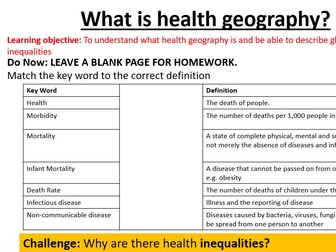
Health Geography Scheme of Work – GCSE / KS3 / KS4 A complete Scheme of Work covering health geography, global and UK health inequalities, and disease. Includes lessons on smoking, obesity, coronary heart disease (CHD), malaria, and Ebola, alongside an end-of-unit assessment. All lessons include worksheets, classroom activities, and homework tasks, providing a structured and coherent approach to teaching key Geography health topics.
Depositional landformsQuick View
Frannyb92

Depositional landforms

(0)
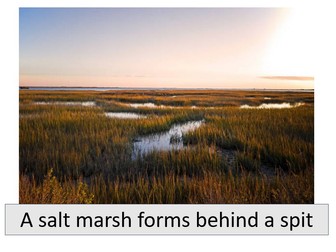
A year lesson on depositional landforms at the coastline. Tombolos, spits and bars are discussed. There is a starter and plenary to compliment learning.
Impacts of an ageing populationQuick View
Frannyb92

Impacts of an ageing population

(0)
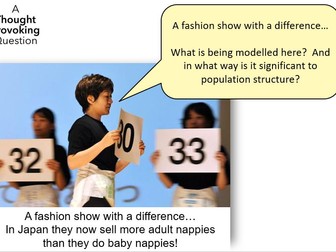
This is a KS3 resource about ageing populations. The powerpoint looks at Japan as an example. Included in the slides are activities and answers. There is a video based task with questions for students as well as a starter activity using the words for the lesson.
Youthful PopulationsQuick View
Frannyb92

Youthful Populations

(0)
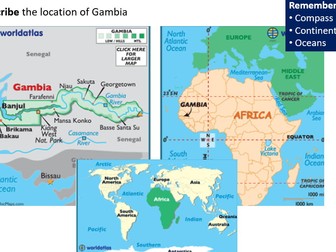
This is a lesson introducing youthful populations. The lesson looks at The Gambia as an example of a country with this demographic. The lesson has activities and writing tasks to help students think through this idea.