 Quick View
Year 4 Place Value Display Pack | White Rose Maths Inspired Vocabulary and Representation Cards
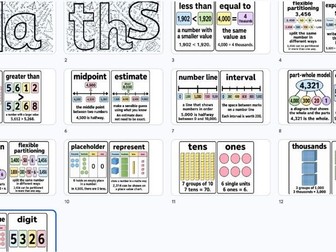
A clear, inclusive and vocabulary rich Year 4 Place Value Display Pack, designed to support teaching across the White Rose Maths Year 4 Autumn Place Value unit. This classroom display resource includes large, easy to read mathematical vocabulary cards with bold black text, clear examples and visual representations to support all learners, including EAL, SEND and children with speech, language and communication needs.
Perfect for maths working walls, place value displays, pre teaching vocabulary, retrieval practice, intervention groups and daily classroom reference. The pack supports children to understand and use key mathematical language linked to place value, digits, thousands, hundreds, tens, ones, partitioning, flexible partitioning, expanded form, place value charts, number lines, intervals, midpoints, estimating, comparing, ordering, greater than, less than, equal to, rounding and Roman numerals.
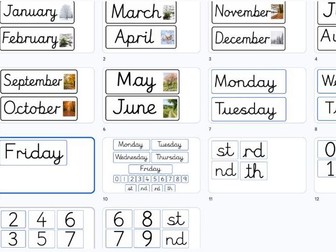
The cards use accessible PECS inspired layouts, enlarged mathematical representations, clear examples, pastel coloured Dienes, counters, number lines and place value charts, helping children see the maths clearly from a classroom display board. Ideal for Year 4 teachers, lower key stage two classrooms, maths leads, SENDCos, teaching assistants and anyone wanting a purposeful, inclusive and visually supportive maths learning wall.