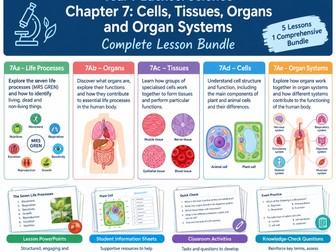
Chapter 7: Cells, Tissues, Organs and Organ Systems (KS3) - BundleQuick View
chico107

Chapter 7: Cells, Tissues, Organs and Organ Systems (KS3) - Bundle

5 Resources
This resource bundle is designed to support the teaching of Year 7 Edexcel Science – Chapter 7: Cells, Tissues, Organs and Organ Systems (KS3). It includes a collection of structured lesson PowerPoints, supporting student resources and classroom activities covering all five topics in the chapter, helping students build a secure understanding of biological organisation and life processes. What’s included? ** 7Aa – Life Processes:** A structured lesson introducing the seven life processes (MRS GREN) and explaining how to identify living, dead and non-living things. ** 7Ab - Organs:** A lesson exploring the functions of different organs in the human body and how they contribute to essential life processes. ** 7Ac - Tissues:** A lesson explaining how groups of specialised cells work together to form tissues and perform particular functions. 7Ad - Cells: A lesson introducing cell structure and function, including the main components of plant and animal cells and their differences. ** 7Ae - Organ Systems: ** A lesson exploring how organs work together in organ systems and how different systems contribute to the functioning of the human body. Student information sheets and supporting resources: Resources to help students follow lesson content, consolidate key concepts and develop their understanding of important scientific terminology. Classroom activities and knowledge-check questions: Tasks and questions to reinforce learning, assess understanding and encourage students to apply their knowledge across the chapter. The bundle helps students develop a clear understanding of the organisation of living organisms, progressing from cells to tissues, organs and organ systems, while exploring the life processes that characterise living things. Ideal for Edexcel KS3 Science teachers looking for a comprehensive, classroom-ready bundle that provides consistent lesson resources across the whole chapter. Suitable for classroom teaching, revision, consolidation, homework and independent learning.
7Aa: Life ProcessesQuick View
chico107

7Aa: Life Processes

(0)
This resource is designed to support the teaching of 7Aa: Life Processes for Year 7 Edexcel Science (KS3). It includes a structured lesson PowerPoint, supporting student resources and activities to help students understand the seven life processes and how living organisms carry out essential functions. What’s included? Lesson PowerPoint: A structured presentation introducing the seven life processes: movement, respiration, sensitivity, growth, reproduction, excretion and nutrition (MRS GREN). Student information sheet: A supporting resource to help students identify and describe the life processes carried out by living organisms. Classroom activities: Tasks and questions to develop students’ understanding of the characteristics of living organisms and distinguish between living, dead and non-living things. **Knowledge-check questions: **Questions to assess understanding, reinforce key terminology and encourage students to apply their knowledge to different examples. The resources help students develop a secure understanding of the seven life processes and recognise how these characteristics are used to identify living organisms. Ideal for Edexcel KS3 Science teachers looking for a classroom-ready resource that combines clear explanations, student support and opportunities to check understanding. Suitable for classroom teaching, revision, consolidation and independent learning.
7Ae: Organ SystemsQuick View
chico107

7Ae: Organ Systems

(0)
This resource is designed to support the teaching of 7Ae: Organ Systems for Year 7 Edexcel Science (KS3). It includes a structured lesson PowerPoint, supporting student resources and activities to help students understand how organs work together in organ systems to carry out essential functions in the human body. What’s included? Lesson PowerPoint: A structured presentation introducing organ systems and explaining how different organs work together to perform specific functions, with examples from the human body. Student information sheet: A supporting resource to help students identify major organ systems, recognise the organs within them and describe their roles in maintaining the body’s normal functioning. Classroom activities: Tasks and questions to help students match organs to their corresponding systems, explore the functions of different organ systems and understand how the systems work together. Knowledge-check questions: Questions to assess understanding, reinforce key scientific vocabulary and encourage students to explain the relationships between cells, tissues, organs and organ systems. The resources help students develop an understanding of organisation in multicellular organisms and recognise how different levels of organisation contribute to the functioning of the human body. Ideal for Edexcel KS3 Science teachers looking for a classroom-ready resource that combines clear explanations, student support and opportunities to check understanding. Suitable for classroom teaching, revision, consolidation and independent learning.
7Ad: CellsQuick View
chico107

7Ad: Cells

(0)
This resource is designed to support the teaching of 7Ad: Cells for Year 7 Edexcel Science (KS3). It includes a structured lesson PowerPoint, supporting student resources and activities to help students understand cells as the basic units of life, identify their main structures and explore the differences between plant and animal cells. What’s included? Lesson PowerPoint: A structured presentation introducing cell structure and function, explaining the roles of key cell components, including the nucleus, cytoplasm, cell membrane and, in plant cells, the cell wall, chloroplasts and permanent vacuole. Student information sheet: A supporting resource to help students identify and label cell structures, describe their functions and compare plant and animal cells. Classroom activities: Tasks and questions to develop students’ ability to recognise cell structures, interpret cell diagrams and explain the differences between plant and animal cells. Knowledge-check questions: Questions to reinforce key scientific vocabulary, assess understanding and encourage students to apply their knowledge of cell structure and function. The resources help students develop a secure foundation in cell biology and understand how cell structures support the functions of living organisms. Ideal for Edexcel KS3 Science teachers looking for a classroom-ready resource that combines clear explanations, student support and opportunities to assess learning. Suitable for classroom teaching, revision, consolidation and independent learning.
7Ac: TissuesQuick View
chico107

7Ac: Tissues

(0)
This resource is designed to support the teaching of 7Ac: Tissues for Year 7 Edexcel Science (KS3). It includes a structured lesson PowerPoint, supporting student resources and activities to help students understand what tissues are, how they are formed and how groups of specialised cells work together to perform particular functions. What’s included? Lesson PowerPoint: A structured presentation introducing tissues and explaining how similar specialised cells work together to carry out specific functions within the body. Student information sheet: A supporting resource to help students understand the relationship between cells and tissues and identify examples of tissues found in the human body. Classroom activities: Tasks and questions to help students recognise different types of tissues, describe their functions and understand how cells work together. Knowledge-check questions: Questions to reinforce key terminology, assess understanding and develop students’ ability to explain the relationship between specialised cells and tissues. The resources help students build their understanding of biological organisation and prepare them to explore how tissues combine to form organs. Ideal for Edexcel KS3 Science teachers looking for a classroom-ready resource that combines clear explanations, student support and opportunities to check understanding. Suitable for classroom teaching, revision, consolidation and independent learning.
7Ab: OrgansQuick View
chico107

7Ab: Organs

(0)
This resource is designed to support the teaching of 7Ab: Organs for Year 7 Edexcel Science (KS3). It includes a structured lesson PowerPoint, supporting student resources and activities to help students understand what organs are, their functions and how they contribute to the functioning of the human body. What’s included? **Lesson PowerPoint: **A structured presentation introducing organs, explaining their functions and exploring examples of organs found in the human body. Student information sheet: A supporting resource to help students identify key organs, describe their functions and consolidate their understanding of organ structure and function. Classroom activities: Tasks and questions that encourage students to identify organs, match them to their functions and explore how different organs contribute to essential life processes. Knowledge-check questions: Questions to assess understanding, reinforce key scientific vocabulary and encourage students to apply their knowledge to familiar biological examples. The resources help students develop an understanding of the role of organs in the human body and prepare them to explore how organs work together within organ systems. Ideal for Edexcel KS3 Science teachers looking for a classroom-ready resource that combines clear explanations, student support and opportunities to assess learning. Suitable for classroom teaching, revision, consolidation and independent learning.
A Level Edexcel Chemistry – Unit 1 - Animated TestsQuick View
chico107

A Level Edexcel Chemistry – Unit 1 - Animated Tests

(0)
This resource includes two animated assessment tests (Test A and Test B) for Edexcel A Level Chemistry Unit 1, each worth 50 marks, alongside animated mark schemes designed to support teachers in reviewing answers and explaining the correct responses step by step. What’s included? Test A: 50 mark assessment. Test B: 50 mark assessment. Animated mark schemes: Step-by-step explanations of answers, ideal for teachers to go through questions with students and clarify common misconceptions. Classroom-ready resource: Suitable for revision lessons, formative assessment, exam practice and feedback sessions. The animated format allows teachers to reveal answers progressively, explain the reasoning behind each response and reinforce key chemical concepts and exam technique. Ideal for A Level Chemistry teachers looking for an engaging way to assess students’ understanding, review exam-style questions and provide structured feedback. A practical resource for classroom teaching, revision and exam preparation.
SC10a Core practical - Electrolysis of copper sulfateQuick View
chico107

SC10a Core practical - Electrolysis of copper sulfate

(0)
This resource is designed to support the teaching of SC10a Core Practical: Electrolysis of Copper Sulfate for Edexcel GCSE Chemistry (KS4). It includes a structured lesson PowerPoint, a student information sheet, exam practice questions and an animated homework PowerPoint to support teaching, learning and feedback. What’s included? Lesson PowerPoint: A structured presentation to guide students through the core practical, explaining the key concepts and processes involved in the electrolysis of copper sulfate. Student information sheet: A supporting resource for students to use during the lesson, helping them follow the content and consolidate their understanding. Exam practice questions: Exam-style questions integrated into the lesson to develop students’ application of knowledge and confidence with GCSE exam technique. Animated homework PowerPoint: A presentation with animated answers, allowing teachers to reveal the answers progressively and go through them with students during whole-class feedback. The resources help students understand electrolysis, consolidate their knowledge of the practical and practise applying their understanding to GCSE-style examination questions. Ideal for Edexcel GCSE Chemistry teachers looking for a classroom-ready resource that combines clear explanations, student support, exam practice and interactive feedback. Suitable for classroom teaching, revision, consolidation and homework review.
Ripple tank worksheetQuick View
chico107

Ripple tank worksheet

(0)
In this worksheet students have a couple of multiple choice questions and an exercise to practice their graphic skills.
Chemical and Physical properties of metals and non-metalsQuick View
chico107

Chemical and Physical properties of metals and non-metals

(0)
This is a KS3 Lesson on Chemical and Physical properties of metals and non-metals with a starter, plenary, key learning, extra activity. Lesson objectives: Name the substances formed when metals and non-metals react with oxygen.  Classify the substances formed when metals and non-metals react with oxygen.  Describe an oxidation reaction with a word equation and a particle diagram.
Endothermic and Exothermic reactions/bond energyQuick View
chico107

Endothermic and Exothermic reactions/bond energy

(0)
This resource is a worksheet on Endothermic and Exothermic reactions/ bond energy aim to KS3. It contains: 10 multiple-choice questions 2 questions with short answers (complete the blanks) - one page 2 questions with short answers and calculations - two pages
Metals and Non-metalsQuick View
chico107

Metals and Non-metals

(0)
This resource is a worksheet on Metals and Non-metals aim to KS3. It contains: 10 multiple-choice questions 2 questions with short answers (complete the blanks) - one page 2 questions with short answers and calculations - two pages
Metals and acidsQuick View
chico107

Metals and acids

(0)
This is a KS3 Lesson on Metals and acids with a starter, plenary, key learning, extra activity. Lesson objectives: State what is formed when metals react with acids.  Compare the reactions of different metals with dilute acids.  Describe a metal–acid reaction with a word equation.
Chemical equations/Balanced equationsQuick View
chico107

Chemical equations/Balanced equations

(0)
In this worksheet, you have chemical reactions involving metals, hydroxides, oxides and salts that students need to write the appropriate formula. You also have an exercise dedicated to balance chemical equations.