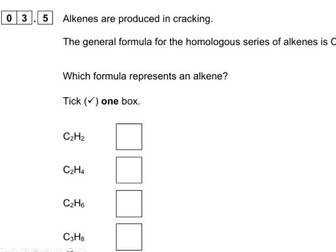
Slide show with exam questions and answers, covering Alkanes, Crude Oil Distillation, and Cracking. Includes past paper questions, written activities, and quick fire questions.
For AQA IGCSE Combined Science: Trilogy. Chemistry. Unit: Organic Chemistry.
Can be adapted for any exam board.
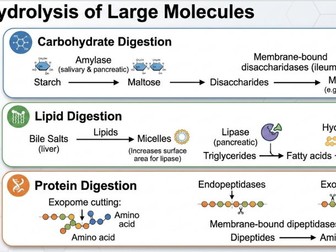
Slideshow covers the AQA AS Biology topic for Section 3.3.3: Digestion and Absorption. It breaks down how large biological molecules are broken down and absorbed by the body.
What is Covered:
The Process of Digestion: The step-by-step hydrolysis of carbohydrates, lipids, and proteins, including roles of amylases, membrane-bound disaccharidases, lipases, bile salts, endopeptidases, exopeptidases, and dipeptidases.
Mechanisms of Absorption: How digested nutrients move across the cell membranes of the ileum, focusing on sodium-glucose co-transport and the role of micelles in lipid absorption.
Required Practical Skills: A guide to designing and interpreting experiments on enzyme reaction rates (such as the effects of pH and bile salts) and using Visking tubing as a model for the gut wall.
Exam Practice: Includes exam-style questions and answers at the end to help test your understanding and practice applying the content to real assessments.
Slides Include:
Exam Questions and Answers
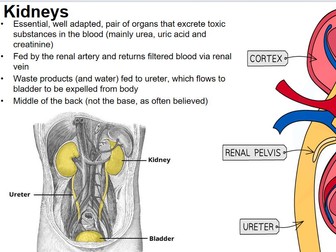
Kidney Structure and Function
Osmoregulation
Role of ADH
Insuling Signalling in Beta Cells
Type I and II Diabetes
Stem Cells Use in Treating Diabetes
Genetically Modified Bacteria for Insulin Production
Slides for the AQA A-Level Biology specification: 3.6.4.3 Control of blood water potential.
It provides a technical breakdown of renal function, moving from gross anatomy to molecular mechanisms.
Content Overview:
Anatomy: Structure of the kidney and the detailed architecture of the nephron.
Ultrafiltration: The role of hydrostatic pressure, the glomerular filtration barrier, and the formation of glomerular filtrate.
Selective Reabsorption: The mechanism of the Proximal Convoluted Tubule (PCT), including the role of microvilli and co-transport proteins.
Osmoregulation: The function of the Loop of Henle as a counter-current multiplier.
Endocrine Control: The role of osmoreceptors in the hypothalamus and the action of Antidiuretic Hormone (ADH) on the permeability of the distal convoluted tubule and collecting duct.
Resource Features:
Exam-Focused: Exam Questions and Answers
Slides for the Edexcel IGCSE Biology (4BI1) specification, covering nutrition and the digestive system.
Resource Contents:
Nutrient Overview:
The Digestive System:
Role of Bile:
Assessment: Embedded past-paper questions throughout the slides to check student understanding.
Specification Links:
Section 2b: Nutrition – Diet (2.7–2.10)
Section 2c: Nutrition – Digestion (2.11–2.13)
Format: PowerPoint (.pptx)
Compatibility: Designed for IGCSE and GCSE Biology (KS4)
SUMMARY:
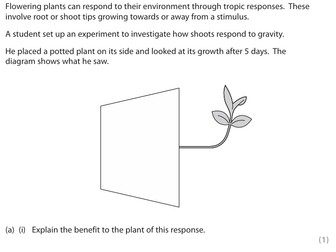
IGCSE Biology slides and exam questions and answers on Phototropism and Gravitropism.
CONTENT:
Slides on both tropisms
Plant response to stimuli
Summary table
Role of Auxin
Quiz
Embedded Exam Qs and As for students to do
5 Mark Plenary
EXAM BOARD:
KS4 National Curriculum Content
For Edexcel IGCSE Biology but easily adapted to any board (e.g. AQA, CIE, WJES)
AS Biology - Water - Edexcel B Specification (but easily adapted to any exam board).
Includes exam questions and mark schemes embedded.
Includes:
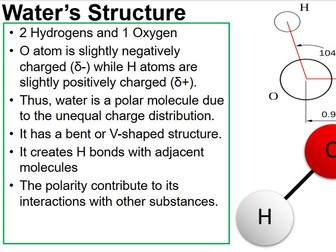
Water’s Structure
Hydrogen Bonding of Water
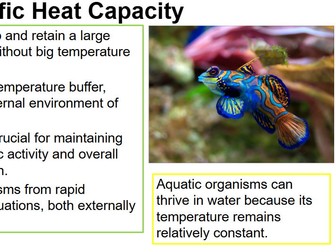
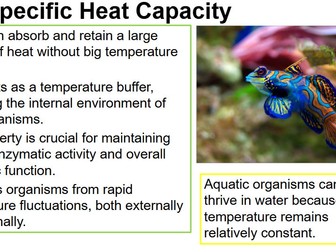
High Specific Heat Capacity
Latent Heat of Vapourisation
Cohesion and Surface Tension
Written Questions
5 Mark Written Question
Plenary Questions
Comprehensive AS Biology Slides on Carbohydrates. AQA or CIE Exam board, but easily adapted to any other. Covers the entire topic for AS Level. 53 Slides.
Includes past paper questions and mark scheme.
Includes:
Role of Carbohydrates
Glucose Properties
Glucose Structure (alpha and beta)
Monosaccharides
Polysaccharides
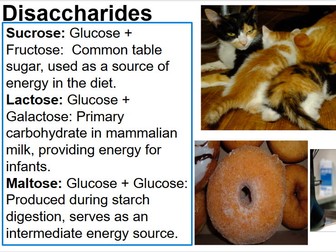
Disaccharides
Glycosidic Bonds
Condensation and Hydrolysis
Testing for Reducing and Non Reducing Sugars
Colorimeter
Testing for Starch
Recap Questions
Plenary
RESOURCE CONTENTS: A-LEVEL BIOLOGY GAS EXCHANGE (EDUQAS SPECIFICATION)
PRINCIPLES OF EXCHANGE
Relationship between organism size, metabolic rate, and diffusion distance.
Surface Area to Volume Ratio (SA:V) calculations for cubes and spheres.
Practice problems: Calculating SA:V for varying cell sizes.
General features of exchange surfaces: Thin, moist, large surface area, and maintenance of concentration gradients.
FISH GAS EXCHANGE (BONY FISH)
Anatomy: Gill arches, filaments, and secondary lamellae.
Counter-current flow mechanism: Explanation of blood and water flowing in opposite directions.
Comparison between counter-current and parallel flow oxygen saturation curves.
Ventilation mechanism: Interplay between the buccal cavity (mouth) and operculum.
INSECT GAS EXCHANGE
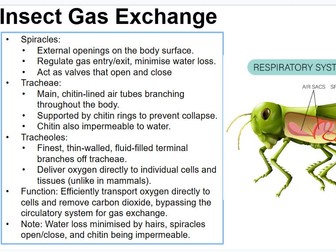
Terrestrial adaptations: Chitinous exoskeleton and spiracles for water loss control.
Tracheal system: Tracheae and tracheoles.
Gas movement via diffusion, abdominal pumping (ventilation), and fluid levels in tracheole ends.
HUMAN GAS EXCHANGE
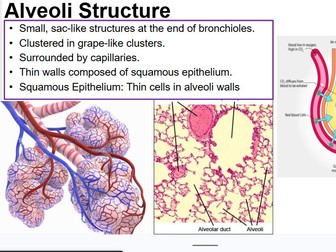
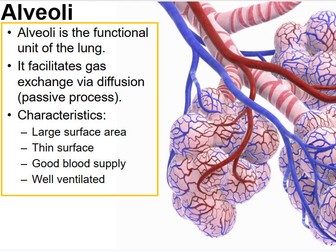
Anatomy: Trachea, bronchi, bronchioles, and alveoli.
Tissue functions: Cartilage (support), smooth muscle (constriction), elastic fibers (recoil), and ciliated epithelium with goblet cells.
Ventilation: Role of external and internal intercostal muscles and the diaphragm during inspiration and expiration.
MATHEMATICS AND MICROSCOPY
Microscopy calculations: Using the formula Image size = Actual size x Magnification (I=AM).
Units of measurement: Conversions between millimeters (mm), micrometers (µm), and nanometers (nm).
Calibration: Step-by-step use of eyepiece graticules and stage micrometers.
ASSESSMENT
Integrated Eduqas and SME past paper questions.
Mark schemes.
TECHNICAL SPECIFICATIONS
Format: Editable .pptx / Google Slides.
Exam Board: Designed for Eduqas; adaptable for AQA, OCR, and Edexcel.
Level: Key Stage 5 / A-Level.
Slides covers the mechanisms of evolutionary biology, moving from individual adaptations to the formation of new species. It is designed for A-Level (or equivalent) biology students and aligns with major exam board specifications, but contains AQA embedded questions from past papers and SaveMyExams (with mark schemes). Can be easily adapted to suit your individual needs.
Content:
Gene Mutation and Effects on Polypeptides
Defining Evolution
Adaptations
Natural Selection
Stabilizing Selection: Favoring intermediate phenotypes.
Directional Selection: Shifting towards an extreme phenotype.
Disruptive Selection: Favoring both extremes over the mean.
Allopatric Speciation
Sympatric Speciation
RESOURCE CONTENTS: A-LEVEL BIOLOGY IMMUNITY AND COMMUNICABLE DISEASES (AQA SPECIFICATION BUT ADAPTABLE)
PATHOGEN STRUCTURE AND CLASSIFICATION
Prokaryote structure:
Viral structure: Capsid, nucleic acids (DNA/RNA), and attachment proteins.
HIV structure: Detailed anatomy including reverse transcriptase, RNA, capsid, and envelope.
Viral infection: Mechanism of viral replication within host cells.
PHAGOCYTOSIS AND NON-SPECIFIC IMMUNITY
Mechanism of phagocytosis
Role of lysosomes, phagosomes, and phagolysosomes.
Antigen presentation: How macrophages become Antigen-Presenting Cells (APCs).
SPECIFIC IMMUNE RESPONSE (CELLULAR AND HUMORAL)
T-cell activation: Helper T-cells, Cytotoxic T-cells, and Memory T-cells.
Role of Cytokines: Interleukins and their role in cell signaling and clonal expansion.
B-cell activation: Clonal selection and clonal expansion.
Plasma cells and Memory B-cells: Primary vs. secondary immune responses.
ANTIBODIES AND IMMUNOLOGY TECHNIQUES
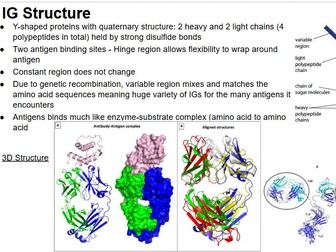
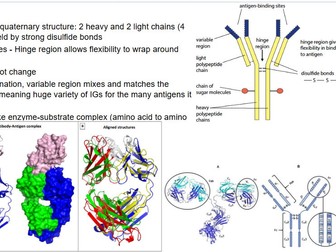
Antibody structure: Variable and constant regions, hinge regions, disulfide bridges, and light/heavy chains.
Monoclonal Antibodies (mAbs): Definition and properties.
Monoclonal Antibody production: The Hybridoma method (fusing B-cells with myeloma cells).
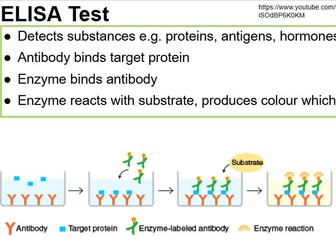
ELISA Test: Direct and indirect methods for detecting antigens or antibodies (e.g., HIV testing).
ANTIBIOTICS AND PENICILLIN
Mechanism of action:
Bacteria vs. Viruses: Why antibiotics are ineffective against viral structures and metabolism.
Antibiotic resistance: Development and spread of resistant strains.
VACCINATION AND ETHICS
Principles of vaccination: Artificial active immunity and herd immunity.
Types of vaccines: Attenuated, killed, and subunit vaccines.
Ethics: Discussion on animal testing in vaccine development, and clinical trial protocols.
ASSESSMENT AND DATA
Integrated AQA past paper questions.
Mark schemes for questions on B/T cell coordination and mAb production.
TECHNICAL SPECIFICATIONS
Format: Editable .pptx / Google Slides.
Exam Board: Designed for AQA. Can be adapted for OCR / Edexcel etc.
Level: Key Stage 5 / A-Level.
Slides covering IGCSE/GCSE content on Gas Exchange. Designed for CIE, but can be adapted for any KS4 specification.
Includes:
Inspired v Expired Air
Rate of Breathing
Respiratory System
Alveoli
Ciliated Cells
Goblet Cells
Effects of Smoking
2 Quizzes for Students
AS Biology - Water - CIE Specification (but easily adapted to any exam board)
Includes:
Water’s Structure
Hydrogen Bonding of Water
High Specific Heat Capacity
Latent Heat of Vapourisation
Cohesion and Surface Tension
Plenary Questions
RESOURCE CONTENTS: GCSE PHYSICS FORCES AND MOTION (AQA COMBINED SCIENCE). AQA EXAM QUESTIONS AND MARK SCHEMES IN THE SLIDES.
FORCES
List of forces
Resultant forces: Calculating the net force acting on an object along a straight line.
Balanced forces: Situations where the resultant force is zero (stationary or constant speed).
Unbalanced forces: Situations where the resultant force is non-zero (acceleration or deceleration).
SPEED, DISTANCE, AND TIME
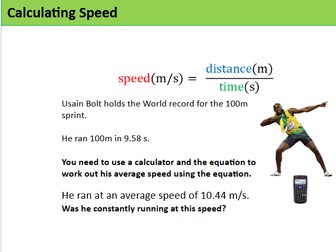
The standard equation: Distance travelled = Speed x Time (s = vt).
Units of measurement: Meters (m), seconds (s), and meters per second (m/s).
Typical speeds: Average values for walking, running, cycling, and the speed of sound.
Practice problems: Rearranging the equation to calculate speed, distance, and time.
DISTANCE-TIME GRAPHS (D-T GRAPHS)
Interpreting the gradient: Representing constant speed.
Stationary objects: Horizontal lines on a D-T graph.
Acceleration and deceleration: Represented by curved lines.
Calculating speed: Determining the gradient from a straight-line section of the graph.
D-T graphs: Plotting coordinates from provided data sets.
VELOCITY-TIME GRAPHS (V-T GRAPHS)
Interpreting the gradient: Representing acceleration.
Calculating acceleration: Using the formula a = Change in velocity / time.
Practice problems: Identifying constant velocity vs. constant acceleration.
ASSESSMENT AND DATA
Embedded AQA Combined Science (Trilogy) past paper questions.
Practice for the Required Practical: Investigating the relationship between force and acceleration.
Mark Schemes
TECHNICAL SPECIFICATIONS
Format: Editable .pptx / Google Slides.
Exam Board: AQA Combined Science (Trilogy).
Level: Key Stage 4 / GCSE.
A-LEVEL BIOLOGY ANTOBODIES - ELISA - MAB PRODUCTION WITH EXAM QUESTIONS AND MARK SCHEMES (AQA SPECIFICATION BUT ADAPTABLE)
ANTIBODIES
Antibody structure: Variable and constant regions, hinge regions, disulfide bridges, and light/heavy chains.
Monoclonal Antibodies (mAbs): Definition and properties.
Monoclonal Antibody production: The Hybridoma method (fusing B-cells with myeloma cells).
ELISA Test: Direct and indirect methods for detecting antigens or antibodies (e.g., HIV testing).
ASSESSMENT AND DATA
Integrated AQA past paper questions.
Mark schemes for questions on B/T cell coordination and mAb production.
TECHNICAL SPECIFICATIONS
Format: Editable .pptx / Google Slides.
Exam Board: Designed for AQA. Can be adapted for OCR / Edexcel etc.
Level: Key Stage 5 / A-Level.
AS Biology - Water - AQA Specification (but easily adapted to any exam board).
Includes exam questions and mark schemes embedded.
Includes:
Water’s Structure
Hydrogen Bonding of Water
High Specific Heat Capacity
Latent Heat of Vapourisation
Cohesion and Surface Tension
Written Questions
Plenary Questions
AS Biology slides for AQA. Fish and Insect Gas Exchange. Includes Past Paper Questions and Mark Schemes.
Content:
Insect Gas Exchange
Fish Gas Exchange
Exam Questions
EXAM PREPARATION
Feature a selection of authentic past paper questions.
Mark scheme answers are provided to help students understand examiner requirements.
CORE CONTENT
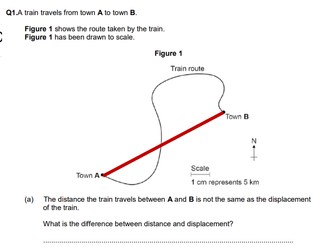
The resource covers the standard acceleration equation.
It includes the uniform acceleration equation plus problems.
A whole class exercise.
There is a dedicated section on displacement.
LESSON STRUCTURE
A guided class exercise is included to help students practice applying formulas.
Logical progression from theory to calculation.
RESOURCE CONTENTS: A-LEVEL BIOLOGY IMMUNITY AND COMMUNICABLE DISEASES (AQA SPECIFICATION BUT ADAPTABLE)
PATHOGEN STRUCTURE AND CLASSIFICATION
Prokaryote structure:
Viral structure: Capsid, nucleic acids (DNA/RNA), and attachment proteins.
HIV structure: Anatomy including reverse transcriptase, RNA, capsid, and envelope.
Viral infection: Mechanism of viral replication within host cells.
PHAGOCYTOSIS AND NON-SPECIFIC IMMUNITY
Mechanism of phagocytosis
Role of lysosomes, phagosomes, and phagolysosomes.
Antigen presentation: How macrophages become Antigen-Presenting Cells (APCs).
SPECIFIC IMMUNE RESPONSE (CELLULAR AND HUMORAL)
T-cell activation: Helper T-cells, Cytotoxic T-cells, and Memory T-cells.
Role of Cytokines: Interleukins and their role in cell signaling and clonal expansion.
B-cell activation: Clonal selection and clonal expansion.
Plasma cells and Memory B-cells: Primary vs. secondary immune responses.
VACCINATION AND ETHICS
Principles of vaccination: Artificial active immunity and herd immunity.
Types of vaccines: Attenuated, killed, and subunit vaccines.
Ethics: Discussion on animal testing in vaccine development, and clinical trial protocols.
ASSESSMENT AND DATA
Integrated AQA past paper questions.
Mark schemes for questions on B/T cell coordination and mAb production.
TECHNICAL SPECIFICATIONS
Format: Editable .pptx / Google Slides.
Exam Board: Designed for AQA. Can be adapted for OCR / Edexcel etc.
Level: Key Stage 5 / A-Level.
For IGCSE Biology 9-1 Edexcel (but easily adapted for AQA, combined, coordinated and others)
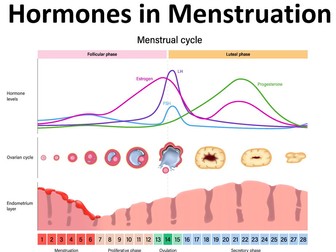
Summmary: Hormone control of menstruation and secondary sex characteristics with exam questions. Female reprodutive system. Roles of placenta and amniotic fluid.
Anatomy & Physiology: Clear diagrams of the female reproductive system and the role of testosterone in males.
The Menstrual Cycle: the four key hormones—FSH, LH, Oestrogen, and Progesterone—and how they interact via feedback loops.
Pregnancy & Development: The functions of the placenta (diffusion/barrier) and amniotic fluid (protection).
Integrated Edexcel past paper questions with mark schemes to provide instant feedback and practice.
Teacher Tip: The hormone graph slide is perfect for a “draw-along” activity to help students visualize how FSH and LH peaks trigger ovulation.
This slide show is designed for the AQA A-Level Biology specification, covering key concepts within the populations and evolution unit. It transitions from the mechanisms of selection to the processes governing the formation of new species.
Content Coverage
Natural Selection: Detailed explanations of directional, stabilising, and disruptive selection.
Speciation: Clear distinctions between allopatric (geographical) and sympatric (reproductive) isolation.
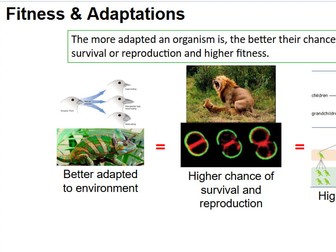
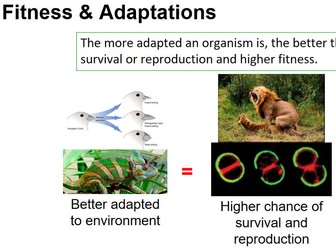
Evolutionary Theory: Definitions and applications of biological fitness and the concept of ‘survival of the fittest’.
Gene Mutation: How mutation lead to polypeptide changes.
Assessment: Integrated practice featuring exam questions and curated ‘Save My Exams’ questions with embedded mark schemes for immediate feedback.


 Quick View