Sports Studies R184 Topic 1-Lesson SlidesQuick View
bacardisapla

Sports Studies R184 Topic 1-Lesson Slides

(0)
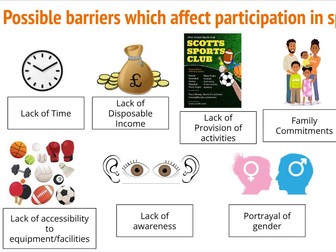
These Sports Studies Topic 1 lesson slides are designed to support students in understanding the key issues that affect participation in sport, with a strong focus on both subject knowledge and exam technique. The resource aligns with the R187 specification and covers the full learning outcome: understanding user groups, barriers to participation, and strategies to increase involvement in sport. The lessons guide students through identifying a wide range of user groups (e.g. ethnic minorities, disabled participants, families, and economically disadvantaged groups) and exploring the barriers they may face, such as lack of time, disposable income, access, provision, and role models. Students are then introduced to practical solutions, including targeted provision, promotion, initiatives, and improving access to facilities and equipment. In addition, the resource develops understanding of factors affecting the popularity of sport, including media coverage, role models, environment, provision, and spectator appeal, helping students link theory to real-world sporting examples. A key strength of these slides is the embedded exam preparation, with structured opportunities to practise: AO1 recall questions to build core knowledge AO2 application questions using realistic scenarios AO3 extended 8-mark “discuss” questions Students are explicitly taught how to approach exam questions using strategies such as “BUG the question” and the PEEI (Point, Explain, Evidence, Impact) structure, enabling them to develop clear, well-supported written responses. The lessons include a variety of engaging activities such as mini whiteboard tasks, discussion prompts, exam practice, and independent written work, alongside scaffolding and model structures to support all learners. This resource is ideal for classroom teaching, revision, or intervention, helping students build confidence in both their understanding of participation in sport and their ability to succeed in exam conditions.
Sports Studies R184 Topic 2-Lesson SlidesQuick View
bacardisapla

Sports Studies R184 Topic 2-Lesson Slides

(0)
These Sports Studies Topic 2 lesson slides focus on The Role of Sport in Promoting Values and provide comprehensive coverage of sporting values, initiatives, ethical behaviour, and performance-enhancing drugs (PEDs). The resource is designed to develop both subject knowledge and exam skills in line with the R184 specification. Students are introduced to key concepts including the 7 sporting values (e.g. teamwork, fair play, inclusion), as well as Olympic and Paralympic values, exploring their meaning and how they are demonstrated in real sporting contexts. The lessons also examine how sport promotes positive behaviours such as sportsmanship, etiquette, and citizenship, while contrasting this with gamesmanship and cheating. The resource includes detailed exploration of sporting initiatives and campaigns at local, regional, and national levels, helping students understand how participation and inclusion are encouraged across different user groups. Real-world examples are used to reinforce understanding and link theory to practice. A significant focus is placed on Performance Enhancing Drugs (PEDs), including: Reasons why athletes may use PEDs Ethical and health implications The role of World Anti-Doping Agency (WADA) Testing procedures, sanctions, and prevention strategies The wider impact of doping on sport, athletes, and spectators The slides also embed a strong emphasis on exam preparation, with opportunities to practise: AO1 knowledge-based questions AO2 application using sporting scenarios AO3 extended responses, including 6- and 8-mark “discuss” questions Students are supported with exam techniques such as “BUG the question” and structured writing approaches, helping them to develop clear, analytical responses. A variety of engaging activities are included throughout, such as mini whiteboard tasks, discussions, video prompts, scenario-based questions, and exam practice, making the lessons suitable for whole-class teaching, revision, or intervention. This resource is ideal for building students’ understanding of values in sport while developing the skills needed to succeed in written assessments.
Sports Studies R184 Topic 3-Lesson SlidesQuick View
bacardisapla

Sports Studies R184 Topic 3-Lesson Slides

(0)
This resource supports the delivery of Topic 3 in Sports Studies, focusing on the process and impact of hosting major sporting events. It is designed to guide students through the pre-event, during-event, and post-event stages, helping them develop a full understanding of how large-scale sporting events are planned, delivered, and evaluated. The slides introduce students to the three types of sporting events (regular, one-off, and regular recurring) and provide opportunities to apply this knowledge through classification and research tasks. Learners then explore the bidding process, including the requirements for a successful bid and the associated benefits and risks. Students examine how host cities prepare through infrastructure development, considering transport, venues, and accommodation, alongside financial costs and social impacts. The resource also covers global investment and employment opportunities, encouraging students to evaluate both positive outcomes and potential drawbacks such as public opposition and financial risk. During the event, the resource highlights key areas such as tourism, media coverage, national pride, and economic activity, as well as challenges including congestion, security risks, and negative media attention. Post-event content focuses on legacy, including increased participation in sport, improved facilities, and long-term economic effects, while also addressing issues like unused venues and financial loss. Interactive elements such as Do Now tasks, exam-style questions, case studies (e.g. London 2012 Olympics), and a ‘create your own bid’ activity are included to promote engagement, critical thinking, and application of knowledge. Overall, this resource aims to develop students’ ability to describe, explain, and evaluate the impacts of hosting major sporting events, preparing them for assessment in the Sports Studies course.
Sports Studies R184 Exam Revision SlidesQuick View
bacardisapla

Sports Studies R184 Exam Revision Slides

(0)
These Sports Studies revision lesson slides are designed to help students confidently prepare for exams by developing their understanding of key content and how to answer different types of exam questions. The resource covers all topics, including participation in sport, sporting values, major events, national governing bodies, and technology in sport. Each lesson is structured around exam-style questioning, with a strong focus on the three assessment objectives: AO1(knowledge): quick-fire recall questions to build core understanding AO2 (application): short-answer questions that apply knowledge to real-life scenarios AO3 (analysis and evaluation): extended 6 to 8 mark questions requiring explanation and discussion. Students are guided through effective exam techniques, including how to BUG (Break Up the Question), identify command words, and structure high-mark responses using the PEEI (Point, Explain, Example, Impact) method. The slides incorporate a range of engaging activities such as mini whiteboard tasks, turn-and-talk discussions, exam practice questions, and peer assessment opportunities. Model answers, scaffolding, and planning frameworks are included to support learners of all abilities in developing confidence and exam skills. This resource is ideal for whole-class revision, intervention sessions, or independent study, helping students improve both their subject knowledge and exam performance.
Sports Studies R184 Topic 4&5 Lesson SlidesQuick View
bacardisapla

Sports Studies R184 Topic 4&5 Lesson Slides

(0)
This resource supports the teaching of Topic 4 and Topic 5 in Sports Studies, focusing on the role of National Governing Bodies (NGBs) and the use of technology in sport. It is designed to build students’ understanding of how sport is organised, developed, and enhanced in modern society. For Topic 4, the slides introduce NGBs as organisations responsible for managing and developing sport within a country. Students explore the key roles of NGBs, including increasing participation, developing coaching and officiating, organising competitions, maintaining rules, ensuring safety, and raising funding. The resource also covers safeguarding, anti-doping, and the importance of policies and initiatives in making sport inclusive and fair. Real-life examples and exam-style questions are used to reinforce knowledge and encourage application. For Topic 5, the resource focuses on the different ways technology is used in sport. Students learn about the five main aims of technology, including enhancing performance, improving safety, aiding recovery, supporting officials’ decision-making, and improving the spectator experience. The slides explore a wide range of examples such as advanced equipment, performance analysis tools, officiating technology (e.g. video review systems), and assistive technology. Students are encouraged to evaluate the benefits and drawbacks of technology, considering its impact on performers and spectators. Key issues such as cost, accessibility, fairness, and the disruption of gameplay are explored through discussion tasks and debates, helping students develop critical thinking and evaluative skills. The resource includes a variety of interactive elements, such as Do Now activities, short-answer questions, matching tasks, and structured debates. These activities are designed to promote engagement, check understanding, and prepare students for assessment. Overall, this resource aims to develop students’ ability to describe, explain, and evaluate the role of organisations and technology in sport, equipping them with the knowledge and skills required for success in the Sports Studies course.
Dance dynamics picture cardsQuick View
bacardisapla

Dance dynamics picture cards

(0)
Bring energy, creativity, and structure to your dance sessions with our Dance Dynamic Picture Cards – a versatile teaching resource designed to inspire movement, develop performance skills, and reinforce understanding of dance dynamics in learners of all ages. Each card features an image paired with a clear action word or dynamic quality (such as sharp, fluid, suspended, explosive), making it easy for students to visualize and embody different movement qualities. Whether you’re leading a warm-up, choreographing a routine, or exploring expressive movement in creative dance, these cards help reinforce key vocabulary and encourage physical exploration. Product Features: Set includes 15 cards with professionally illustrated or photographed visuals Covers a range of dance dynamics: speed, weight, flow, energy, and space Ideal for primary, secondary, or inclusive dance settings Suitable for individual, pair, or group activities Supports curriculum-linked learning outcomes in dance education Perfect for dance teachers, classroom educators, and movement therapists, these cards spark imagination while helping students deepen their understanding of how dynamics transform movement.
Netball homework/Non-doer sheetQuick View
bacardisapla

Netball homework/Non-doer sheet

(0)
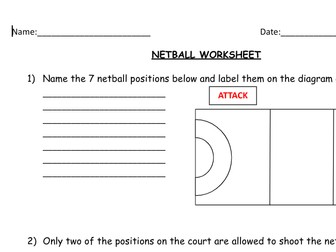
A sheet comprised of short answer questions relating to basic Netball knowledge. Can be good to use as a homework sheet or for a quick task for non-participants in your lessons.
Year 9 and 10 Health related fitness bookletQuick View
bacardisapla

Year 9 and 10 Health related fitness booklet

(0)
Elevate your Core PE fitness lessons with this engaging and purposeful Year 9–10 Fitness Booklet, created to support the delivery of practical fitness units in Key Stage 4. This resource is designed to promote active participation, personal development, and an understanding of key fitness principles—all while keeping students motivated and accountable. Perfect for use in lesson time, as a learning log, or for independent tasks, this booklet encourages students to take ownership of their physical progress through structured activities, fitness tracking, and goal setting. Product Features: Developed specifically for Year 9–10 Core PE practical lessons Covers fitness components, methods of training and progress tracking Includes circuit planning sheets, workout logs, and student reflection tasks Suitable for all ability levels with adaptable tasks Ideal for PE departments seeking a practical, low-prep resource that blends physical activity with meaningful reflection and progression.
Non Doer Job Role CardsQuick View
bacardisapla

Non Doer Job Role Cards

(0)
4 job role cards to give to no doers/students not participating in your PE lessons. Each card has a job role and instructions/steps on what they need to do to fulfill that role.
Volleyball Serve Resource cardsQuick View
bacardisapla

Volleyball Serve Resource cards

(0)
Resource cards for peer teaching/individual practice for both underarm and overarm serve in Volleyball. Contains teaching points and images to help break down the skill for students.
Volleyball Spike Resource CardQuick View
bacardisapla

Volleyball Spike Resource Card

(0)
This visual aid breaks down the spike into key teaching points and uses images to support. Use this for reinforcing teaching points in individual practice or peer teaching.
Year 7 and 8 Health related fitness work bookletQuick View
bacardisapla

Year 7 and 8 Health related fitness work booklet

(0)
Make your fitness lessons active, structured, and engaging with this Year 7–8 Fitness Booklet, created to support practical PE sessions through clear guidance, purposeful activities, and student reflection. Designed specifically for Key Stage 3, this resource helps students build foundational knowledge of fitness components while developing their physical performance and tracking personal progress. Whether you’re delivering a fitness unit, circuit training, or warm-up sessions, this booklet offers a consistent and easy-to-use structure that encourages independent learning and active participation. Product Features: Tailored for Years 7–8, with age-appropriate language and tasks Introduces key components of fitness through fun, practical activities Includes warm-ups, fitness testing logs, circuit templates, and reflection tasks Ideal for use during lessons, as homework, or for cover work Perfect for PE teachers who want a ready-to-go, student-friendly resource to support fitness education in a practical setting.
Year 10 Components of fitness bookletQuick View
bacardisapla

Year 10 Components of fitness booklet

(0)
Support your students’ understanding of health related fitness with this Component of Fitness Workbook, designed to align with national curriculum and GCSE PE specifications. This structured, student-friendly resource breaks down key fitness components—such as cardiovascular endurance, muscular strength, flexibility, and more—through clear explanations, engaging tasks, and practical application. Perfect for classroom or practical lessons, the booklet helps students consolidate knowledge, apply theory to real-life sporting examples, and prepare effectively for assessments. Product Features: Covers all 10 components of fitness with clear definitions and sporting examples Designed for Year 10 students but adaptable for Year 9–11 use Supports practical application of knowledge, revision, homework, or cover work with minimal teacher input Ideal for PE departments seeking a ready-to-use, curriculum-aligned resource that boosts student confidence and subject understanding.
KS3 Dance 8 week scheme of learning/lesson plansQuick View
bacardisapla

KS3 Dance 8 week scheme of learning/lesson plans

(0)
The resource is a powerpoint that outlines each dance lesson for an 8 week unit. The theme for this unit of work is SURVIVAL. The powerpoint includes videos of the set choreography created for both contemporary and street styles. Each lesson on the powerpoint is identified by a slide containing the title of the lesson, Learning objectives and links to a warm up song and stretch song. Each slide also contains teaching points for the lesson, including key terminology and definitions, in the slide notes below the slides. The lessons give students the opportunity to develop the following skills in Action, Space, Dynamics and Relationships (ASDR): Jumps Rolls Leaps Floor work Spins and turns Spatial design Transitions Contact Solo’s, duets and trios This is aimed at KS3.