Updated Syllabus! Tectonic Hazards IGCSE Geography Cambridge AssessmentQuick View
EmiliaRoebuck

Updated Syllabus! Tectonic Hazards IGCSE Geography Cambridge Assessment

(0)
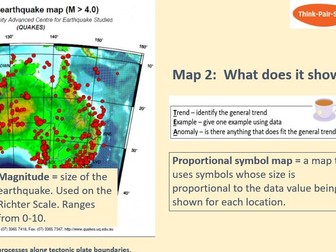
For Exams from 2027! Completed lesson overview for ‘Tectonic Environments’ from Paper 1 Physical Geography. Lessons are in PowerPoint format and are ready to go, including all starter tasks. Lessons contain a variety of exam and skill opportunity. Including photograph analysis, proportional symbol maps and use of 16-point compass. As well as a greater emphasis on the concept of ‘evaluation’ in line with the new syllabus update. Lessons follow the guided structure on published Cambridge Scheme of Work. Including two detailed specific example lessons on one Earthquake on 2010 Haiti and one Volcanic Eruption on 2022 Hunga Tonga eruption. Package also includes two* Model Answers* for detailed specific examples and one End of Unit Assessment. Lessons cover as followed: • L01 To know the names and locations of the main tectonic plates and how tectonic plates move • L02 To describe and explain processes along tectonic plate boundaries • L03 What are the different types of earthquakes • L04 To understand the processes, features and hazards associated with volcanoes • L05 To be able to explain why people live in areas at risk to tectonic hazards • L06 To explain the social, economic and environmental impacts of tectonic hazards • L07 To evaluate the different strategies and techniques used to manage the impacts of earthquakes and volcanic eruptions • L08 To know the causes, impacts and responses of one earthquake in a country and the management strategies • L09 To know the causes, impacts and responses of one volcanic eruption in a country and the management strategies
Updated Syllabus! Towns and Cities IGCSE Geography Cambridge AssessmentQuick View
EmiliaRoebuck

Updated Syllabus! Towns and Cities IGCSE Geography Cambridge Assessment

(0)
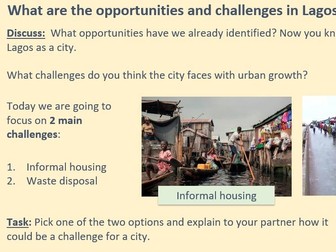
For Exams from 2027! Completed lesson overview for ‘Towns and Cities’ from Paper 2 Human Geography. Lessons are in PowerPoint format and are ready to go, including all starter tasks. Lessons contain a variety of exam and skill opportunity. Including line graph analysis, photograph analysis and extended writing opportunities. As well as a greater emphasis on the concept of ‘evaluation’ in line with the new syllabus update. Lessons follow the guided structure on published Cambridge Scheme of Work. Including one detailed specific example lesson on LIC City Lagos, Nigeria. Lessons cover as followed: • L01 To be able to describe and explain global patterns and trends in urbanisation. • L02 To explain the opportunities of urban living. • L03 To explain the opportunities and challenges of rapid urban growth. • L04 To know the impact of urban sprawl on the rural urban fringe and surrounding areas. • L05 To evaluate urban growth management strategies. • L06 To investigate a detailed case study of an urban area, describing its causes of growth, challenges and sustainable management strategies.
Updated Syllabus! Changing Populations IGCSE Geography Cambridge AssessmentQuick View
EmiliaRoebuck

Updated Syllabus! Changing Populations IGCSE Geography Cambridge Assessment

(0)
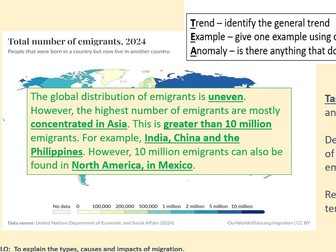
For Exams from 2027! Completed lesson overview for topic 6 ‘Changing Populations’ from Paper 2 Human Geography. Lessons are in PowerPoint format and are ready to go, including all starter tasks. Lessons contain a variety of exam and skill opportunity. Including line graph construction and analysis, population pyramids, choropleth maps. As well as a greater emphasis on the concept of ‘evaluation’ in line with the new syllabus update. Lessons follow the guided structure on published Cambridge Scheme of Work. Including two detailed specific example lessons on Pro-Natalist Policy for Population Decline on Japan and International Migration on Myanmar to Thailand. Package also includes two* Model Answers and two Knowledge Organisers (PDF)* for detailed specific examples. Lessons cover as followed: L01 To know the patterns and trends in global population growth. L02 To know the reasons for the growth and decline of a country’s population. Reasons include role of fertility rate, birth rate, death rate, natural increase and migration. L03 The impacts of population growth or decline. L04 To understand and evaluate the impact of pro-natalist and anti-natalist policies on birth rates L05 To understand strengths and limitations of the DTM L06 To understand the factors influencing population structure L07 To understand the causes of youthful and ageing populations and evaluate the impacts L08 To know one named example of a pro-natalist policy L09 To explain the types, causes and impacts of migration L10 To examine strategies for managing migration L11 To know one named international migration stream