French Numbers & Age | Les Nombres 1–31 | Year 7 KS3 French LessonQuick View
lindaponeau

French Numbers & Age | Les Nombres 1–31 | Year 7 KS3 French Lesson

(0)
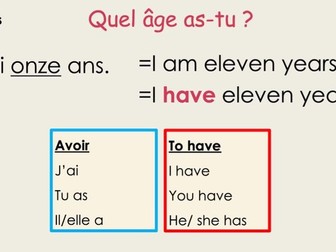
French Numbers & Age – Les Nombres 1–31 | KS3 Year 7 A ready-to-teach KS3 French lesson for Year 7 / beginner learners, introducing French numbers and teaching students how to ask and say their age. The lesson begins with retrieval of previously learned greetings and introductions before introducing numbers and developing students’ ability to use avoir to talk about age. Students will learn to: recognise and use French numbers 1–31 ask Quel âge as-tu ? use j’ai / tu as / il-elle a say their age correctly in French understand that French uses avoir rather than être when talking about age Activities include: Do Now / retrieval practice vocabulary matching number recognition and pronunciation listening practice mini-whiteboard activities speaking and writing differentiated extension tasks translation extended writing challenge The lesson progresses from vocabulary recognition to students independently producing sentences such as: J’ai onze ans. Quel âge as-tu ? The final challenge also revisits previously learned language, allowing students to combine age with greetings, personality and opinions. **Suitable for: Year 7 French, KS3 French, beginner French, numbers, age, introductions and retrieval/revision. Editable PowerPoint included.**
French Sports | Jouer & Faire + Opinions | KS3 Year 7–8 | 64-Slide Lesson PackQuick View
lindaponeau

French Sports | Jouer & Faire + Opinions | KS3 Year 7–8 | 64-Slide Lesson Pack

(0)
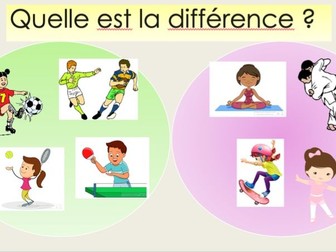
French Sports – Les Sports | Jouer & Faire + Opinions | KS3 Year 7–8 A comprehensive and engaging 64-slide KS3 French resource pack for teaching sports, hobbies and opinions. Suitable for Year 7 and Year 8 French, the resource introduces and practises a wide range of sports vocabulary while helping pupils understand when to use jouer and faire. Students progress from recognising key vocabulary to producing increasingly developed sentences about the sports they play/do, their opinions and reasons. Language and structures include: Les sports Jouer au / à la / aux Faire du / de la / de l’ J’aime / Je n’aime pas… Giving opinions Giving reasons using car / parce que Extending sentences using connectives Sports vocabulary includes: football, rugby, basketball, tennis, table tennis, yoga, jogging, judo, cycling, skateboarding, climbing, horse riding, dancing, swimming, gymnastics and more. Activities include: Vocabulary presentation and recall Retrieval practice Listening and dictation Reading comprehension True / False activities Translation Speaking practice Grammar and sentence-building Jouer vs faire practice Opinions and reasons Differentiated challenges Extended sentence writing Homework activities The activities build from word level to sentence level, allowing students to develop answers such as: J’aime jouer au foot car c’est amusant. J’aime faire de la natation parce que c’est relaxant. Je n’aime pas jouer au tennis car c’est assez difficile. The resource can be taught as an extended sequence or teachers can select individual activities to suit their class and lesson length. Suitable for: KS3 French Year 7 French Year 8 French Beginner / lower-intermediate learners Sports and hobbies topic Cover / revision / retrieval Includes an editable 64-slide PowerPoint.
Year 7 French Greetings & Introductions | 2 Complete Lessons | KS3 BeginnersQuick View
lindaponeau

Year 7 French Greetings & Introductions | 2 Complete Lessons | KS3 Beginners

(0)
Year 7 French Greetings & Introductions – 2 Complete KS3 Lessons A ready-to-teach 2-lesson French pack for Year 7 / KS3 beginners, ideal for pupils at the very beginning of their French learning. Across the two lessons, students learn to greet someone, introduce themselves, ask another person’s name and say how they are feeling. Language covered: Bonjour / Salut Comment t’appelles-tu ? Je m’appelle… Ça va ? Ça va très bien / bien / pas mal / Ça ne va pas Au revoir / À plus The lessons gradually build students’ confidence through modelling, repetition and retrieval before moving towards independent communication. Activities include: Do Now / retrieval activities Teacher modelling and pronunciation practice Vocabulary matching Reading comprehension Pair speaking Question-and-answer practice Differentiated challenge activities Creative comic-strip writing task Plenary and retrieval questions Students work towards being able to hold a simple introductory conversation in French by the end of the sequence. Suitable for Year 7 French, KS3 French, complete beginners, first French lessons and back-to-school teaching. **Includes: **editable PowerPoint containing 2 complete lessons.