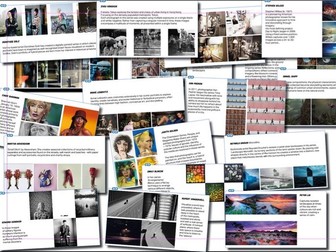
PPT consisting of 35 slides with inspiring photographers across a range of different styles using different experimental techniques both with the camera, Photoshop and physical manipulation to show to your students at the beginning of the project.
Each artist has 3-4 examples of their work and a brief description of how they relate to the theme.
There are four suggestions of artists for each of the following themes.
Nature
Isolation
Movement
Interiors
Time
Reflections
Costumes
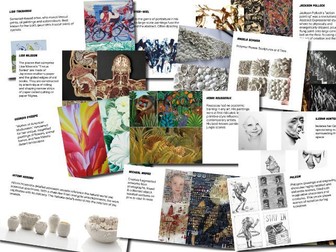
PPT consisting of 35 slides with inspiring artists across a range of different styles and media including. Painting, collage, ceramics, textiles, illustration, assemblage, drawing and photography to show to your students at the beginning of the project.
Each artist has 3-4 examples of their work and a brief description of how they relate to the theme.
There are four suggestions of artists for each of the following themes.
Nature
Isolation
Movement
Interiors
Time
Magnificent
Lost & Found
Includes 5 page PPT and a printable double sided worksheet - can be used for 2-3 lessons or given as cover depending on materials used to apply the colour.
Consists of two separate tasks
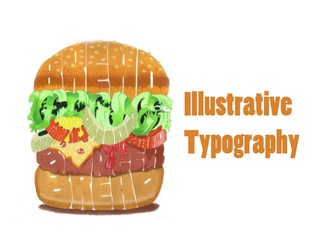
Create a single work illustrative typography example
Create a more developed slogan or group of words as illustrative typography example.
Set as cover - use simple sketched examples
As a series of lessons - larger examples using paint or taken into digital software
GCSE digital Photography sketchbook with placeholders, sentence starters and prompts for students.
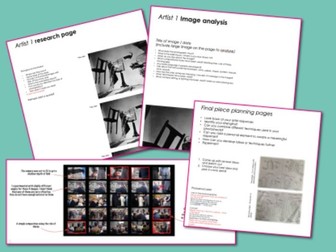
Digital sketchbook includes the following pages for students to type over questions, replace images and ingredients of what to include on each page for a great GCSE result. Can adapt to any theme. Each page shows which assessment objective it links to.
Mind map exploring theme
Mood board of images exploring theme
Initial photo shoot exploring theme
Artist 1 research page
Artist 1 image analysis
Artist 1 response page
Artist 2 research page
Artist 2 image analysis
Artist 2 response page
Artist 3 research page
Artist 3 image analysis
Artist 3 response page
Final piece planning pages with in depth photo shoot plan prompts, sketched examples
Notes on how to present and annotate your best images.
Bundle should cover the first term for year 10 GCSE photography
Introduction to Photography GCSE, Power Point presentation covering
GCSE course content
Brief history looking at the first known photograph & technique
Example of contemporary artist using the same technique
Several slides of photographers work - looking at many different genres
Mind map task - what is photography
Understanding digital SLR camera controls with task
How to hold a camera
What are the seven elements of photography
Initial home learning task - tonal scale
How to analyse an image successfully
Basic camera functions, Power Point presentation covering
17 page PPT covering basic camera functions including manual/auto focus, how to adjust aperture, shutter speed and ISO. Includes some basic activities, perfect as a practical introduction to using digital SLR cameras for the start of the course.
Topics covered
How to use manual/auto focus with photoshoot
How to use aperture to capture scenes with a shallow and deep depth of field with photoshoot
Undersatnding the exposure triangle
How to make a contact sheet using Photoshop
Understanding ISO
Ten page presentation introducing Cyanotype
Slide 1. What is Cyanotype
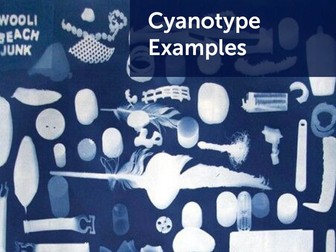
Slide 2/3. Visual examples
Slide 4. Equipment and how to prepare papers
Slide 5. How to expose objects to create a Photogram
Slide 6. How to create a digital negative using Photoshop to create a Cyanotype print
Slide 7,8,9. Artists who use Cyanotype in their work
Slide 10. Task
Resource contains 2 page worksheet PDF
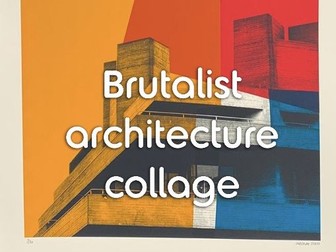
Page 1. description of task, examples of Brutalist collages and link to a 7 minute informational video about Brutalist architecture
Page 2. Black and white photographic sources featuring Brutalist architecture to cut up and use for collage.
Other useful materials - Bright colour paper to collage on to contrast the black and white photography
Suggested printing size A3
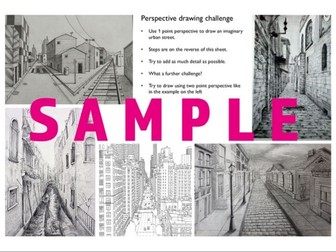
One point perspective drawing worksheet.
Includes several examples in different styles and step-by-step instructions on the reverse. Suggested extension activity of Two point perspective drawing.
Students will need plain paper and pencil to complete the task
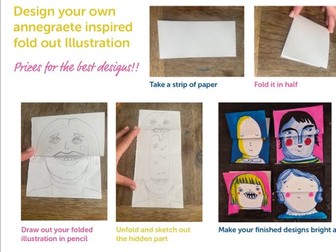
Three page Powerpoint for an illustrative end of term, fun, drawing competition.
Inspired by the Instagram artist and illustrator @annegraete.
Includes…
Several examples of the artists work
Video of how her fold out illustrations work
Step-by-step instructions with pictures
Ideal to use throughout KS3
You will need a strip of paper for each student, coloured pens or pencils and sweets for prizes (if you want to be popular)
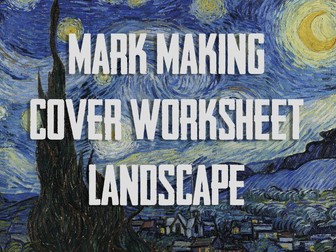
Printable worksheet with ghosted image of Starry Night, colour references and description of task…
‘Using coloured pencils Work over the ghost image using directional mark making techniques to create movement
Overlap marks to blend colours’
Worksheet ideal for a cover lesson or extension activity.
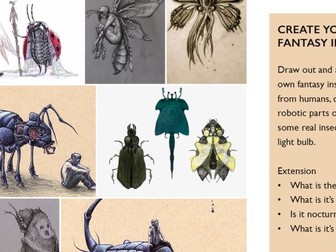
Shows example illustrations of fantasy insects and suggestions of elements students might use.
Task
draw your own fantasy insect and apply colour
Second task is to write a fact file to go with your creation
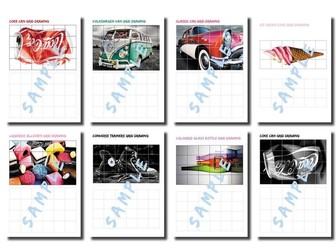
Printable grid drawing worksheets, perfect for cover or print larger on cartridge paper for more sustained paintings or drawings
Bundle includes
Crushed coke can (colour)
Crushed coke can (greyscale)
Coloured glass bottles
Converse trainers
Liquorice Allsorts
Ice cream cone
Vintage car
Volkswagen van
KS3 cover lesson resource.
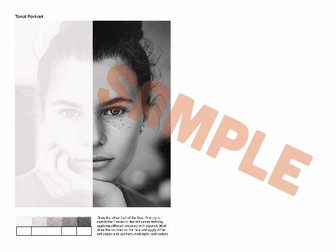
Half face tonal portrait pencil drawing.
First identity 5 different tones in a tonal ladder, then apply over a half face ghosted image. Finally use mark making techniques to add texture.
Learning objectives.
Understand how to create a range of tonal values using a pencil.
Understand how to apply mark making techniques to create texture.
Use symmetry and proportion to create a portrait
ART Command words
Command words are the words and phrases used in exams and other
assessment tasks that tell students how they should answer the question.
Can use as an art room poster and/or a sheet to stick inside books
Acknowledge
To give credit for, recognise, and highlight something, such as a selected source or the work of others.
Analyse
To examine in depth, study thoroughly, question, investigate and consider your own opinion or visual investigation of something.
Apply
To use knowledge, skills and understanding and to employ appropriate techniques when developing and progressing ideas.
Appropriate
Suitable, relevant, applicable to intention.
Consider
To think through, review, reflect on and respond to information or a theme, subject or starting point.
Create
To conceive, make, craft or design something new or invent something.
Demonstrate
To show, exhibit, prove or express such things as subject specific knowledge, understanding and skills.
Develop
To take forward, change, improve or build on an idea, theme or starting point.
Discuss
To deliberate, consider, talk over, debate or examine something.
Explore
To investigate, examine and look into with an open mind about what might be found and developed.
Evidence
To show, prove, support and make clear or verify something.
Identify
To recognise links and associations between things such as sources and connections with personal work, accounting for choices and decisions made.
Investigate
To enquire into, examine in depth, and/or analyse the relevance of a chosen subject and associated sources .
Organise
To collect, collate, arrange and combine elements of your work into a clear and logical submission.
Present
To give a response to an idea, theme or starting point that shows a personal, meaningful and organised fulfilment of intentions.
Realise
To achieve, attain and/or accomplish your intentions.
Record
To document ideas, thoughts, insights and responses to starting points in visual and written annotated form.
Refine
To improve, enhance and change elements of your work for the better.
Research
To study in detail, discover and find information about.
Response
To produce personal work generated by a subject, theme, starting point, or design brief.
Select
To make an inform choice of what to submit for assessment rather than submitting everything produced during the course of study.
Show
To indicate, explain, present and display your own thoughts and findings.
Study
To examine, consider, investigate, research and show an in-depth understanding of what you have found or experienced.
Visual arts vocabulary for students books
Perfect to print out and stick inside the cover of students books for annotation reference
A-Z of key words and art terms
Bright and colourful
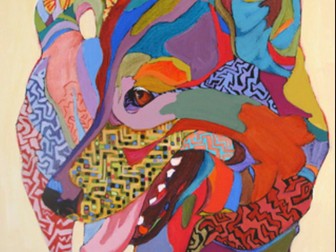
Responding to the colourful, patterned paintings by Caroleen Clarke. Great resource for cover lesson.
Choice of three different worksheets with ghosted animal images to work over the top. 1, dog, 1 ram and 1 owl.
On each worksheet, students are given examples and the artists work and instructions of how to divide up the images and apply colour and pattern.
Task could be completed in a cover lesson with colour pens/pencils or printed out on thicker cartridge paper to apply paint
Learning objectives
Understand how to apply colour theory to create depth
Use pattern to define shape/form
Understand how the element of pattern is applied in art
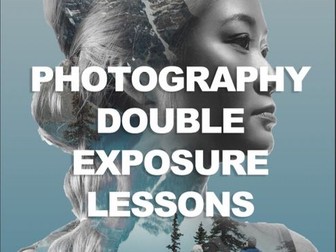
Targeted at GCSE photography groups but could be used for year 9 in some circumstances. Would fit well with portrait or landscape projects and surrealism.
Resource would last 3-4 lessons including students capturing the head shots and completing a photographers research page as well as following the instructions of how to put their final imagaes together as outlined in the video and worksheet.
Resources consists of,
Power point introducing double exposure photography, a look at the photographer Antonio Mora with his Spanish, surrealist portraits.
Instructional, narrated screen recording showing the process of combining two images successfully.
Printable student handout which corresponds with the video with step-by-step written instructions and screen shots of different stages - Print out on A3
Photoshop techniques used include.
Use of adjustment layers
Use of layer masks
How to desaturate and image
Combining images in one document
Using the layers panel
Applying different layer blends
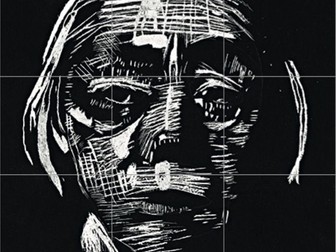
One lesson cover resource ideal for portraiture project or looking at German Expressionism.
Worksheet with gridded self portrait of Kathe Kollwitz
Learning objectives
Understand how to apply mark making techniques to create a portrait
Understand how to use grids in portraiture
Worksheet includes some brief Art History information about the artist
Single worksheet - ideal for cover lesson
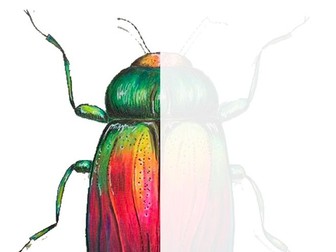
Worksheet consists of a half finished blended colour pencil beetle with tips on how to blend colour pencils successfully. Other half of beetle has ghosted faint image to work over.
Learning objectives
Understand how to apply symmetry
Understand how to blend colour pencils effectively
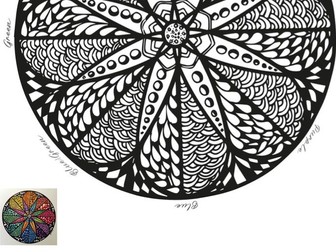
Worksheet with Zentangle and colour wheel reference, perfect for KS3 cover lesson.
Using coloured pencils students need to apply colour to the mandala as it appears on the colour wheel and identify the complementary colours.


 Quick View