 Quick View
KS3/ SEN/ EAL reading intervention. 20 lessons.
Engaging Grammar Intervention for Key Stage 3 & EAL Learners
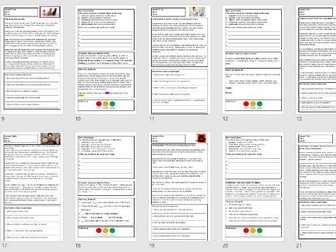
This resource offers 20 thoughtfully designed grammar intervention lessons, perfect for Key Stage 3 students and English as an Additional Language (EAL) learners.
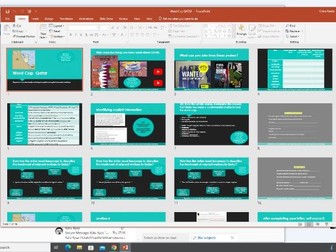
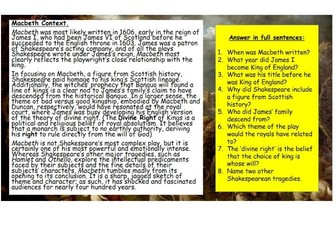
Each lesson is anchored in a high-interest topic—like roller coasters, K-pop, or wildfires—paired with clear reading passages, vocabulary support, and targeted grammar practice. Students develop foundational literacy and grammar skills while building confidence and real-world language proficiency.
Accessible texts and questions tailored for EAL and lower-literacy learners
Step-by-step grammar instruction with scaffolded practice
Engaging, contemporary topics to boost motivation
Vocabulary building in every lesson
Ready to use for interventions, small groups, HOMEWORK or independent studY
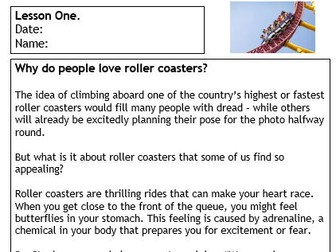
Roller Coasters: Capitalising names and the first word in a sentence
Scary Movies: Ending sentences with a full stop.
K-Pop: Using question marks for questions
Dogs: Recognising and writing basic nouns
Baking: Recognising and writing basic verbs
Phones: Recognising and writing basic adjectives
Banksy: Using “a” and “an” correctly
Labubus: Using “I” as a capital letter
Rats: Matching simple subjects and verbs
Lab Grown MeatL Using simple plurals.
Space: Sentence Types. Identifying and writing simple, compound, and basic complex sentences.
AI: Subject-Verb Agreement: Matching singular/plural subjects with correct verb forms.
Wildfires: Verb Tenses: Using past, present, and future tense verbs accurately.
Moon Landing: Punctuation Basics: Using capital letters, full stops question marks, exclamation marks, and commas in lists.
Kidfluencers: Pronoun Use: Selecting appropriate pronouns and ensuring pronoun-
agreement.
Hair: Using Compound Sentences: using coordinating conjunctions (and, but, or, so) in compound sentences.
Animal’s Mental Health: Apostrophes: Using apostrophes for contractions and possessives.
Music: Adjectives and Adverbs: Understanding the difference and using both to describe nouns and verbs.
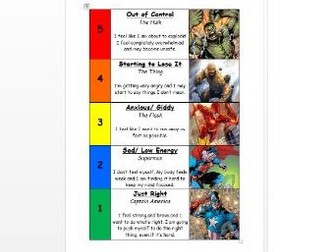
Feelings: Prepositional Phrases: Recognising and using prepositions and simple prepositional phrases.
Mental Imagery: Common Homophones : Distinguishing between words like their/there/they’re, to/too/two, your/you’re.