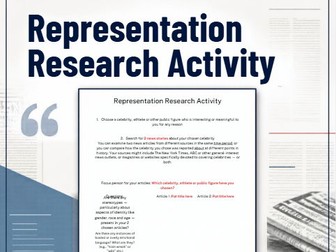
Representation Research ActivityQuick View
kjack960805

Representation Research Activity

(0)
How can the media shape the way we see a celebrity? In this engaging Celebrity Representation activity, students choose a well-known person or celebrity and investigate how they are represented across different media articles. Students locate relevant articles about their chosen celebrity and then analyse the language, images, headlines and ideas presented to determine how the person is being represented.
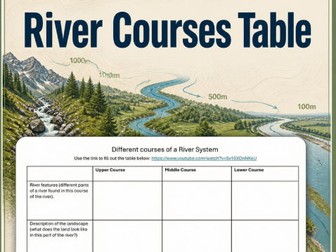
River Course ActivityQuick View
kjack960805

River Course Activity

(0)
Explore the journey of a river from its source to its mouth with this River Courses Table activity! Students watch a supporting YouTube video and use the information they gather to complete a table about the upper, middle and lower courses of a river. The activity guides students to identify the key characteristics of each river course, helping them recognise how a river changes as it moves downstream
Freytag's Pyramid Narrative TemplateQuick View
kjack960805

Freytag's Pyramid Narrative Template

(0)
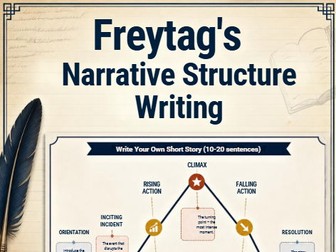
Not sure how to help students turn their ideas into a structured narrative? This Freytag’s Narrative Structure Writing template breaks the narrative writing process into clear, manageable sections, giving students a scaffold for developing their own story. Students work through the key stages of Freytag’s Pyramid — from the exposition and rising action through to the climax, falling action and resolution — building their story one section at a time.
Character Profiles - Boy in the Striped PyjamasQuick View
kjack960805

Character Profiles - Boy in the Striped Pyjamas

(0)
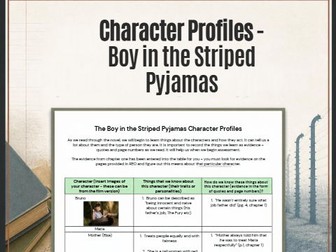
How well do your students really understand the characters in The Boy in the Striped Pyjamas? This character profile activity encourages students to move beyond simply describing characters and instead use evidence from the novel to justify their ideas. Students explore key characters and identify their character traits, before locating quotes, actions and events from the text that support their interpretations.
Livability Matching ExerciseQuick View
kjack960805

Livability Matching Exercise

(0)
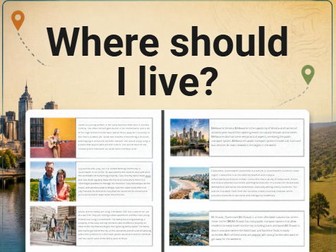
What makes one place more livable than another? And does the best place to live depend on the individual? In this engaging Geography activity, students are given a range of different individual situations, needs and preferences and must decide which location would be the most suitable place for each person to live. Students need to consider a range of livability factors, such as access to services, employment, transport, environment, lifestyle and population, before matching each individual to the location that best meets their needs.
Flood Modelling ActivityQuick View
kjack960805

Flood Modelling Activity

(0)
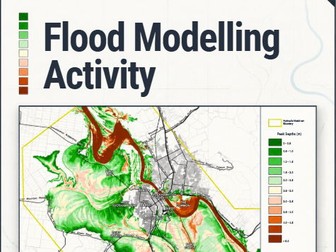
Put students’ geographical map-reading skills into practice with this engaging flood modelling activity. In this activity, students examine a projected flood map and use their geographical knowledge and map-reading skills to investigate what the map is showing. Rather than simply reading information from the map, students are encouraged to observe patterns, identify areas at risk and make geographical assumptions based on the evidence provided. Students then respond to a series of questions that require them to interpret the flood model and apply their understanding of flooding, location, spatial patterns and geographical processes.
Character Archetypes TableQuick View
kjack960805

Character Archetypes Table

(0)
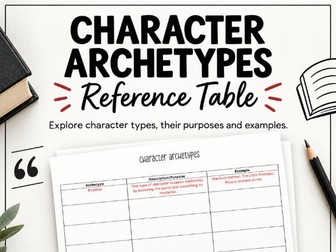
Help students understand and identify character archetypes with this clear and easy-to-use reference table. This resource introduces students to common character archetypes by providing space to explore the archetype, its description/purpose, and examples from familiar texts and films. It is designed to help students recognise recurring character types and understand the role they can play within stories.
Geography Liveability Case StudyQuick View
kjack960805

Geography Liveability Case Study

(0)
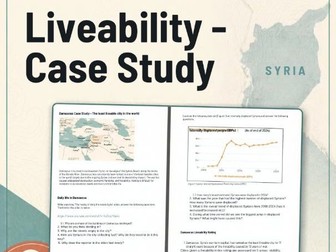
This Geography resource introduces students to the concept of liveability through a real-world case study of Damascus, Syria. Students begin by exploring what liveability means in Geography and considering the physical and human characteristics that can make a place more or less liveable. They then undertake contextual research into Damascus, building an understanding of the city’s location, history, population and circumstances before investigating its liveability. The resource uses Damascus as a compelling case study because it has repeatedly been ranked as the least liveable city in the world by the Economist Intelligence Unit’s Global Liveability Index.
C.L.O.C.C. - Geography Concept Learning ActivityQuick View
kjack960805

C.L.O.C.C. - Geography Concept Learning Activity

(0)
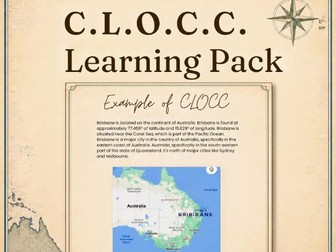
Help students confidently develop their C.L.O.C.C. geographical skills with this engaging, scaffolded resource designed to take students from explicit instruction to independent practice. This resource introduces students to the C.L.O.C.C. concept step-by-step, using clear explanations, diagrams, visual examples and worked examples to help students understand what they are looking for and how to apply the skill. Once students have been guided through the process, they can use the accompanying practice table/worksheet to apply their understanding independently.
Horror Creative Writing PromptsQuick View
kjack960805

Horror Creative Writing Prompts

(0)
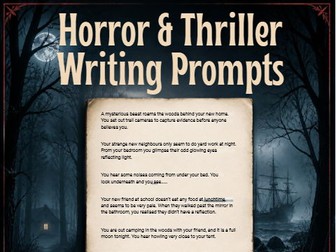
Need a little inspiration to get those scary stories started? This collection of horror and thriller writing prompts is designed to spark students’ imaginations and help them develop ideas for their own suspenseful narratives. From creepy discoveries and unexplained events to unsettling characters and terrifying situations, the prompts provide a starting point that students can take in their own direction.
Separation of Powers Research ActivityQuick View
kjack960805

Separation of Powers Research Activity

(0)
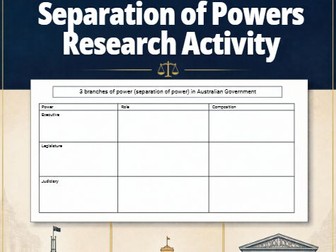
How does Australia’s system of government prevent too much power from being held by one group? This Separation of Powers research activity guides students through the three key areas of Australian government — the Legislative, Executive and Judicial branches. Students research each branch and use an online source or physical classroom resource to find and record the information they need to complete the activity.
First Nations Storyline Mind mapQuick View
kjack960805

First Nations Storyline Mind map

(0)
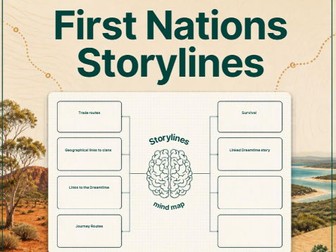
How did First Nations Australians use knowledge of Country and the Dreaming to survive and thrive in Australia’s diverse environments? This First Nations Storylines template provides students with a structured mind map to organise and record their own research into First Nations knowledge, connection to Country and traditional ways of living. Students can investigate how knowledge and storylines helped communities understand and respond to their environment, including the challenges of living in Australian desert environments.
Livability Table ExerciseQuick View
kjack960805

Livability Table Exercise

(0)
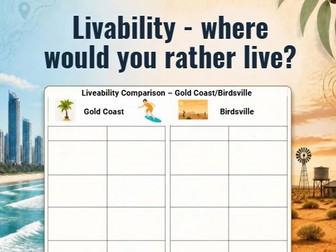
Help students explore the concept of livability by comparing two very different Australian places: the Gold Coast and Birdsville! This scaffolded Geography activity guides students through a range of livability factors, including access to services, environment, transport, population, employment and lifestyle. Students are provided with key information and examples to get them started, while selected sections are left blank for students to research, complete and apply their own geographical thinking
Creative Writing ExemplarQuick View
kjack960805

Creative Writing Exemplar

(0)
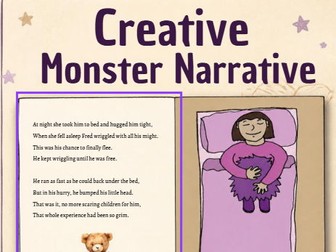
Bring creative writing to life with this storybook narrative exemplar, designed to show students how they can create their own digital story using Microsoft PowerPoint and created images! This resource provides students with a complete example of a creative monster narrative, while also breaking the story down into the key stages of Freytag’s Pyramid Narrative Structure. Students can see how each section of the narrative works together — from the exposition and rising action through to the climax, falling action and resolution — while using the exemplar as inspiration for creating their own story.
Ethos, Pathos and Logos Table ActivityQuick View
kjack960805

Ethos, Pathos and Logos Table Activity

(0)
Help students identify and analyse Ethos, Pathos and Logos in persuasive texts with this clear and easy-to-use analysis table. This activity gives students a structured way to examine a persuasive piece and record what they can see and identify within the text. Students look for examples of Ethos (credibility), Pathos (emotion) and Logos (logic/reasoning) and record the evidence they find. The table provides a simple framework for students to practise recognising persuasive appeals before moving towards more detailed analysis of how and why a writer uses them to influence an audience.
Different Types of Flooding TableQuick View
kjack960805

Different Types of Flooding Table

(0)
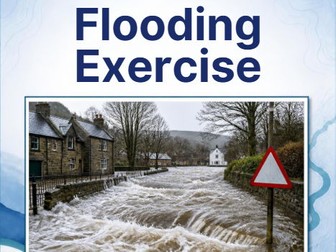
Help students build their geographical knowledge of flooding with this simple and structured research activity. This resource provides students with a research table designed to investigate different types of flooding. Students research each flood type and record key information, helping them identify how different floods occur and the geographical processes and characteristics associated with them. The structured format provides students with a clear framework for organising their research while developing their ability to locate, interpret and summarise geographical information.
Rainfall in AustraliaQuick View
kjack960805

Rainfall in Australia

(0)
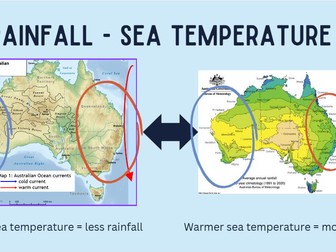
A powerpoint presentation with embedded activities that focuses on Geography and the distribution of rainfall, in particular, in Australia. Geographical concepts covered include: Factors that influence rainfall, such as landforms, climate events and sea temperatures Orographic lift El nino and La nina Geographical skills covered include: Map reading and the knowledge of BOLTSS Geographic terminology
Top 10 Livable Cities ActivityQuick View
kjack960805

Top 10 Livable Cities Activity

(0)
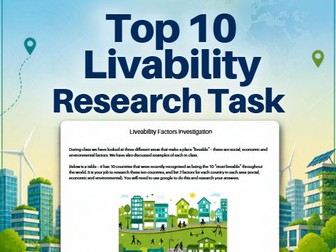
What makes a place one of the most livable in the world? In this Top 10 Livability Research Task, students investigate a selection of the world’s most highly ranked countries and explore the factors that contribute to their livability. Using the provided list as a starting point, students research the social, economic and environmental factors that help make each place a desirable place to live.