The Life of William ShakespeareQuick View
GluesticksandGlitter

The Life of William Shakespeare

(0)
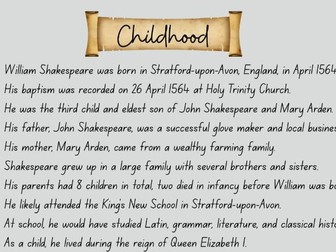
William Shakespeare – 17-Page Presentation & Activities This 17-page presentation provides students with an engaging introduction to the life, language and world of William Shakespeare. The slides cover a range of key areas, including: Shakespeare’s childhood – his early life, family and upbringing in Stratford-upon-Avon. Education – what Shakespeare may have studied at school and how his education influenced his writing. Marriage – his relationship with Anne Hathaway and the famous mystery surrounding the “second-best bed”. Children and family – information about Susanna, Hamnet and Judith. Shakespeare’s language - fascinating facts about his vocabulary, word choices and influence on the English language. Shakespearean insults – exploring Shakespeare’s creative and often hilarious use of insults and wordplay. The Jacobean Era – key information about the society, beliefs, politics and events that influenced Shakespeare’s later works. The Great Chain of Being – an accessible explanation of this important belief and how it links to Shakespeare’s plays. The Globe Theatre – exploring Shakespeare’s theatre, his acting company, his audiences and what it was like to watch a play in his time. Fun Oracy Activity – The Shakespearean Insult Battle The presentation also includes a fun, interactive oracy task where students become Shakespearean insult writers and performers. Students select words from a Shakespearean insult word bank, combine them to create their own ridiculous insults, and then perform them dramatically to a partner. Their partner must then try to translate the insult into modern English. The activity encourages students to develop their speaking, listening, vocabulary, confidence and performance skills, while also helping them understand Shakespeare’s playful use of language. Three Differentiated Writing Tasks To finish the presentation, there are three writing tasks at different levels of challenge, allowing you to differentiate the activity for your class. Students can either: Complete all three tasks to gradually develop their ideas and writing skills. Choose the task that best matches their confidence and ability. Challenge themselves to complete a harder task once they have finished an easier one. The tasks encourage students to use what they have learned about Shakespeare and apply it to context, themes, society and Shakespeare’s continuing relevance today. This resource is ideal for Years 9–11 and can be used as a complete lesson, a series of lessons, a cover lesson, or as an introduction to a Shakespeare unit. It combines knowledge, discussion, oracy and extended writing to keep students engaged while building their understanding of Shakespeare and his world.
Shakespeare or Artist DisplayQuick View
GluesticksandGlitter

Shakespeare or Artist Display

(0)
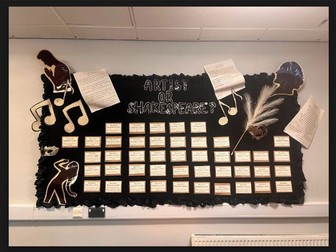
I have created a “Shakespeare or Artist?” display, which challenges pupils to guess whether a quote was written by William Shakespeare or by a modern artist. The artists featured are Tupac, Justin Bieber, Taylor Swift, and Drake. The activity encourages pupils to engage with Shakespeare’s language in a fun and interactive way. By comparing his words with modern song lyrics, students begin to recognise that many of the themes Shakespeare explored such as love, friendship, ambition, heartbreak, and identity are still relevant today. This display helps pupils develop a greater appreciation of Shakespeare by showing that his ideas and emotions are not as distant or difficult as they may first appear. It also promotes discussion, critical thinking, and close reading skills as pupils analyse the language and meaning behind each quote before making their decision. 22 quotes for pupils to sort and discuss. Quotes can be printed double-sided so that each quote is attached to the correct artist, or cut out individually and mounted on card as shown in the display. Music note decorations. Silhouettes of Justin Bieber, Taylor Swift, and William Shakespeare. “Act 1” and “Song Lyrics” display pages. Display lettering. All resources needed to recreate the display shown.
Would you rather boardQuick View
GluesticksandGlitter

Would you rather board

(0)
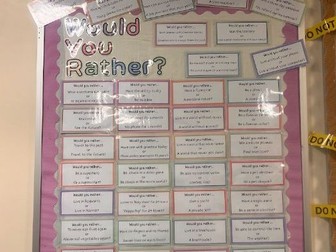
This display features a range of “Would You Rather…?” questions designed to encourage discussion, decision-making, and critical thinking skills among students. The pack includes: Display lettering 49 engaging “Would You Rather…?” questions These questions provide an interactive way to promote reasoning, communication, and thoughtful debate within the classroom.
English Pathways Resources BookletQuick View
GluesticksandGlitter

English Pathways Resources Booklet

(0)
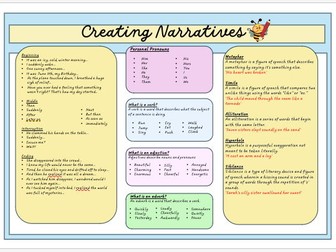
This booklet is dedicated to the exploration of narratives, the communication of experiences, and the appreciation of poetry. Visual aids are essential in these areas as they support children’s understanding and retention, stimulate imaginative thinking, and enhance their ability to express emotions. By incorporating visual elements, we foster a richer, more engaging learning environment for our young learners.
A Christmas Carol Display BoardQuick View
GluesticksandGlitter

A Christmas Carol Display Board

(0)
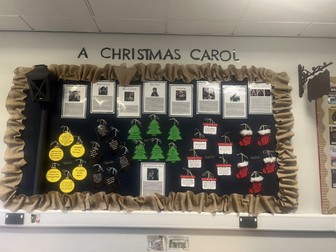
Imagine a vibrant display board for ‘A Christmas Carol’ that draws students in with its eye-catching layout! The board features captivating illustrations of key characters like Scrooge, Bob Cratchit, and the Ghosts of Christmas Past, Present, and Yet to Come, each accompanied by fun facts about their roles. Alongside, you’ll find quotes from each stave, the analysis cleverly tucked on the reverse, encouraging students to engage deeply with the text. With rich colours and a festive flair, this display not only celebrates Dickens’ classic but also fosters a love for reading What a splendid addition to any classroom! I’ve printed some of the quotes onto coloured paper. Added cotton wool to the stockings for that extra creative flair.
A Christmas Carol - Knowledge OrganiserQuick View
GluesticksandGlitter

A Christmas Carol - Knowledge Organiser

(0)
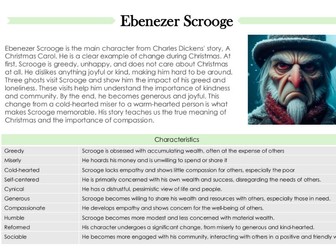
This knowledge organiser resource for Charles Dickens’ ‘A Christmas Carol’ serves as a comprehensive guide designed to enhance students’ understanding of the text and its context. It provides a detailed background of Charles Dickens, illuminating his life experiences and the influences that shaped his writing style and themes. Additionally, the organiser explores the socio-economic conditions of Victorian England, offering insights into the contrasts between wealth and poverty, which are central to the narrative. A succinct summary of each stave is included, allowing students to grasp the development of the plot and the evolution of the protagonist, Ebenezer Scrooge. The resource delves into significant themes, such as the spirit of Christmas, redemption, and social injustice, encouraging learners to make connections between the text and the wider social issues of the era. It highlights Victorian lifestyles and social attitudes, particularly regarding Christmas celebrations during the Victorian period, thereby establishing a contextual framework for understanding the story’s moral undertones. An in-depth character analysis provides students with an opportunity to explore motivations and relationships, enhancing their engagement with the text. Overall, this knowledge organiser is an invaluable tool for facilitating a deeper appreciation of ‘A Christmas Carol’ and its lasting significance.
'A Christmas Carol' Stave QuestionsQuick View
GluesticksandGlitter

'A Christmas Carol' Stave Questions

(0)
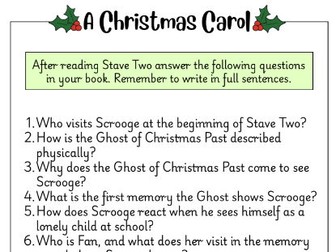
This resource serves as a comprehensive guide for students engaging with Charles Dickens’ “A Christmas Carol”. It is designed to enhance comprehension and analytical skills following the reading of each stave. At the conclusion of each stave, students are prompted to turn to a set of reflective questions that facilitate deeper understanding of the text’s themes and characters. For instance, one pertinent question asks, “How does Dickens use the imagery of death and decay to highlight the consequences of Scrooge’s life choices?” This encourages students to explore the symbolic significance of these images and their relation to Scrooge’s moral journey. Additionally, the questions aim to stimulate critical thinking, allowing students to connect Victorian societal issues and the text’s moral lessons to contemporary contexts. As students navigate through the staves, they will encounter various inquiries focusing on character motivations, thematic development, and narrative techniques. The resource is meticulously crafted to align with the educational curriculum, ensuring that it meets the high standards expected within our classrooms. By using this resource, educators can foster a rich literary discussion, equipping students with the tools necessary for a comprehensive understanding of Dickens’ enduring classic.
Food & Tech - Sugar and our bodiesQuick View
GluesticksandGlitter

Food & Tech - Sugar and our bodies

(0)
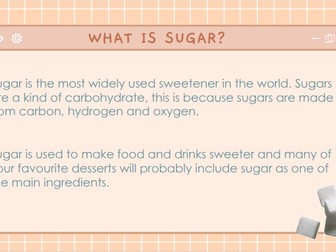
In this engaging lesson, you’ll explore how sugar works in our bodies after we eat, focusing on daily sugar intake for teenagers and the concept of The Perpetual cycle. You’ll discuss the potential for sugar addiction and differentiate between natural and added sugars. Students will embark on a fun exercise to investigate the sugar content in popular drinks, reinforcing their understanding of what’s in what they consume. To wrap up, you’ll conduct an experiment boiling Coke versus sugar-free Coke to observe the differences
What is fairtrade? PowerpointQuick View
GluesticksandGlitter

What is fairtrade? Powerpoint

(0)
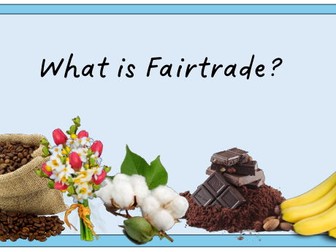
A 14 slide powerpoint on ‘What is fair trade?’ The Fair Trade presentation aims to educate students on ethical consumerism and the importance of supporting fair trade products. It includes an engaging discussion on how much it costs to produce a typical chocolate bar versus a banana. Students will participate in an interactive activity, guessing these production costs, fostering awareness of the economic realities faced by producers worldwide.
Macbeth Revision BookletQuick View
GluesticksandGlitter

Macbeth Revision Booklet

(0)
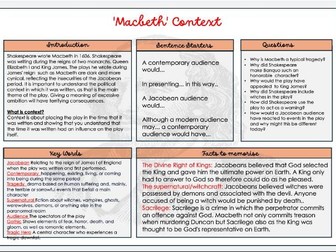
This 19 page Macbeth knowledge organiser serves as an invaluable resource for students, encompassing critical elements such as character information, a comprehensive plot summary by acts, and 40 key quotes that encapsulate the text’s themes. Additionally, it provides essential context regarding the socio-historical background and an in-depth exploration of the intertwined themes and character dynamics. Such a structured and concise tool aids students in grasping the intricacies of Shakespeare’s work, facilitating effective study both in the classroom and at home. Ultimately, it is instrumental in enhancing comprehension, encouraging analytical thinking, and fostering greater engagement with the text.
Of Mice And Men Knowledge OrganiserQuick View
GluesticksandGlitter

Of Mice And Men Knowledge Organiser

(0)
The ‘Of Mice and Men’ knowledge organiser is an invaluable educational resource comprising 27 pages that comprehensively delve into the various elements of John Steinbeck’s novella. It thoroughly covers all major characters, detailed plot summaries, contextual information relevant to the 1930s America, and an exploration of significant themes such as friendship, dreams, and the impact of loneliness. Each section is designed to facilitate effective revision, enabling students to connect ideas and retain information more effectively. Visual aids are crucial for enhancing learning outcomes, particularly for students who may struggle with traditional text-based resources. They provide clear, engaging representations of complex information, making abstract concepts more tangible. Additionally, visual tools can cater to diverse learning styles, fostering a more inclusive classroom environment. By incorporating visual aids, we can significantly improve comprehension and retention, enabling students to achieve their academic potential more successfully.
Refugee Boy: Knowledge OrganiserQuick View
GluesticksandGlitter

Refugee Boy: Knowledge Organiser

(0)
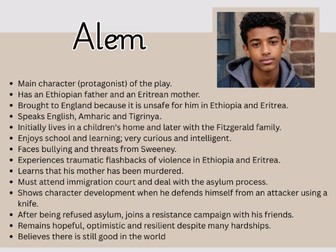
A comprehensive 33-page GCSE Knowledge Organiser for Lemn Sissay’s stage adaptation of Refugee Boy, designed to help students develop a strong understanding of the play, its characters, context and key themes. The knowledge organiser includes: Benjamin Zephaniah – key information about his life, experiences and motivations as the original author. Lemn Sissay – information about his life, experiences and connection to the play. Authorial motivations – why the writers explore particular issues and ideas. The significance of the title Refugee Boy. The conflict between Ethiopia and Eritrea and its impact on Alem and his family. Immigration and refugees – key contextual information. Perceptions of the UK and how these are presented in the play. Foster care and the experiences of children in care. Character Knowledge Each key character is explored through images and clear bullet-point information, including: Alem Mr Kelo Mrs Kelo Mustapha Sweeney Mr and Mrs Fitzgerald Ruth The organiser also includes a brief description of each scene, helping students understand the development of the plot and characters across the play. Key Themes Dedicated sections explore the play’s major themes: Identity Belonging Hope Violence Prejudice The resource is designed as a clear, accessible revision tool for GCSE students, giving them essential knowledge and context that they can use when analysing Refugee Boy and preparing for examinations.