

 Quick View
Kinaesthetic Fetch–Decode–Execute Cycle Activity (GCSE Computer Science)
Kinaesthetic Fetch–Decode–Execute Cycle Activity
Year Group: Year 10 (KS4)
Objective:
Physically demonstrate the fetch–decode–execute cycle by acting as CPU components and memory.
Resources:
Mini whiteboards (memory locations, MAR, MDR, CIR, ACC, ALU, CU), Marker pens, Instructions (e.g., LDA 10, STA 20, ADD 15)
Preparation:
Write instructions on memory boards. Label boards for CPU components.
Set up “memory” and “CPU” areas in the classroom.
Activity Steps:
Assign students to roles: memory, registers, ALU, CU.
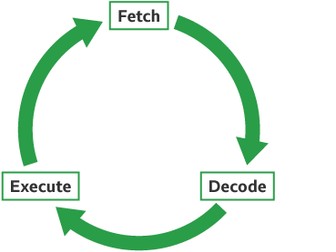
Step through the FDE cycle: CU → MAR → Memory → MDR → CIR → decode → execute.
Repeat for all instructions.
Optional: other students narrate or act as data buses.
Outcome:
Students visualize CPU-memory interactions, making an abstract concept concrete.