This is a handy classroom visual aid with sentence starters for KS3 students beginning their study of language and literature in earnest. It is a reference point for them when writing analytical paragraphs.
A worksheet that allows student to complete an ‘apostrophe hunt’ either independently or in pairs/groups. Once apostrophes have been taught to them, they should search for apostrophes for contraction and possession.
This is a full PPT for the novel Girl, Missing by Sophie McKenzie. Originally used for Y7 mixed ability class, but could easily be used for a Y8 or weaker Y9 class. This powerpoint includes activities for the full novel, including: analysis of character, conflict, suspense and atmosphere, creative writing, interviews, diary entries, predictions, KWL and script writing. Also included is a list of books with similar themes for those who are interested after they read Girl, Missing.
Teaching etymology strengthens reading comprehension, improves spelling, supports critical thinking, and empowers students to decode unfamiliar words across subjects and is an important part of the National Curriculum.
Get confident with teaching etymology to your students! This resource includes common prefixes and commonly misspelled words. The resource was used during whole school assemblies and for staff CPD in order to build student and staff confidence in teaching the origin of words. Typically, one rule was chosen each week, and there was a 2 minute standing slot in whole school assembly where it could be discussed with students.
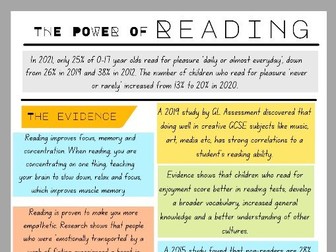
This resource is a heavily researched presentation given to secondary school parents about the importance of literacy and reading in their young people. Also comes with a summary poster for their reference. Could also be used for staff CPD or information for older students.
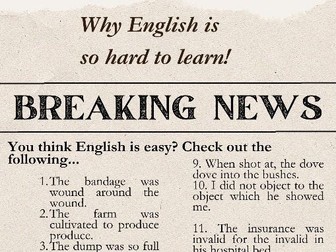
This whole school literacy assembly identifies the benefits of reading, writing and spelling. It uses a fun example of a poem to identify why spell check doesn’t always work, and ends with a challenge.
A lesson on how newspaper articles are laid out, including key features such as the headline, byline, quotes, 5Ws and sensational and emotive language. The focus is more on a tabloid style article in this lesson so that students can practise using that style of writing. Suitable for Y7/Y8 students.
A revision booklet for third year students which covers themes of death, love, growing up, feminism, nature, childhood and war. Opportunity to compare poems dealing with similar themes. Each poem has reflective notes and an opportunity for students to write and consider their own thoughts on the writing. Poetic concepts and definitions are given at the beginning of the booklet for helpful reference. A very helpful revision guide for students approaching their Junior Cycle English exam.
A collection of quotations for Leaving Certificate English General Vision and Viewpoint and Cultural Context Comparative Question, covering The Handmaid’s Tale, By the Bog of Cats and Brooklyn. Key moments are identified.
A supportive self-care resource to help teenagers manage stress, build resilience, and maintain positive wellbeing habits with the support of teachers if needed.
A set of prompts and guidance to support restorative conversations, helping students reflect on behaviour, understand impact, and repair relationships.
A KS4 recommended reading list selected to complement the curriculum, support literacy development, and encourage wider reading beyond the classroom. A great resource for teachers, pupils and parents.
A recommended reading list for KS3 (Y7, 8 & 9) students, offering a range of engaging books to support reading development and promote enjoyment of literature. A good place to start for students and parents who are unsure what to recommend.
A visual aid to encourage increased learning independence in students who may rely too much on the teacher for guidance and support when it is not always needed.
A collection of exit tickets designed to assess student understanding at the end of lessons and provide quick, formative feedback to inform future teaching.