Practical: Investigate the motion of everyday objects, such as toy cars or tennis balls, using the S
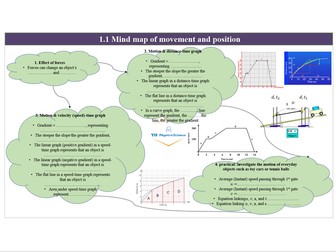
This bundle includes three topics: distance–time graphs, velocity–time graphs, and a practical investigation of motion, where students investigate the motion of everyday objects (such as toy cars or tennis balls) using the SUVAT equations.
Topic 1: This resource is designed to support the teaching of distance–time graphs. It guides students through plotting graphs, interpreting different types of motion, calculating average speed, and using a tangent to determine instantaneous speed at a specific time. Structured classwork tasks are included to reinforce understanding and exam technique. The resource is suitable for use across all major exam boards, including Edexcel, AQA, OCR, and CIE.
Topic 2: This resource is designed to support the teaching of velocity–time graphs. It covers how to plot velocity–time graphs, interpret different types of motion (constant velocity, acceleration, and deceleration), calculate acceleration from the gradient, and determine distance travelled from the area under the graph. Structured classwork tasks are included to reinforce understanding and exam technique. The resource is suitable for use across all major exam boards, including Edexcel, AQA, OCR, and CIE.
This resource is designed to support students in applying the SUVAT equations within a practical investigation of motion. Using a real-world experimental setup (e.g. a trolley on a ramp with light gates), students explore the relationships between initial speed (u), final speed (v), acceleration (a), time (t), and distance travelled (s).
This bundle also includes a completed mind map with answers, designed to summarise all the key points and concepts expected by the examiner for this topic.