Design Sparks: 10 Nature Inspired DT ChallengesQuick View
PotfulofPens

Design Sparks: 10 Nature Inspired DT Challenges

(0)
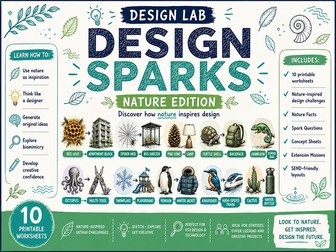
Inspire creative thinking with 10 ready-to-use design challenge worksheets based on real examples from nature. Perfect for KS3 Design & Technology, cover lessons, starters, extension tasks and GCSE idea generation. This resource helps students develop creativity, problem-solving and sketching skills by exploring how natural forms, structures and adaptations can inspire new products and designs. Each worksheet presents students with a nature-based challenge, such as designing a backpack inspired by a turtle shell or a high-speed train inspired by a kingfisher. Students analyse key features, identify characteristics worth borrowing and generate their own original design ideas. The activities encourage observation, biomimicry, innovation and creative risk-taking while providing enough structure to support less confident learners. Included challenges: Beehive → Apartment Block Spider Web → Bus Shelter Pine Cone → Lamp Turtle Shell → Backpack Cactus → Water Bottle Kingfisher → High-Speed Train Snowflake → Playground Penguin → Winter Jacket Octopus → Multi-Tool Chameleon → School Bag Each worksheet includes: ✔ High-quality visual references ✔ Nature facts and key features ✔ Product reference examples ✔ Large sketchbook-style design area ✔ Creative thinking prompts ✔ Extension challenges ✔ SEND-friendly layout ✔ Opportunities for independent and group work Ideal for: KS3 Design & Technology GCSE DT Generation of Ideas Cover lessons Starter activities Fast finishers Homework tasks STEM clubs Enrichment and creativity days Students are guided through a simple process of Observe → Analyse → Create, helping them develop the skills used by designers, engineers and architects when generating innovative ideas. Contents: 10 worksheets + cover page Format: A4 Landscape PDF Suitable for: Years 7-11 (ages 11-16) Subjects: Design & Technology, Product Design, Engineering, STEM and Biomimicry A versatile, low-preparation resource designed to promote creativity, independent thinking and high-quality design sketching across KS3 and KS4.
AQA GCSE DT NEA SetupQuick View
PotfulofPens

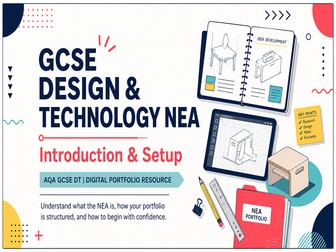
AQA GCSE DT NEA Setup

(0)
Launch the GCSE DT NEA with a clear, polished introduction resource that helps students understand expectations and set up their portfolio. This GCSE Design & Technology NEA resource is designed to introduce students to the AQA NEA in a calm, structured and accessible way. It helps students understand what the NEA involves, how the work is assessed, what their final outcome might include and how to begin organising their digital portfolio. The resource is ideal for the first lessons of the NEA, especially when students need clear guidance before starting Section A. Includes slides on: what the NEA is possible final outcome types how the NEA is assessed supervised conditions portfolio length and page structure setting up a reusable PowerPoint portfolio template basic digital portfolio organisation Suitable for: AQA GCSE Design & Technology Year 10 or Year 11 NEA launch lessons digital portfolio setup NEA preparation SEND-friendly classroom teaching independent catch-up or cover work
Design Sparks: 10 Creative DT ChallengesQuick View
PotfulofPens

Design Sparks: 10 Creative DT Challenges

(0)
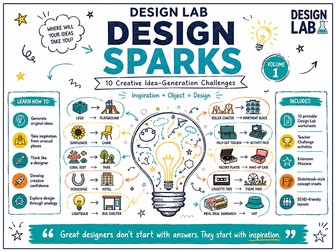
10 printable KS3 Design & Technology creativity worksheets. Students use inspiration from unexpected objects and ideas to generate original design concepts. Includes: • LEGO → Playground • Sunflower → Chair • Coral Reef → Park • Horseshoe → Hotel • Lightbulb → Bus Shelter • Roller Coaster → Apartment Block • Fold-Out Toolbox → Activity Pack • Record Player → Make-Up Case • Cassette Tape → Theme Park • Meal Deal Sandwich → Hat Each worksheet includes inspiration prompts, sketchbook-style concept sheets, teacher challenges and extension activities. Ideal for KS3 DT, KS4 generating design ideas, cover lessons, design thinking, product design, architecture projects, graphics and creative starter activities. 10 pages Print-ready PDF SEND-friendly layout
Design Mash-ups - 20 creativity challengesQuick View
PotfulofPens

Design Mash-ups - 20 creativity challenges

(0)
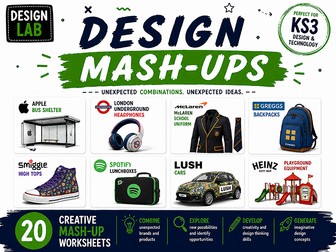
Design Mash-Ups is a collection of 20 highly engaging Design Lab worksheets that challenge students to combine unexpected brands and products to generate imaginative new design concepts. Students explore how brand identity, materials, colours, user needs and aesthetics influence design while developing creativity, annotation and sketching skills. Examples include: Apple Bus Shelters London Underground Headphones McLaren School Uniforms Greggs Backpacks Spotify Lunchboxes Heinz Playground Equipment Lush Cars Smiggle High-Top Trainers NASA Wedding Dresses LEGO Furniture Ferrari Smartphones Fender Desk Lamps and more! Perfect for: KS3 Design & Technology Cover lessons Starter activities Design thinking activities Product design Graphics Textiles Resistant Materials Creative homework Enrichment and extension work Students learn to: analyse existing products identify design features apply branding to new contexts generate original ideas communicate concepts visually develop confidence in sketching and annotation Includes 20 printable A4 pdfs plus blank template.
AQA GCSE DT NEA Exploring OpportunitiesQuick View
PotfulofPens

AQA GCSE DT NEA Exploring Opportunities

(0)
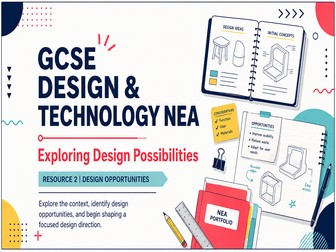
Help GCSE DT students start Section A with confidence using clear, visual slides for exploring design opportunities and choosing a focused direction. This resource supports students with the early stages of the AQA GCSE Design & Technology NEA, focusing on Section A: Identifying and Investigating Design Possibilities. It guides students through how to explore a wide range of design opportunities within a chosen context, think beyond obvious ideas, and begin shaping a meaningful problem to investigate further. Suitable for: AQA GCSE Design & Technology NEA Section A introduction lessons Year 10 or Year 11 NEA preparation design opportunity exploration context analysis portfolio page planning SEND-friendly teaching and independent work