Full Enquiry Colonialism in Canada KS3Quick View
ms_amtaylor1

Full Enquiry Colonialism in Canada KS3

(0)
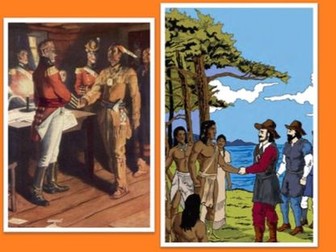
Enquiry Question: Did colonialism sever the Indigenous Peoples of Canada’s connection to the land? Full enquiry looking at the relationship between the Indigenous Peoples of Canada and the British Empire and how this effected the Indigenous People’s relationship to the land. Great enquiry that brings in elements of climate change and the historic environment. Focuses on change and continuity with the students completing a visual metaphor sheet throughout the enquiry to track how the relationship to land changed. Contains final Mini Blog Post task in last lesson that could be used as a final assessment or a home learning task. Includes all PowerPoints, worksheets and resources. Designed for KS3 Lesson 1: What was life like before the arrival of the British? Look as who the Indigenous People are; looks specifically at the Haudenosaunee people and students complete a knowledge organiser Lesson 2: What can we learn from the Three Sisters and the Honourable Harvest? Looks at similarities and differences between the Indigenous and British farming methods and beliefs completing a Venn diagram activity. Lesson 3: Who has the right to ‘own’ land? Looks at what a treaty is and why they were made between the British and the Indigenous peoples and how they impact the relationship between the British and the Indigenous peoples; Source analysis task building skills to answer the Edexcel GCSE “How useful are sources X and Y …” exam question. Lesson 4: How far did Indigenous Peoples become removed from their land? Looks at the residential ‘school’ system. Please ensure that this lesson is treated with caution as it may be unsettling to students. Students examine experiences from residential school survivors and decide how far removed from their land and culture they were. Lesson 5: What can we learn from Indigenous Peoples connection to the land today? Looks at how Indigenous Peoples are returning to the land and rebuilding and strengthening their relationship to the land today; examines how Indigenous knowledge and understanding can help us combat climate change
Full Enquiry Women's History KS3Quick View
ms_amtaylor1

Full Enquiry Women's History KS3

(0)
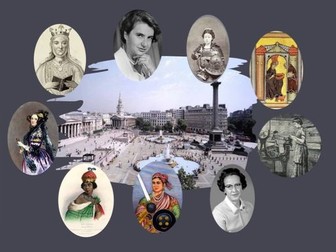
Enquiry Question: Why is it ‘his’ story? This enquiry has students asking why most of the history we study is focused on men, their perspectives and accomplishments. But where are the women? Using the 5Rs of Significance students will exam women from across time periods and across the globe and ask who should be remembered? The enquiry begins with an introduction lesson using Trafalgar Square and the empty Fourth Plinth to get students thinking about why there are only statues dedicated to men in such significant location to women’s history. Students will prepare either presentations or a poster over the course of the enquiry on a woman they think is significant enough to be memorialised with a statue. Includes all PowerPoints and resource sheets. Lesson 1: Introduction Lesson 2: Medieval Misconceptions - Students examine their misconceptions about women during the medieval period and investigate individuals and groups to learn about the power, independence, and influence medieval women were capable of. Lesson 3: Industrial Women and the Match Strike Girls - Students use the 5R’s to think about why the Match Strike Girls are rarely mentioned when studying the Industrial Period and examine how their story has begun to pop up in popular media. Lesson 4: Worldwide Expectations – Textbook Challenge - This lesson is all about group work – students are each given a women from somewhere in the world and using the 5R’s must convince the Textbook Committee (you) as to why their woman should be included in the new national textbook. Can be done across 2 lessons. Lesson 5: Women who have changed the world - Students learn about women who have mase incredible contributions to the world through science, medicine, culture, human rights, etc. and why they may have been lost to history. Lesson 6: Who deserves to be remembered? - Final lesson where students bring their knowledge together and present or showcase their final work.
Full Enquiry Cold War Tension KS3Quick View
ms_amtaylor1

Full Enquiry Cold War Tension KS3

(0)
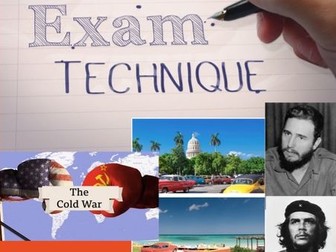
Enquiry Title: What led to worsening Superpower relations, 1945-68? This enquiry looks at the early years of the Cold War – 1945 to 1968 – using cause and consequence as its main second order concept. Developed to be a foundational enquiry to prepare KS3 students for the Edexcel Superpower Relations exam. Students will walk away from this enquiry understanding that worsening relations was caused by a series of things, with the main factor being mutual suspicion. The final lesson is an Escape Room style where students will need to use their knowledge of all the events throughout the enquiry to answer questions, discover clues, and come to a conclusion about what led to worsening Superpower relations during this time. Lesson 1: Introduction – Capitalism VS Communism and Mutual Suspicion Lesson 2: How did the East and West fall out? - Looks at the early conferences (Tehran, Yalta, and Potsdam) through a role play activity where students investigate how these allies began to become enemies. Lesson 3: Why did an ‘Iron Curtain’ descend on Europe? - Examines the development of the Satellite States and Churchills infamous speech to the decline or relations between the USSR and the USA. Lesson 4: Why was Berlin the centre of the Cold war? - Looks at the cause and the consequences of the Berlin Blockade; lessons begins to build students understanding and structure of the narrative account question for the GCSE exam. Lesson 5 – How did the Arms and Space race contribute to Cold War tensions? - Focuses on both the arms and space race; students will developed a consequence ladder to help them develop their skills to answer the ‘Describe one consequence of …’ exam question. Lesson 6 – Why did the Berlin Wall become a symbol of Cold War tension? - Looks at the significance of the Berlin Wall and different interpretations of why it was built, who benefited from it, and what its consequences where. Lesson 7 – How did a tropical paradise almost end the world? - Examines all exam skills needed for GCSE – cause and consequence, narrative account, significance. Lesson 8 – When was tension the lowest? - Final escape room lesson = students must use their knowledge from the enquiry to answer questions and gain clues. Can be adapted to become more competitive if desired.