Misinformation, Disinformation : Complete Lesson Pack and Posters (KS3/KS4)Quick View
Metapedagogy

Misinformation, Disinformation : Complete Lesson Pack and Posters (KS3/KS4)

(0)
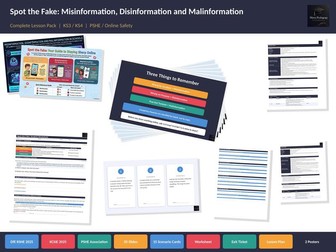
Complete lesson pack teaching students to identify and respond to misinformation, disinformation, malinformation and conspiracy theories. Aligned to DfE RSHE 2025 and KCSIE 2025. This ready-to-teach resource pack contains everything you need to deliver a 50 to 60 minute PSHE or online safety lesson on false information for KS3 and KS4 students. The lesson covers the three types of false information, how conspiracy theories spread, how to evaluate online content before sharing it, and what to do when you encounter false information online. What’s included: Lesson PowerPoint (.pptx, 20 slides) with full speaker notes on every slide, class discussion questions, a quick check activity and built-in instruction slides for the worksheet and exit ticket. Scenario Sorting Cards (.pptx, 15 cards with answer key) for a group classification activity. Cards are printed as handouts, 3 per page, and cut for groups of 3 to 4 students. Categories are randomised so students cannot spot patterns. Student Worksheet (.pdf, 2 pages, 18 marks) with six sections covering all learning objectives: definitions matching, conspiracy theory classification, students’ own examples, same event with different intent, source evaluation using the Source/Evidence/Motive/Impact checklist, and action planning. Exit Ticket (.pdf, 4 per A4 page) with three open-response questions testing recall, application and response to false information. Lesson Plan (.pdf, 2 pages) with full curriculum mapping, timings, differentiation for lower and higher ability, and assessment guidance. Student Poster (.pdf) and Staff Poster (.pdf) for classroom and staffroom display. Curriculum alignment: DfE RSHE Statutory Guidance (July 2025, mandatory September 2026): p.19 (countering misinformation) and p.28 (being a discerning consumer of information online, understanding the prevalence of misinformation and disinformation including conspiracy theories). KCSIE 2025, paragraph 135: misinformation, disinformation and conspiracy theories classified as safeguarding harms. PSHE Association Programme of Study: KS4 L6, L7; KS3 R28, R35, R36; Essential Skills (analysis, assessing validity and reliability of information). Learning objectives: Define misinformation, disinformation and malinformation Recognise how conspiracy theories spread as false information Identify real-world examples of each type Explain why the intent behind false information matters Evaluate online content before sharing it Know how to respond when you encounter false information PowerPoint files are editable for classroom use. All other resources are provided as print-ready PDFs. The lesson PowerPoint includes speaker notes throughout so non-specialist teachers can deliver the lesson with confidence. Suitable for PSHE lessons, online safety weeks, safeguarding drop-down days and computing lessons.
MISINFORMATION, DISINFORMATION AND MALINFORMATION Staff PosterQuick View
Metapedagogy

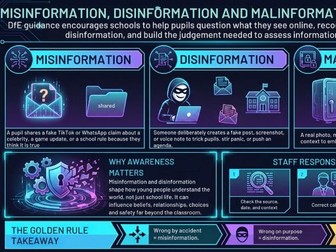
MISINFORMATION, DISINFORMATION AND MALINFORMATION Staff Poster

(0)
Staffroom display poster covering the three types of false information students encounter online: misinformation, disinformation and malinformation. Designed for school staff. This poster gives teachers and support staff a clear overview of how false information operates in a school context, with definitions, school-specific examples and a three-step staff response protocol: check the source, correct calmly, escalate if harmful. It explains why awareness of false information matters beyond the classroom, including its impact on student beliefs, relationships, choices and safety. Designed for display in staffrooms, staff workrooms or pastoral offices. Useful as a quick reference during safeguarding briefings, INSET sessions or online safety weeks. KCSIE 2025 (paragraph 135) now classifies misinformation, disinformation (including fake news) and conspiracy theories as safeguarding harms. This poster supports schools in meeting that requirement by ensuring all staff can recognise and respond to false information when they encounter it among students. Provided as a print-ready PDF. Part of the Spot the Fake complete lesson pack, available separately. Tags: misinformation, disinformation, malinformation, staff training, staffroom display, online safety, safeguarding, KCSIE 2025, school poster, false information, fake news, staff CPD, pastoral, PSHE
Identifying Types of False information Student PosterQuick View
Metapedagogy

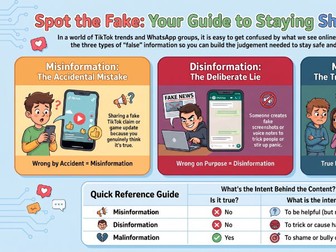
Identifying Types of False information Student Poster

(0)
Classroom display poster explaining the three types of false information: misinformation, disinformation and malinformation. Designed for KS3 and KS4 students. This colourful A3 display poster breaks down the differences between misinformation (wrong by accident), disinformation (wrong on purpose) and malinformation (true but twisted) using age-appropriate examples set in TikTok, WhatsApp, Instagram and Snapchat. Each type has a clear definition, a relatable student scenario and a simple key phrase students can remember. The poster includes a quick reference table showing whether the information is true or false and what the intent behind it is, giving students a quick visual check they can refer back to during lessons or independent work. Suitable for display in PSHE classrooms, computing rooms, form rooms or school corridors as part of online safety provision. Aligned to DfE RSHE Statutory Guidance (July 2025, mandatory September 2026) p.28: students should learn how to be a discerning consumer of information online, understanding the prevalence of misinformation and disinformation online, including conspiracy theories. Supports KCSIE 2025 paragraph 135, which classifies misinformation, disinformation and conspiracy theories as safeguarding harms. Provided as a print-ready PDF. Part of the Spot the Fake complete lesson pack, available separately. Tags: misinformation, disinformation, malinformation, false information, fake news, online safety, PSHE, KS3, KS4, classroom display, poster, KCSIE 2025, RSHE, safeguarding, digital literacy