 Quick View
Progressive UKS2 Arithmetic Tests | Year 6 SATs Practice
A complete 30-week progressive arithmetic programme for Year 6, designed to build fluency, confidence and accuracy while preparing pupils for the KS2 SATs Arithmetic Paper.
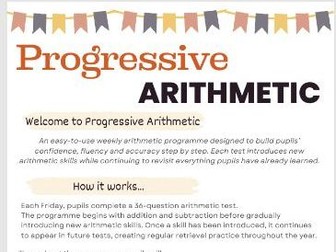
Take the planning out of weekly arithmetic practice! This ready-to-use resource provides a structured arithmetic test for every week, with skills introduced gradually and then revisited throughout the programme.
Rather than giving pupils full SATs-style papers from the beginning of the year, the tests build progressively. Pupils start with core addition and subtraction before multiplication, division, decimals, fractions, percentages and written methods are introduced. Once a skill has been taught, it continues to appear in later tests, giving pupils regular opportunities to revisit and consolidate their learning.
What’s included:
30 weekly arithmetic tests
36 questions in every test
22 progressive tests that build skills step by step
8 full arithmetic tests for later in the year
Separate, easy-to-use answer booklet
Increasing challenge as the year progresses
Regular practice of previously introduced skills
Long multiplication and long division
Fractions, decimals and percentages
Mixed numbers and improper fractions
Order of operations
Missing numbers and inverse operations
From Week 9 onwards, tests follow a 36-question / 40-mark structure, including 2-mark written calculation questions, helping pupils become familiar with the format and demands of the KS2 Arithmetic Paper.
The final 8 tests bring the skills together into full arithmetic practice, making them ideal for building confidence and identifying gaps as SATs approach.
Ideal for:
Year 6 weekly arithmetic practice
Friday maths tests
SATs preparation
Morning work
Homework
Intervention groups
Tracking arithmetic progress across the year
Simply print one test each week and go — no need to continually create new arithmetic questions or decide which previously taught skills need revisiting.
30 weeks. 1 consistent routine. Progressive practice from the start of Year 6 through to SATs preparation.