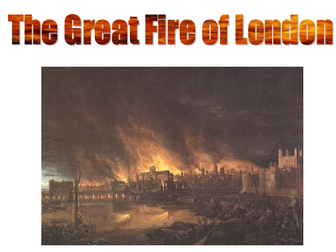
This resource links with the topic of The Great fire of London and leads the children into creating their own Newspaper reports. Follow the Powerpoint for lesson sequence and resources included for independent work.
The sequence of work covers the following sequence:-
Headlines
Key Features
Who, What, Where, When, Why
Roll the dice sentence
Main body - paragraphs
Quotes
Each lesson follows the following pattern with slides taking you through each step:
Connect - retrieval opportunity
Explain - introduction to new vocabulary
Model - Teacher modelling
Attempt - Oracy
Apply - Independent activity
Consolidate - What have we learned.
The PowerPoint takes you through the sequence of lessons - can pick up and run with it.
All resources are included
This resource links with the topic of The Great fire of London and leads the children into creating their diary entry.
Follow the Powerpoint for lesson sequence and resources included for independent work.
Each lesson follows the following pattern with slides taking you through each step:
Connect - retrieval opportunity
Explain - introduction to new vocabulary
Model - Teacher modelling
Attempt - Oracy
Apply - Independent activity
Consolidate - What have we learned.
The PowerPoint takes you through the sequence of lessons - can pick up and run with it.
All resources are included
This resource links with the topic of The Great fire of London and leads the children into creating their own instructions to make bread - Great opportunity to turn your class room into Thomas Farriner’s bakery and allow the children the opportunity to follow their instructions and make their own bread roll.
Follow the Powerpoint for lesson sequence and resources included for independent work.
Each lesson follows the following pattern with slides taking you through each step:
Connect - retrieval opportunity
Explain - introduction to new vocabulary
Model - Teacher modelling
Attempt - Oracy
Apply - Independent activity
Consolidate - What have we learned.
The PowerPoint takes you through the sequence of lessons - can pick up and run with it.
All resources are included
This resource links with the topic of The Great fire of London and leads the children into creating their poetry work. Follow the Powerpoint for lesson sequence and resources included for independent work.
The sequence of work covers the following sequence:-
Description using our senses
Similes
Rhyming poetry
Final Poem
Each lesson follows the following pattern with slides taking you through each step:
Connect - retrieval opportunity
Explain - introduction to new vocabulary
Model - Teacher modelling
Attempt - Oracy
Apply - Independent activity
Consolidate - What have we learned.
The PowerPoint takes you through the sequence of lessons - can pick up and run with it.
All resources are included
This resource links with the topic of The Great fire of London and leads the children into creating their own factsheet. Follow the Powerpoint for lesson sequence and resources included for independent work.
The sequence of work covers an introduction to the Great fire - looking at when, why,where it started, how it started and what happened after.
Each lesson follows the following pattern with slides taking you through each step:
Connect - retrieval opportunity
Explain - introduction to new vocabulary
Model - Teacher modelling
Attempt - Oracy
Apply - Independent activity
Consolidate - What have we learned.
The PowerPoint takes you through the sequence of lessons - can pick up and run with it.
All resources are included
This resource links with the topic of The Great fire of London and leads the children into creating their own work…
Introdyction to the Great Fire.
Newspaper reports.
Poetry.
Instructions - Bread Making
Diary Writing
Follow the Powerpoint for lesson sequence and resources included for independent work.
Each lesson follows the following pattern with slides taking you through each step:
Connect - retrieval opportunity
Explain - introduction to new vocabulary
Model - Teacher modelling
Attempt - Oracy
Apply - Independent activity
Consolidate - What have we learned.
The PowerPoints take you through the sequence of lessons - can pick up and run with it.
All resources are included
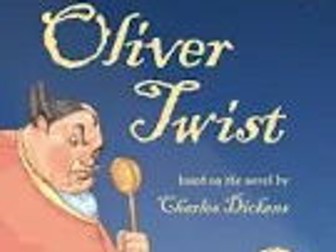
This is a full unit or work about Oliver Twist - in a child friendly way, it has a Powerpoint for you to follow and all resources needed - approx 16 lessons for English and History.
It follows the enquiry Question of “Was Life always hard during Victorian Britain?”
We look at:
Comic writing
Description writing based on what life was like in workhouses
Diary writing
Predictions
Instructions for making Gruel
Wanted posters
Reading comprehension and retrieval activities.
The topic looks at
Queen Victoria
Rich and Poor people
Workhouses
Life of Victorians
I have also got ‘A Christmas Carol’ in my shop by Charles Dickens which make a great unit for the Autumn term - covering the same Author
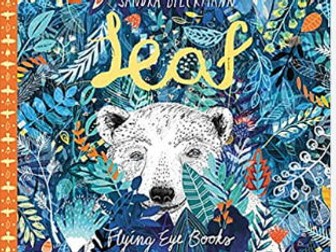
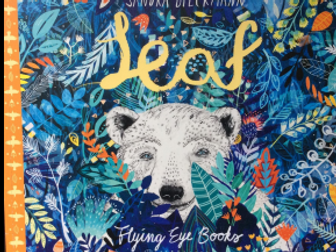
This is a sequence of English work aimed at KS1. It focuses on inference and retrieval of the text. It looks at the skills of persuasion to encourage the animals to be kind to the Polar bear, Newspaper skills for the children to begin to write their newspaper reports based on a strange sighting in the Forest. Children learn about headlines, quotes and the main body of a news paper. The powerpoint is followed and the resources to go with each lesson is provided. There is no planning sheet as I plan through the powerpoint and each lesson is clearly visible to the user.
The bundle also contains my Geography work with the enquiry question “Is the temperature the same everywhere you go?”
It covers the KS1 objectives:
Locational Knowledge:
• Locate the North Pole (Arctic) and South Pole (Antarctica)
• Identify Arctic (around the North Pole)
• Identify Antarctica
• This links to naming continents and oceans.
• Understand they are the coldest places on Earth
Place Knowledge
• The polar regions are often used as the contrasting non-European area required in KS1.
• For example:
• Comparing a UK town with a settlement in the Arctic
• Comparing weather, homes, clothing and animals
The topic also has a focus on Climate Change, introducing children to what it is and the effective it is having on the environment. We are focusing this on the Arctic and the impact Climate change is having on the Polar bears and their habitats – linking this back to the text leaf.
We also look at the effects of plastic in the ocean through the book Alba
This is a full sequence of work for English that takes you through many skills, such as characater descriptions, setting descriptions, predictions, reading comprehensions, missions, inverted commas, conjunctions and exciting writing opportunities. The work contains worksheets for each lesson and a powerpoint to follow for the sequence of lessons.
We have developed Reading journals and do Guided reading as a whole class. The Guided reading document is for my year 2 class has an Interactive White board and corresponding worksheets to assess a variety of skills, from inference, deduction, retrieval to comprehension - all in a variety of different methods.
I have re written the text so each child could have a copy and allow children to read. There is also the option to highlight key vocab and words that children don’t understand
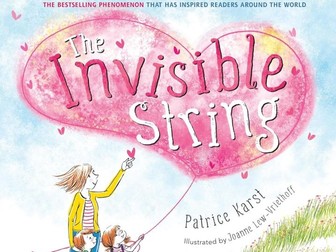
9 lessons planned and delivered through a Powerpoint presentation. The book has been scanned and added as a 2 part PDF which supports the activities. The activities are planned with KS1 children in mind, but the book lends itself to all ages of children as they respond to the idea of The Invisible String.
Resources are also included but some additional resourcing will need to be done prior to the lesson - white crayons, water colours, wool, string, friendship bracelet beads.
This is for my year 2 class. The file contains an Interactive white board with the accompanying resources. It has a link to the John lewIs advert from the Literacy shed.
The resource gives you the opportunity to continuously assess a variety of different skills taught throughout the term.
The interactive white board also contains a whole class shared read that I have written based on the advert to model good vocab and expectations of the assessed piece.
The sequence of lessons are as follows:
Cold write
Inference activity to assess understanding of what the children have read - Opportunity for adjectives that the children could add
A sequencing activity which has been differentiated 3 ways - to enable independent work (cut and stick and verbally explain, write full sentences, add feelings for the characters)
Story map
Varied sentence openers - using Adverbs and Fronted adverbials
Shared read
Opportunity for the children to write the beginning, middle and end of the story
Warm write
This resource has a powerpoint for 14 lessons which focus on reading and writing.
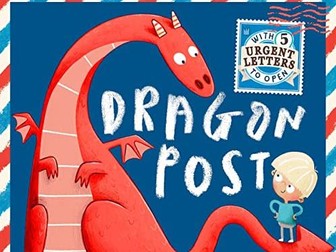
The sequence is based on the book ‘Dragon Post’ and covers the following lessons. I have added a PDF of the text but this is also added to the powerpoint.
inference activity on the front cover
Questions to ask about a dragon
To write a reply letter from the fire brigade
What would you need to look after a dragon properly
True or false reading activity
Persuasion would a dragon make a good pet/not a good pet
Design a home for a dragon using reasoning skills
A story map
Narrative of the text
Skim and Scan
Storyboard
Instructions how to look after your pet dragon
Reading comprehension
Missing poster
I have devised this resource to help me assess my pupils in year 2 who are not working at the Key stage 1 level.
The resource is purely to help reporting on progress and it is essential that pupils working at pre key stage standard are still tracked using B squared or equivalent.
I aim to use this document at every assessment point to demonstrate progress over time. It is also core evidence for children who progress and now are working at KS1 level.
This Flat Stanley unit of work covers many of the National Curriculum. For English the aim is for the children to internalise the text of Flat Stanley then using what they know write their own version.
The children then design their own Flat Stanley character and we will post it along with a letter to a member of their family or friends and await a reply back to school (good old fashion Royal Mail delivery) the family member or friend will do exciting things with Flat Stanley and tell them all about it in their reply.
A recount will be based on walking to a post box as a class to post the letter.
The resources include a letter for parents asking for a stamp and explaining what is happening with the letters for a family member.
Children will then write another narrative about what their own Flat Stanley character has been up to.
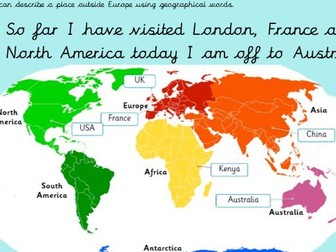
Geography: Flat Stanley will visit UK/London, France, North America and Australia
covering the following objectives: The Interactive White board will take you through each lesson teaching the objective and then linking it to the piece of work.
• I can name the continents of the world and locate them on a map.
• I name the capital cities of England, Wales, Scotland and Northern Ireland.
• I know what I like and do not like about a place that is different to the one I live in.
• I describe a place outside Europe using geographical words.
• I know the key features of a place from a picture using words like beach, coast, forest, hill, mountain, ocean, valley.
DT/ART objectives - Children will design and make a kite of Flat Stanley.
Can generate, develop, model and communicate their ideas through talking, drawing
Can select from a wide range of materials and components, including construction materials.
There is no plan as you can follow the Interactive white board for each lesson and use the relevant worksheets to accompany each lesson you can deliver the lessons at your own pace .
This is a year 2 scheme of work that s based on the Great Fire of London.
The package contains
4 English lesson - worksheets and Interactive Whiteboard resources (senses poem, diary entry, instructions for bread making, fact sheet for the Great Fire of London.)
DT Lesson - making bread
Art- collage for the Great Fire of London
Whole class reading activities - all resources
History - London in the past/present, Pudding Lane how the great fire of London started
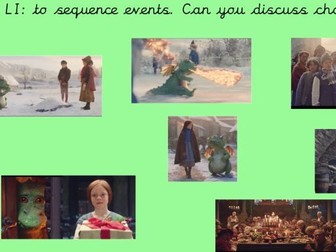
Samuel Pepys Diary extract, Sequencing of events
All of the activites follow the new guidelines to ensure lessons are more skill specific.
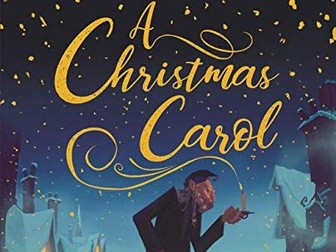
This resource contains 15 English lessons with Powerpoint and accompanying resources. The children will learn about Charles Dickens and the Christmas Carol through an age appropriate rhyming book and Muppet Christmas Carol links that are all hyperlinks on the Powerpoint. The book has been scanned onto the Powerpoint to make it easy to follow and encourage whole class reading.
I do not go into when Scrooge see his own death - I breeze past this bit but still focus on all 3 ghosts.
Children complete a range of activities such as persuasion, letter writing, diary writing, comic strips and much more. There are SPAG links at the start of some lessons that introduce a new year 2 SPAG skill - for example, contractions and fronted adverbial phrases.
I have also attached my art for this term which is a series of 6 lessons focussing on the work of Monet and the picture The Magpie. Children will learn about Monet, evaluate his work, plan their own work in the style of Monet but with sketching with shading and tone work using HB pencils as a focus medium.
This is a sequence of English work that contains about 10 lessons. Covering many different aspect of the NC objectives.
There are reading activities, including true or false statements, sequencing, comprehension, newspaper reports, recounts, persuasive writing.
All lessons are sequenced through a power point, with links and independent activity. There is a golden write (extended writing opportunity) and a pdf version of the text.
This is a sequence of work with Powerpoint and all resources to go with the lessons. The sequence contains lots of shared talking, diary writing, a narrative, reflections on what children find hard, inference skills to try and establish how Ellie may be feeling throughout the advert, Time for thinkin - who could be on the phone - what do children think the adults are excited about?
It focusses on Christmas - What’s important to us, things we find hard - how do we get better? and sensitively addresses the important issue of children in care. We talk about the enquiry question ‘Is Christmas always a happy time of year?’
I have planned and used promts in each powerpoint slide to show when to stop the advert clip for discussion based work before leading onto a writing opportunity for each session.
7 lessons have been differentiated (only slight adaptations but you can edit as you feel necessary)
This is a sequence of work which is aimed at younger children Y2/3 It is based on the text Christmas Carol which is a rhyming version of the well known Charles Dickens novel. The text is on the Powerpoint and matches the lesson being taught. The accompanying worksheets are also added and by following the Powerpoint clearly shows which activity is for which lesson.
I have added my Interactive White board document with corresponding resources for children to use. I have also added my resources that I have on my resources table to help the children access their learning. It follows the white rose guidance


 Quick View