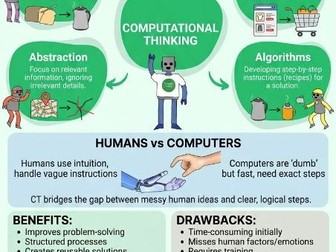
1.1.1 Know the definition and understand the purpose of computational
thinking.
1.1.2 Know when to use computational thinking.
1.1.3 Know and understand the benefits and drawbacks of using
computational thinking.
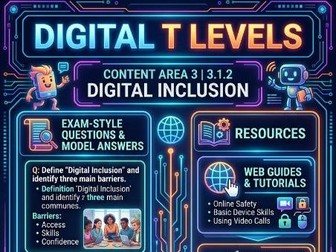
Understand the importance of digital inclusion:
• ensuring fair access to digital services:
o suitable technologies (hardware and software)
o connectivity
o checking for bias within datasets
o conforming to codes of best practice
o public sector bodies’ website and mobile applications accessibility
regulations:
– key features and purpose.
3.1.1 Understand how the increased reliance on digital systems impacts: Organisational culture, changes in communication methods (face to face, email, video****
calls)
o increased productivity and availability expectations
o increase in staff monitoring
o new working practices (remote/hybrid/in-office working)
o automation of services including the use of artificial intelligence (AI)
• society:
o loss of jobs
o shift in skill requirements
o reduction in human decision making and loss of empathy
o privacy (digital footprint, surveillance)
o changing behaviours (loss of social skills, digital identity)
o access to wider social networks (personal and professional)
o access to online services (government, commercial and
entertainment)
o potential isolation (lack of skill, equipment, connectivity,
resistance to change)
o improved access to information (professional and personal)
o increased use of AI including generative AI (textual, graphical,
video and audio)
o globalisation:
– access to global media sources.


 Quick View