KS1 RE Islam Unit 1.5 – Who is a Muslim and what do they believe? – 6 Lesson Bundle – PowerPoints & WorksheetsQuick View
BareminimumBrilliance

KS1 RE Islam Unit 1.5 – Who is a Muslim and what do they believe? – 6 Lesson Bundle – PowerPoints & Worksheets

6 Resources
KS1 Religious Education – Islam Full Unit 1.5 Bundle: Who is a Muslim and what do they believe? This bundle contains 6 complete KS1 lessons aligned with the Northamptonshire Agreed Syllabus 2025 to 2030. Lessons included: Lesson 1 – Who is Allah? Lesson 2 – Why is the Prophet Muhammad important? Lesson 3 – Why is the Qur’an special? Lesson 4 – How do Muslims show their beliefs through prayer? Lesson 5 – What values guide Muslims in daily life? Lesson 6 – How do Muslim beliefs influence everyday life? Each lesson includes: • A 10-slide PowerPoint • A structured worksheet • Clear main activity • Oracy starter • Plenary • Key vocabulary slide Children will learn: • Muslims believe in one God called Allah. • The Qur’an is the holy book of Islam. • Muhammad is important to Muslims. • Prayer is called Salah. • Charity is called Zakat. • Beliefs influence daily actions. Suitable for KS1 and designed for clear, structured teaching.
KS1 RE Unit 1.5 - Islam - Lesson 1 - Who is Allah?Quick View
BareminimumBrilliance

KS1 RE Unit 1.5 - Islam - Lesson 1 - Who is Allah?

(0)
KS1 Religious Education – Islam Lesson 1 from Unit 1.5: Who is a Muslim and what do they believe? Learning Objective: To understand that Muslims believe in one God called Allah. This lesson includes: • A clear 10-slide PowerPoint • Sorting worksheet: “Muslims believe…” / “Muslims do not believe…” • Reflection sentence task • Key vocabulary slide Children learn: • Islam is a religion. • A Muslim follows Islam. • Muslims believe in one God called Allah. • Allah is unique and has no partners. The lesson contains: • Lesson objective slide • Key learning slide • Oracy starter • Structured main activity • Plenary and key words Suitable for KS1 and aligned with the Northamptonshire Agreed Syllabus 2025 to 2030.
KS1 RE Unit 1.5 - Islam - Lesson 2 - Why is the Prophet Muhammad important?Quick View
BareminimumBrilliance

KS1 RE Unit 1.5 - Islam - Lesson 2 - Why is the Prophet Muhammad important?

(0)
KS1 Religious Education – Islam Lesson 2 from Unit 1.5: Who is a Muslim and what do they believe? Learning Objective: To understand why the Prophet Muhammad is important to Muslims. This lesson includes: • A clear 10-slide PowerPoint • Sequencing worksheet (Cave of Hira events) • Explanation sentence task • Key vocabulary slide Children learn: • Muslims believe Muhammad received a message from Allah. • The angel Jibril delivered the message. • This happened in the Cave of Hira. • Muslims follow Muhammad’s example. The lesson contains: • Lesson objective slide • Key learning slide • Oracy starter • Structured sequencing activity • Plenary and key words Suitable for KS1 and aligned with the Northamptonshire Agreed Syllabus 2025 to 2030.
KS1 RE Unit 1.5 - Islam - Lesson 3 - Why is the Qur’an special?Quick View
BareminimumBrilliance

KS1 RE Unit 1.5 - Islam - Lesson 3 - Why is the Qur’an special?

(0)
KS1 Religious Education – Islam Lesson 3 from Unit 1.5: Who is a Muslim and what do they believe? Learning Objective: To understand why the Qur’an is special to Muslims. This lesson includes: • A clear 10-slide PowerPoint • Respect sorting worksheet (Shows respect / Does not show respect) • Sentence stem task • Key vocabulary slide Children learn: • The Qur’an is the holy book of Islam. • Muslims believe it contains Allah’s words. • The Qur’an is written in Arabic. • Muslims show respect when handling the Qur’an. The lesson contains: • Lesson objective slide • Key learning slide • Oracy starter • Structured sorting activity • Plenary and key words Suitable for KS1 and aligned with the Northamptonshire Agreed Syllabus 2025 to 2030.
KS1 RE Unit 1.5 - Islam - Lesson 6 - How do Muslim beliefs influence everyday life?Quick View
BareminimumBrilliance

KS1 RE Unit 1.5 - Islam - Lesson 6 - How do Muslim beliefs influence everyday life?

(0)
KS1 Religious Education – Islam Lesson 6 from Unit 1.5: Who is a Muslim and what do they believe? Learning Objective: To understand how Muslim beliefs influence everyday life. This lesson includes: • A clear 10-slide PowerPoint • Synthesis map worksheet (Belief / Guidance / Action) • Final sentence task • Key vocabulary slide Children learn: • Muslims believe in one God called Allah. • The Qur’an guides Muslims. • Muslims follow the Prophet’s example. • Beliefs influence daily actions. The lesson contains: • Lesson objective slide • Key learning slide • Oracy starter • Structured synthesis activity • Plenary and key words Suitable for KS1 and aligned with the Northamptonshire Agreed Syllabus 2025 to 2030.
KS1 RE Unit 1.5 - Islam - Lesson 4 - How do Muslims show their beliefs through prayer?Quick View
BareminimumBrilliance

KS1 RE Unit 1.5 - Islam - Lesson 4 - How do Muslims show their beliefs through prayer?

(0)
KS1 Religious Education – Islam Lesson 4 from Unit 1.5: Who is a Muslim and what do they believe? Learning Objective: To understand how Muslims show their beliefs through prayer. This lesson includes: • A clear 10-slide PowerPoint • Compare worksheet (Everyday life / Prayer time) • Sentence stem task • Key vocabulary slide Children learn: • Prayer in Islam is called Salah. • Muslims pray five times each day. • Muslims face Makkah when they pray. • Prayer shows belief and worship. The lesson contains: • Lesson objective slide • Key learning slide • Oracy starter • Structured compare activity • Plenary and key words Suitable for KS1 and aligned with the Northamptonshire Agreed Syllabus 2025 to 2030.
KS1 RE Unit 1.5 - Islam - Lesson 5 - What values guide Muslims in daily life?Quick View
BareminimumBrilliance

KS1 RE Unit 1.5 - Islam - Lesson 5 - What values guide Muslims in daily life?

(0)
KS1 Religious Education – Islam Lesson 5 from Unit 1.5: Who is a Muslim and what do they believe? Learning Objective: To understand the values that guide Muslims in their daily lives. This lesson includes: • A clear 10-slide PowerPoint • Values choice worksheet (Charity / Kindness / Respect) • Two sentence stem tasks • Key vocabulary slide Children learn: • Charity in Islam is called Zakat. • Muslims are guided by kindness and respect. • Beliefs lead to actions. • Values help Muslims make daily choices. The lesson contains: • Lesson objective slide • Key learning slide • Oracy starter • Structured choice activity • Plenary and key words Suitable for KS1 and aligned with the Northamptonshire Agreed Syllabus 2025 to 2030.
Upper KS2 Oracy Launch Kit – 6 Week Speaking & Listening ProgrammeQuick View
BareminimumBrilliance

Upper KS2 Oracy Launch Kit – 6 Week Speaking & Listening Programme

(0)
A 6-week Upper Key Stage 2 oracy launch programme designed to explicitly teach argument, rebuttal, explanation, persuasion and formal presentation skills. Includes fully planned lessons, structured slides, printable evidence sheets and an Ofsted/EEF alignment overview. Supports confident spoken language through progressive, purposeful talk routines.
Whole School Oracy Launch Kit – EYFS to Year 6 – 6 Week Speaking & Listening ProgrammeQuick View
BareminimumBrilliance

Whole School Oracy Launch Kit – EYFS to Year 6 – 6 Week Speaking & Listening Programme

4 Resources
A complete 6-week whole school oracy launch programme covering EYFS to Year 6. This structured progression includes: • EYFS Oracy Launch Kit • KS1 Oracy Launch Kit • Lower KS2 Oracy Launch Kit • Upper KS2 Oracy Launch Kit Each phase includes: • 6 fully planned lessons • Structured slides • Printable evidence sheets • Ofsted and EEF alignment overview Designed to provide a progressive, consistent approach to spoken language across the whole school.
KS1 RE – Judaism Unit Bundle (6 Lessons)Quick View
BareminimumBrilliance

KS1 RE – Judaism Unit Bundle (6 Lessons)

6 Resources
A complete 6-lesson KS1 RE unit on Judaism, fully aligned with the Northamptonshire Agreed Syllabus 2025–2030. This unit explores Jewish beliefs about G-d, the importance of Shabbat, the meaning of Havdalah, and the values that guide Jewish life. Pupils develop understanding through structured talk, purposeful tasks and clear progression from belief to practice to meaning. Lessons included: Lesson 1 - What do Jewish people believe about God? Lesson 2 - What is Shabbat and why is it important? Lesson 3 - What happens during Shabbat? Lesson 4 - What is Havdalah? Lesson 5 -What values does Shabbat teach? Lesson 6 -How do Jewish people show their beliefs? Each lesson includes: • A full slideshow with clear learning objectives and key learning • A purposeful main task (no repetitive activities) • Structured reflection sentences • Widgit-compatible key vocabulary (12 words per lesson) • Oracy question and stem sentence • Clear plenary and retrieval opportunities The unit follows a woven approach to belief, practice and meaning, supporting progression and assessment across KS1. Designed for 45–60 minute lessons. Low-prep, inclusive and classroom-ready.
KS1 RE – Judaism: How Do Jewish People Show Their Beliefs? (Lesson 6)Quick View
BareminimumBrilliance

KS1 RE – Judaism: How Do Jewish People Show Their Beliefs? (Lesson 6)

(0)
A complete KS1 RE lesson exploring the question: How do Jewish people show their beliefs in everyday life? This lesson is fully aligned with the Northamptonshire Agreed Syllabus 2025–2030 and forms Lesson 6 of the unit Judaism: Diversity within Judaism. Pupils bring together their learning about Jewish beliefs, Shabbat and Havdalah. They explore how belief and action are connected and how Jewish people show their beliefs through everyday life and values. This final lesson moves beyond recall and supports pupils in making links between belief, practice and meaning. Includes: • Full slideshow with clear learning objective and key learning • End-of-unit synthesis task sheet (Belief → Action → Everyday Life) • Structured reflection sentences • Widgit-compatible key vocabulary (12 words) • Oracy question and stem sentence • Clear plenary and retrieval slide Designed for a 45–60 minute KS1 RE lesson. Low-prep, inclusive and suitable for Years 1 and 2.
KS1 RE – Judaism: What Values Does Shabbat Teach? (Lesson 5)Quick View
BareminimumBrilliance

KS1 RE – Judaism: What Values Does Shabbat Teach? (Lesson 5)

(0)
A complete KS1 RE lesson exploring the question: What values does Shabbat teach Jewish people? This lesson is fully aligned with the Northamptonshire Agreed Syllabus 2025- 2030 and forms Lesson 5 of the unit Judaism: Diversity within Judaism. Pupils explore how Shabbat teaches important values such as rest, family and thankfulness. They learn that religious practice is not only about actions, but also about the values that guide how people live. The lesson builds on prior learning about Jewish beliefs, Shabbat routines and Havdalah, following the syllabus’ woven-in approach to belief, practice and meaning. Includes: • Full slideshow with clear learning objective and key learning • Purposeful values-based task sheet (no sorting or sequencing) • Reflection sentence to deepen understanding • Widgit-compatible key vocabulary • Oracy question and stem sentence • Clear plenary and recap slide Designed for a 45-60 minute KS1 RE lesson. Low-prep, inclusive and suitable for Years 1 and 2.
KS1 Writing Term Bundle – Recount, Explanation & Performance Poetry (20 Lesson Sequence)Quick View
BareminimumBrilliance

KS1 Writing Term Bundle – Recount, Explanation & Performance Poetry (20 Lesson Sequence)

3 Resources
This KS1 Writing Term Bundle includes three fully structured writing units designed for a 5-week half term. The bundle contains: 🐛 Caterpillar Shoes – Recount (8 lessons) 🦋 The Life Cycle of a Butterfly – Explanation Text (8 lessons) 🌲 Nature Walk – Performance Poetry (4 lessons) Each unit follows a clear, sentence-driven structure and includes: • Explicit grammar teaching mapped across lessons • Stretch model sentences for teacher modelling • Closely matched dictated sentences for Year 1 and Year 2 • Vocabulary support for every lesson • Independent writing, editing and performance opportunities • Clear success criteria and lesson overviews • Low cognitive load, highly structured delivery Grammar coverage across the bundle includes: – Subordination (because / when) – Co-ordination (and / but) – Expanded noun phrases – Time adverbials with commas – Present tense and past tense control – List structure and performance rhythm This bundle is ideal for: • Year 1 • Mixed Year 1/2 classes • Teachers seeking a coherent half-term writing sequence • Classrooms wanting clear progression across genres Total of 20 structured lessons. Designed to align with the KS1 National Curriculum and support confident, independent writing.
KS1 Picture Book Writing Bundle - Dear Earth, Whistleless & Little Red Reading Hood (24 Lesson Sequence)Quick View
BareminimumBrilliance

KS1 Picture Book Writing Bundle - Dear Earth, Whistleless & Little Red Reading Hood (24 Lesson Sequence)

3 Resources
This KS1 Writing Bundle includes three fully structured, book-led writing units designed for Year , 2 and mixed Year 1/2 classrooms. The bundle contains: 🌍 Dear Earth 🐦 Whistleless 📚 Little Red Reading Hood Each unit includes 8 carefully sequenced lessons and follows a clear, sentence-driven structure. Lessons build from immersion in the text through explicit grammar teaching and into independent writing, editing and performance. Across the bundle, pupils develop confidence in: • Writing across a range of genres • Using subordination (because / when) • Using co-ordination (and / but) • Building expanded noun phrases • Using time adverbials with commas • Controlling present and past tense • Structuring writing clearly and coherently Every unit includes: • Stretch model sentences for teacher modelling • Closely matched dictated sentences for Year 1 and Year 2 • Vocabulary support for each lesson • Clear success criteria and teacher overviews • Independent writing and structured editing opportunities Total: 24 structured lessons. Designed to align with the KS1 National Curriculum and provide a coherent, book-led writing sequence that is practical, progressive and easy to deliver.
KS1 Explanation Text Unit - The Life Cycle of a Butterfly (8 Lesson Sentence-Driven Sequence)Quick View
BareminimumBrilliance

KS1 Explanation Text Unit - The Life Cycle of a Butterfly (8 Lesson Sentence-Driven Sequence)

(0)
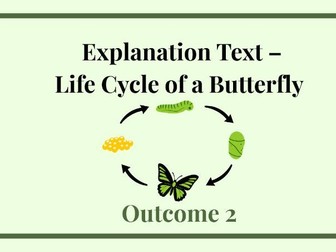
This KS1 writing unit teaches pupils how to write a structured explanation text based on the life cycle of a butterfly. Designed around the Warriner model text for Outcome 2, this 8 lesson sequence builds pupils’ understanding of explanation writing through explicit grammar teaching and carefully structured independent practice. The unit includes: • A clear explanation text structure with title, introduction and subheadings • Stage-based teaching: The Egg, The Caterpillar, The Pupa and The Butterfly • Explicit grammar focus across the sequence: Subordination (because / when) Expanded noun phrases Time adverbials with commas Co-ordination (and / but) • Stretch model sentences for teacher modelling • Closely matched dictated sentences for Year 1 and Year 2 • Vocabulary support for each lesson • A daily oracy and movement routine to rehearse the stages • Independent writing, editing and presentation lessons Pupils finish the sequence by writing a full explanation text with subheadings. Suitable for: • Year 1 • Mixed Year 1/2 classes • Classrooms seeking a clear, structured approach to explanation writing This unit aligns with the KS1 National Curriculum for writing and spoken language and is designed to be practical, progressive and easy to deliver.
KS1 Performance Poetry Unit - Nature Walk (4 Lesson Writing Sequence)Quick View
BareminimumBrilliance

KS1 Performance Poetry Unit - Nature Walk (4 Lesson Writing Sequence)

(0)
This KS1 writing unit is based on the poem “What do you do on a Nature Walk?” and is designed as a short, focused 4-lesson sequence. Pupils explore the structure of a performance poem before creating and performing their own version. The unit is carefully structured to build from immersion and oral rehearsal into independent writing, editing and performance. The sequence includes: • Clear teaching of the poem structure (repetition, rhythm and punchy ending) • Explicit grammar focus across the sequence: Powerful - ing verbs Noun lists using “and” • Stretch model sentences for teacher modelling • Closely matched dictated sentences for Year 1 and Year 2 • Vocabulary support for each lesson • A structured write, edit and perform lesson • Simple editing focus (capital letters, full stops, list structure) Pupils finish the sequence by writing and performing their own nature walk poem using a repeated question structure. Suitable for: • Year 1 • Mixed Year 1/2 classes • Teachers wanting a tight, low-cognitive-load poetry unit • Classrooms preparing for performance or assembly This unit aligns with the KS1 National Curriculum for writing and spoken language and is designed to be practical, structured and easy to deliver within a short half-term.
KS1 Recount Writing Unit - Caterpillar Shoes (Sentence-Driven 8 Lesson Sequence)Quick View
BareminimumBrilliance

KS1 Recount Writing Unit - Caterpillar Shoes (Sentence-Driven 8 Lesson Sequence)

(0)
This KS1 writing unit is based on the Literacy Shed animation Caterpillar Shoes and follows the Warriner medium-term plan for Outcome 1 (Term 4). Pupils write a chronological recount of the story using a structured, sentence-driven 8-lesson sequence. The unit builds carefully from shared understanding of the model text through explicit grammar teaching and into independent writing, editing and performance. Grammar focus across the sequence includes: • Subordination using “because” • Expanded noun phrases • Time openers with commas • Secure past tense verbs Each lesson includes: • A clear “We Are Learning” objective • Success criteria • Stretch model sentences • Closely matched dictated sentences for Year 1 and Year 2 • Vocabulary support • A daily oracy and movement routine to rehearse key plot points • Independent writing, editing and performance lessons This unit is suitable for: • Year 1 • Mixed Year 1/2 classes • Teachers following Warriner English planning • Classrooms seeking a clear, low-cognitive-load writing structure The sequence aligns with the KS1 National Curriculum for writing and spoken language and is designed to be practical, structured and easy to deliver.
KS1 RE – Judaism: What is Havdalah? (Lesson 4)Quick View
BareminimumBrilliance

KS1 RE – Judaism: What is Havdalah? (Lesson 4)

(0)
A complete KS1 RE lesson exploring the question: What is Havdalah and why is it important to Jewish people? This lesson is fully aligned with the Northamptonshire Agreed Syllabus 2025–2030 and forms Lesson 4 of the unit Judaism: Diversity within Judaism. Pupils learn that Havdalah is a special ceremony that marks the end of Shabbat. They explore how Jewish people use Havdalah to move from a special time of rest back into everyday life, helping them understand how beliefs are shown through actions and routines. The lesson follows the syllabus’ woven-in approach to belief and expression and builds on prior learning about Shabbat. Includes: • Full slideshow with clear learning objective and key learning • Purposeful reflection task sheet (no sorting or sequencing) • Dual-coded key vocabulary support • Oracy question and stem sentence • Clear plenary and recap slide Designed for a 45–60 minute KS1 RE lesson. Low-prep, inclusive, and suitable for Years 1 and 2.
KS1 Incident Report Writing Unit – Little Red Reading Hood (Sentence-Driven Sequence)Quick View
BareminimumBrilliance

KS1 Incident Report Writing Unit – Little Red Reading Hood (Sentence-Driven Sequence)

(0)
This KS1 writing unit teaches pupils how to write a formal incident report using the text Little Red Reading Hood by Lucy Rowland as a stimulus. The sequence follows a clear, sentence-driven 8-day structure that supports pupils from shared understanding of the genre through explicit grammar teaching and into independent writing, editing, and performance. The focus is on factual reporting rather than storytelling, reducing cognitive load while maintaining high expectations for sentence quality. The unit includes: • A clear incident report structure (Incident Summary, Incident Details, Warning to the Public) • Explicit grammar teaching across the sequence: – past tense verbs – time openers – expanded noun phrases – command sentences • Stretch model sentences (teacher-only) • Closely matched dictated sentences for Year 1 and Year 2 • Independent sentence prompts to support vocabulary development • Dual-coded vocabulary support • Oracy and movement activities to rehearse language • Dedicated lessons for independent writing, editing, and performance Suitable for: • Year 1 • Mixed Year 1/2 classes • Teachers following the Warriner English planning • Classrooms seeking a structured, low-cognitive-load approach to writing The unit aligns with the KS1 National Curriculum for writing and spoken language and is designed to be inspection-safe, practical, and easy to deliver.
KS1 RE – Judaism: What happens during Shabbat? (Lesson 3)Quick View
BareminimumBrilliance

KS1 RE – Judaism: What happens during Shabbat? (Lesson 3)

(0)
A complete KS1 RE lesson exploring the question: What happens during Shabbat? This lesson is fully aligned with the Northamptonshire Agreed Syllabus 2025–2030 and forms Lesson 3 of the unit Judaism: Diversity within Judaism. Pupils learn that Shabbat follows a special order and includes specific actions such as candle lighting, sharing a meal and resting. They explore how these routines help Jewish people show their beliefs in everyday life. The lesson builds on prior learning about Shabbat and focuses on sequencing and understanding routine, following the syllabus’ woven-in approach to belief and expression. Includes: • Full slideshow with clear learning objective and key learning • Sequencing task to order Shabbat events • Reflection sentence to explain why order matters • Widgit-compatible key vocabulary • Oracy question and stem sentence • Clear plenary and recap slide Designed for a 45–60 minute KS1 RE lesson. Low-prep, inclusive, and suitable for Years 1 and 2.
KS1 RE – Judaism: What is Shabbat? (Lesson 2)Quick View
BareminimumBrilliance

KS1 RE – Judaism: What is Shabbat? (Lesson 2)

(0)
A complete KS1 RE lesson exploring the question: What is Shabbat and why is it important to Jewish people? This lesson is fully aligned with the Northamptonshire Agreed Syllabus 2025-2030 and forms Lesson 2 of the unit Judaism: Diversity within Judaism. Pupils learn that Shabbat is a special weekly time in Judaism, beginning on Friday evening and ending on Saturday evening. They explore how Jewish people show their beliefs through rest, family time and special routines. The lesson builds on prior learning about Jewish beliefs and moves into lived religious practice, following the syllabus’ woven-in approach to belief and expression. Includes: • Full slideshow with clear learning objective and key learning • Comparison worksheet (Before Shabbat / During Shabbat) • Reflection sentence to support explanation • Widgit-compatible key vocabulary • Oracy question and stem sentence • Clear plenary and recap slide Designed for a 45-60 minute KS1 RE lesson. Low-prep, inclusive, and suitable for Years 1 and 2.