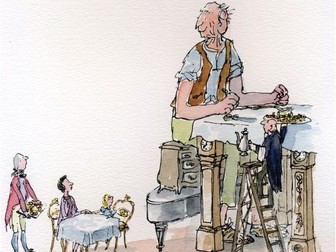
Read the detailed setting description and match it to the picture of the setting.
This needs to be printed and cut out. It can be played as a matching game or as a stick in books activity.
This activity is to help children understand the importance of a detailed description.
How to play:
Give each player a job card: Blacksmith/hunter, Farmer/cook, Children, Thrall/woodworker, Skald/weaver (separate the job according to how many children you have).
Let them read the crisis cards and they need to decide who can help and how.
Go through the answer.
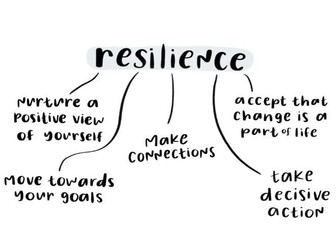
The children are given these different scenarios and need to discuss what they would feel in this situation and how they should move forward, building on resilience.
If you want a word bank to help your class use other words for said or because, this is the resource for you. I get the children to stick the wordbanks before their word and cross out the words that they have used so that they use it only once.
8 challenges for your class to explore Scratch with. Show them 1 slide with a challenge, give them some time to try it out and then show them the answer of code, they then recreate it. This is a great way to direct children on scratch and get them engaged with your computing lesson.
If you liked my scratch challenge 1, this is a step up, a little bit harder.
10 challenges for your class to explore Scratch with. Show them 1 slide with a challenge, give them some time to try it out and then show them the answer of code, they then recreate it. This is a great way to direct children on scratch and get them engaged with your computing lesson.
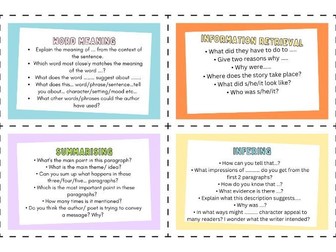
Flashcards for teaching assistants or NQTs to come up with reading comprehension questions on: Word meaning, information retrieval, summarising, infering, prediction, explaining meaning and making comparisons.
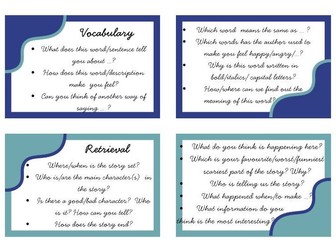
Flashcards for teaching assistants or NQTs to come up with reading comprehension questions on: vocabulary, information retrieval, sequencing, inferring and prediction.