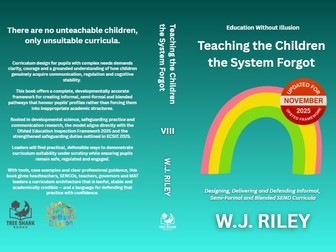
Teaching the Children the System Forgot: Designing, Delivering and Defending CurriculaQuick View
willriley1981

Teaching the Children the System Forgot: Designing, Delivering and Defending Curricula

(0)
Designing an effective curriculum for pupils with the most complex needs is one of the most demanding responsibilities in education. Schools are expected to be ambitious but realistic, compliant yet compassionate, and academically credible while protecting the dignity and safety of children who cannot show progress in conventional ways. Too many settings respond by copying mainstream expectations, stretching subject content beyond meaning, or relying on tokenistic sensory activities without purpose. This book rejects all of that. Instead, it provides a clear, child-centred and legally secure framework for building informal, semi-formal and blended pathways that reflect how pupils actually learn: through regulation, communication, participation, and functional independence. Every chapter is grounded in statutory guidance, developmental science and real classroom practice. Rather than offering gimmicks or one-size-fits-all templates, the book explains the logic behind high-quality SEND provision and shows how to create a curriculum that is safe, coherent and rigorously defensible. Leadership, inspection and external scrutiny are addressed directly. The book explains how to defend curriculum decisions to inspectors, local authorities, governors and MAT executives; how to construct an evidence base built on narrative insight rather than unhelpful data; and how to ensure staff deployment, training and professional conduct match the complexity of pupils’ needs. It includes a full set of appendices with engagement indicators, communication scaffolds, AAC examples, blended timetables, progress narratives, a staff competency framework and a cross-reference table linking the entire curriculum model to national guidance. Written for leaders who want clarity rather than slogans, and for teachers who need practical, developmentally honest guidance, this is a complete manual for designing a curriculum that serves the pupils in front of you, not the expectations of systems built for someone else. It is intentionally direct, transparent and uncompromising about what high-quality SEND provision requires. Whether you are building a curriculum from scratch or refining an existing model, this book gives you the professional architecture needed to deliver education that is safe, lawful and genuinely meaningful.
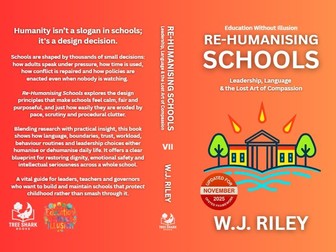
Re-humanising Schools: Leadership, Language & the Lost Art of Compassion: Updated for Ofsted 2025Quick View
willriley1981

Re-humanising Schools: Leadership, Language & the Lost Art of Compassion: Updated for Ofsted 2025

(0)
Re-Humanising Schools is a timely and uncompromising exploration of what happens when the emotional, relational and ethical foundations of school life are neglected and how to rebuild them with clarity, courage and care. Written for leaders, teachers, governors and policymakers, this book challenges the assumption that humanity in schools is a “soft” luxury. Instead, it shows that dignity, trust and relational steadiness are the structural conditions that make learning possible. Across twelve rigorously argued chapters, the book exposes how language, time, design, behaviour systems, family relationships, workload, assessment and leadership decisions either humanise or dehumanise daily experience. It explains how schools drift into brittleness through pace, pressure and procedural noise, and offers a practical blueprint for reversing that drift through disciplined cultural design. Drawing on research from psychology, safeguarding, organisational culture and education, it introduces concepts such as care infrastructure, time architecture, cultural stewardship, boundary discipline, relational ecology, institutional trauma, design literacy, equity by design and restorative repair. The focus here is operational, not rhetorical. Re-humanisation becomes a strategic act, not a slogan. Leaders will find frameworks for ethical decision-making, emotionally safe communication, family partnerships, behaviour redesign, post-incident recovery and succession planning. Teachers will find language tools, boundary scripts, emotional regulation insights and humane assessment approaches. Governors and policymakers will gain clarity on the systems and conditions that create psychological safety, nurture inclusion, and ensure long-term cultural stability. Above all, this is a book about responsibility: how schools can protect childhood, dignity and belonging under relentless pressure. It argues that children flourish when adults are steady, adults are steady when systems are built around people and systems become humane only through intentional design. Re-Humanising Schools is a challenge to create cultures where people are not managed but understood, not hurried through but held in mind. Clear-eyed, evidence-driven and grounded in lived experience, this is a roadmap for leaders who want schools to feel calmer, kinder, fairer and more intellectually serious without compromising rigour.
The Evidence-Informed School: Using Research Without Losing Your Mind: Updated for 2025 OfstedQuick View
willriley1981

The Evidence-Informed School: Using Research Without Losing Your Mind: Updated for 2025 Ofsted

(0)
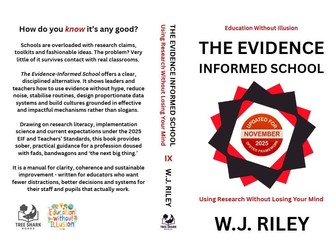
Schools are drowning in claims about “what works.” Every term brings a new toolkit, a new methodology, a new set of promises, and a new wave of pressure. Yet very little of it endures, and even less improves the day-to-day reality of teaching. The Evidence-Informed School cuts through the noise with a clear, uncompromising message: evidence is powerful only when it is understood properly, applied with restraint, and embedded through coherent organisational systems rather than inspirational slogans. Across twelve deeply researched chapters, readers will learn how to interpret studies, how to avoid common traps in cognitive science, how to design proportionate data systems, how to build psychologically safe research cultures, how to run disciplined practitioner enquiries, and how to evaluate impact without inflating claims or adding unnecessary burden. The book draws repeatedly on implementation science, the 2025 Education Inspection Framework, contemporary research literacy standards, and a broad international evidence base, providing leaders with sober, practical guidance they can rely on when the stakes are high. What makes this book different is its refusal to indulge in performance. It rejects the cultish tendencies that have crept into evidence discourse and replaces them with clarity, mechanism, context and honest limitation. It treats teachers as intelligent professionals who deserve precision rather than hype. It treats leaders as custodians of coherence, not curators of novelty. And it treats evidence as a decision-making tool, not a badge for branding. Whether you lead a MAT, run CPD, manage a department, guide early-career teachers or simply want to think more clearly in your own classroom, this book will help you build systems that last. It shows how to stabilise routines, align curriculum and assessment, reduce unnecessary workload, create sector memory, protect developmental spaces from accountability creep, and pace improvement in a way that staff can sustain across years. The Evidence-Informed School is for those who want fewer initiatives and better ones; less noise and more clarity; less performance and more substance. It offers a framework for schools that value judgement, mechanism, coherence and intellectual seriousness. In an era where educational debate is increasingly polarised, superficial and impatient, this book provides what the profession actually needs: calm, credible, disciplined guidance that strengthens practice without spectacle. If you want evidence-informed practice to mean something real, and to survive longer than a single leadership cycle, this is your manual.
The Curriculum Architect: Designing Learning That Works For Everyone - 2025 Ofsted FrameworkQuick View
willriley1981

The Curriculum Architect: Designing Learning That Works For Everyone - 2025 Ofsted Framework

(0)
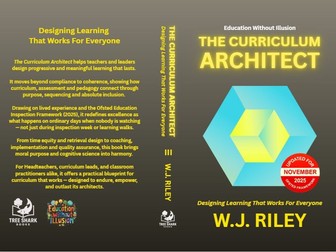
The Curriculum Architect: Designing Learning That Works For Everyoneis a practical and principled guide for educators and leaders seeking to design, implement, and sustain curricula that actually work in classrooms, not just on paper. Written for those living the daily realities of school life, it distils a decade of reform, research, and reflection into a coherent, human approach to curriculum design. Structured through fourteen interconnected chapters, it traces the full architecture of curriculum: from moral intent and concept mapping to sequencing for memory, inclusion through design, literacy across subjects, and leadership that sustains improvement over time. Each section balances cognitive science with professional wisdom, aligning curriculum architecture to the Ofsted Education Inspection Framework (2025) while resisting inspection theatrics. The book offers a blueprint for building schools that teach what matters and remember why it matters: inclusive systems, purposeful timetables, feedback that drives learning, and professional cultures rooted in trust. Leaders will find clarity on how to translate intent into lived classroom practice; teachers will discover how to turn memory research into sustainable routines; governors and inspectors will see what authentic quality looks like beyond the data dashboard. This is not a manual of compliance but a field guide to coherence suitable for heads, leaders, staff and governors alike. It honours the craft of teaching, the science of learning and the moral purpose that underpins both when designing and running an effective curriculum.
Facts Over Gossip - How to Stay Rational, Decent and Effective When the System Loses Its MindQuick View
willriley1981

Facts Over Gossip - How to Stay Rational, Decent and Effective When the System Loses Its Mind

(0)
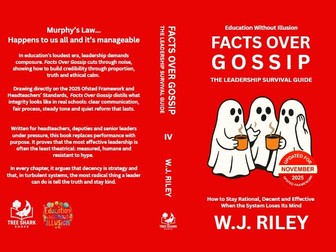
Facts Over Gossip is a brand new book release for education leaders who want substance over spin. In a profession where rumour travels faster than reason, it offers a blueprint for calm, credible leadership built on ethics, proportion, and clarity. Drawing on the 2025 Ofsted Framework, the Headteachers’ Standards, and the Seven Principles of Public Life, it shows how to lead when noise, pressure, and misinformation threaten to drown professional truth. Across fourteen chapters, W.J. Riley dismantles performative management and replaces it with practical integrity. From quiet reform to post-crisis recovery, from digital conduct to institutional memory, every section translates high policy into daily behaviour: how to communicate without distortion, document without fear, and sustain morale without illusion. Written for headteachers, deputies, senior leaders, and governors, Facts Over Gossip bridges the gap between inspection theory and human leadership. It treats proportion as strategy, showing that ethical consistency is not idealism; it’s operational strength. This is the fourth volume in the Education Without Illusion series: pragmatic, plain-spoken books for those still determined to lead well in an imperfect system. Professional yet humane, it reminds leaders that credibility is quiet, reform is cumulative, and truth told calmly is still the most radical act in education.
The Honest Leader - What Schools Don't Tell You Until You're in ChargeQuick View
willriley1981

The Honest Leader - What Schools Don't Tell You Until You're in Charge

(0)
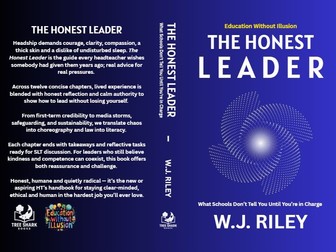
The Honest Leader Leadership in education has never been harder - or more necessary. The Honest Leader is a practical and humane guide for headteachers, deputy heads, and aspiring leaders who want to navigate the daily pressures of modern school life without losing integrity or humanity. Written from lived experience, it combines insight, realism, and calm authority across twelve chapters covering arrival, credibility, communication, crisis, legal literacy, and sustainability. Each chapter ends with key takeaways, reflective questions, and practical “gap tasks” designed for professional development or team discussion. The book rejects leadership cliché in favour of clarity: how to hold authority without arrogance, manage power with empathy, and make decisions that stand up to both scrutiny and sleep. From handling media storms and safeguarding allegations to setting boundaries, protecting wellbeing, and mentoring others, The Honest Leader translates the unspoken realities of headship into a language of grace and competence. It treats calm as strategy, documentation as dignity, and kindness as the highest form of authority. Rooted in evidence, but written with warmth, it reflects the rhythm of real school life - where meetings spill into evenings, inboxes never close, and people matter more than spreadsheets. This is leadership as a sustainable act, where professionalism and compassion coexist. Whether you’re taking up your first post, rebuilding after crisis, or simply trying to stay steady amid complexity, The Honest Leader offers what every leader quietly needs: a reminder that doing the right thing is still possible, and that the person behind the title matters most of all.
SEND Without Spin - What Inclusion Looks Like When it Works (Updated for 2025 Ofsted Framework)Quick View
willriley1981

SEND Without Spin - What Inclusion Looks Like When it Works (Updated for 2025 Ofsted Framework)

(0)
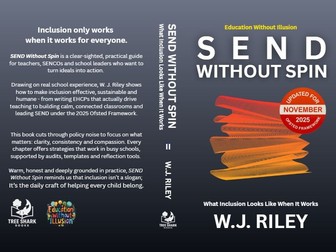
SEND Without Spin: What Inclusion Looks Like When It Works is a grounded, practitioner-led guide to inclusive education that strips away jargon and idealism to show what effective SEND practice actually looks and feels like in real schools. Fully aligned to the new Ofsted Inspection Framework of November 2025 and written for SENCOs, class teachers, senior leaders and support staff, this book brings warmth, realism and clarity to a subject too often smothered by paperwork. Drawing on lived experience in special, mainstream and alternative settings, W. J. Riley offers a practical roadmap for turning policy into daily routines that work - for pupils, staff and families alike. Each chapter blends legal literacy, classroom insight and humane leadership: from writing EHCPs that drive teaching to commissioning alternative provision under the 2025 Ofsted framework. Across fourteen detailed chapters and appendices of audits, templates and CPD tools, Riley shows how to build systems that feel human from the corridor: predictable, relational and calm. SEND Without Spin is part of the Education Without Illusion series from Tree Shark Books. It speaks directly to professionals who want to do inclusion well, without losing honesty or hope. Whether you lead a inclusion, lead a department, manage provision or simply want to make your classroom more accessible, this book restores a sense of balance: rigorous enough for inspection, realistic enough for Monday morning. Readable, reflective and rooted in evidence, SEND Without Spin helps practitioners stay steady in a world of shifting frameworks and unrelenting expectations. It reminds us that inclusion is not a place, but a principle and that the best schools still begin with safety, clarity and compassion.
The Teacher's Defence: Protecting Yourself and Your Staff in a Risk Culture - Ofsted 2025Quick View
willriley1981

The Teacher's Defence: Protecting Yourself and Your Staff in a Risk Culture - Ofsted 2025

(0)
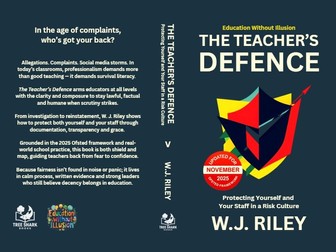
Teaching has never been more legally exposed, publicly scrutinised, or emotionally demanding. The Teacher’s Defence: Protecting Yourself and Your Staff in a Risk Culture is the essential survival guide for today’s educators: plain-English, policy-literate, and fiercely humane. Written by experienced school leader W. J. Riley, this book demystifies the procedures that too often leave teachers paralysed by fear or misinformation. From managing digital footprints and navigating parental complaints to surviving suspension, investigation, and media exposure, Riley shows how calm documentation, lawful process, and emotional intelligence can turn crisis into clarity. Each chapter blends real-world school experience with statutory precision - grounded in the 2025 Ofsted Education Inspection Framework, KCSIE, ACAS, and the Defamation Act so that readers know exactly what to do when risk becomes real. Unlike legal manuals written for lawyers, The Teacher’s Defence speaks to teachers, leaders, governors, HR professionals, and union reps who live the day-to-day pressures of modern schools. It strips away jargon, restores perspective, and re-centres the human purpose behind procedure. Readers learn how to record without paranoia, speak with composure under scrutiny, and rebuild confidence after ordeal. For those exhausted by complaint culture or recovering from false allegation, this book offers not just protection but restoration - the roadmap back from fear to professional self-respect. The message is both clear and comforting: procedure is not punishment; it’s protection. Evidence preserves reputation; grace redeems it. In an age of risk, the calm teacher is the safest teacher.
Coaching For Impact - The Art of Developing Great Teachers (2025 Ofsted EIF)Quick View
willriley1981

Coaching For Impact - The Art of Developing Great Teachers (2025 Ofsted EIF)

(0)
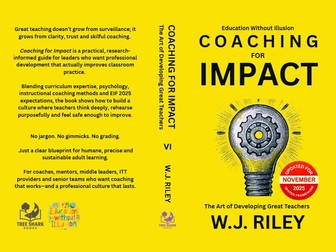
Book 6 in the ‘Education Without Illusion’ series,Coaching for Impactis a clear, uncompromising manual for leaders who want professional development to mean something again. After years of initiative churn, compliance-driven CPD and observation systems that damaged more than they improved, schools need a developmental model grounded in trust, clarity and evidence. This book shows how to build one. Drawing on the latest research in instructional coaching, curriculum enactment, motivation science, cognitive psychology and leadership culture, the book provides a blueprint for coaching that changes classroom practice without surveillance, gimmicks or impossible workload expectations. It explains how to design psychologically safe adult learning, structure meaningful goals, run observations that actually help, and deliver feedback that teachers use, not endure. Every chapter links explicitly to Ofsted’s Education Inspection Framework 2025, KCSIE 2025 and UK Professional Standards to meet the real demands leaders face. Across fifteen chapters, the book demonstrates how coaching becomes culture: a living habits-based system rooted in curriculum mechanisms, disciplined rehearsal, ethical digital use, workload fairness and emotionally intelligent leadership. It dismantles outdated CPD assumptions and replaces them with practical, human-centred routines that strengthen professional identity and raise the quality of education. Written for middle leaders, senior teams, mentors, coaches and ITT providers, Coaching for Impactoffers guidance that is both intellectually serious and grounded in classroom reality. It rejects generic slogans and focuses on what works: clarity, proportion, specificity and respect. The result is a development model that strengthens teachers, stabilises culture and makes improvement sustainable. If you want a coaching system that is credible, humane and genuinely transformative, built on partnership rather than pressure, this is the book that shows you how to create it.
Arithmetic Smart Strategies - EYFS, KS1 and KS2Quick View
willriley1981

Arithmetic Smart Strategies - EYFS, KS1 and KS2

(0)
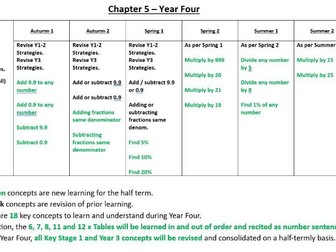
Written specifically to ensure children are able to secure 40 / 40 in their KS2 SATs arithmetic task, the Smart Strategies is a seven-year arithmetic methods programme. The emphasis is on progression over a long period of time, rather than Year 6 teachers feeling the need to ‘fire fight’ in children’s final year of primary education. We start with the most simplistic concepts such as one more / less and build through to calculating percentages, converting measures and converting fractions and whole numbers. The Smart Strategies also features a robust knowledge organiser section in the back of the booklet, which can be used daily as a reference library for children maths lessons. Each ‘Smart Strategy’ is a method, which is linked to a specific arithmetic skill. There’s a ‘tell me’ section, where the method is given, then a ‘show me’ section, which includes an example of the method being successfully used, and finally a ‘suggested resources’ section for Wave 2 and 3 intervention practitioners’ guidance. The Smart Strategies are proven to work, with 71% of Year 6 pupils in my 2023 cohort achieving ARE in mathematics compared to 25% of the same children reaching ARE in their 2019, KS1 assessments. They work best if they are issued to individual children and kept in trays, as well as being published on school websites. The Smart Strategies come with a long-term plan suggestion, but really any of them can be covered at any point in the year by any cohort as need suits. Each chapter / phase is accompanied by a Powerpoint slide show with target questions linked to specific strategies, which will reduce teacher workload and allow colleagues to focus on specific strategies in short, meaningful sessions to support the wider maths curriculum.
KS1 and KS2 Maths 'Smart Strategies' - 76 Ways to Boost Arithmetic Accuracy, Speed and Success!Quick View
willriley1981

KS1 and KS2 Maths 'Smart Strategies' - 76 Ways to Boost Arithmetic Accuracy, Speed and Success!

(0)
Dear colleagues, If this is of interest, I wrote this back in 2017 and it’s called the Smart Strategies. What is it and how does it work? To give context, I was covering a mat leave at in Year 6 and we undertook the 2016 SATs as a warm up for the real thing. We had a 40% pass rate and everything on this programme is a skill the pupils could not consistently demonstrate in either an accurate or a timely manner with their 2016 papers. The premise here is very simple and accessible for anybody: A tricky skill is identified on the left (identify). A child-friendly method is explained to master this skill (tell). An example is given using the method to apply the skill (show). Models and images are suggested that may help mastery (retain). What impact has this had in terms of results? We worked relentlessly on these strategies for around five weeks and the 2017 SATs maths results came back at 63% making age-related. That’s an increase of 23 percentage points or slightly over 50% in terms of numbers of pupils making the grade at ARE. We later cascaded this through staff CPD and teachers divided the skills up into cohort delegations between themselves. I have known a lot of success with this resource in classes I have covered and taught but also with NQT and RQT colleagues I have coached over the years. In addition, I have been contacted by former pupils, parents, colleagues whose children are struggling at secondary school etc and over the years this resource has been very valuable across a variety of contexts. If it is anything you feel could add value to the outcomes for your pupils, families or colleagues then it’s my pleasure to share what has been a very handy resource throughout my career. Will