 Quick View
Y9: KS3 CATHOLIC RED: To the ends of the Earth - L7: Catholic belief about the Church being purified
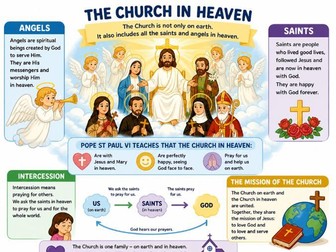
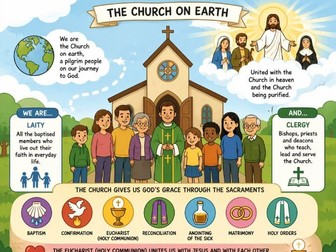
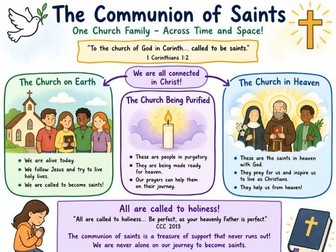
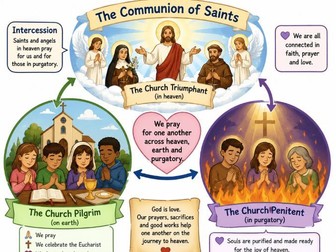
This fully resourced Year 9 lesson explores Catholic beliefs about purgatory, the Church Penitent, and praying for the dead, helping pupils understand how Catholics believe the Church is united across earth, purgatory, and heaven. Carefully aligned with the KS3 Religious Education Directory (RED) and sequenced to support progression to GCSE Religious Studies, the lesson develops key knowledge of purification, the communion of saints, intercession, and the role of prayer for souls in purgatory.
Designed for accessibility (reading age 8–12), the lesson uses clear explanations, one-sentence definitions, misconception checks, and dual-coded visuals to support all learners in understanding challenging theological concepts. Pupils engage with important sources of authority, including CCC 1030, CCC 1031, CCC 1032, and CCC 954, to explore Catholic beliefs about purification after death, the beatific vision, and the communion in spiritual goods.
A key feature of the lesson is a range of highly engaging, independent tasks. Pupils create a “Purgatory Information Poster” explaining Catholic beliefs about purification, design a “Prayer for the Dead Flow Diagram” showing how Catholics believe prayers support souls in purgatory, and complete a “Purgatory: True or False?” activity to challenge misconceptions and justify answers using sources of authority. These activities develop creativity, retrieval practice, theological understanding, and independent learning.
Misconceptions are explicitly addressed throughout the lesson, particularly around common misunderstandings such as purgatory being the same as hell, souls in purgatory being evil, and the belief that praying for the dead has no purpose. Structured hinge questions and mini-whiteboard checks are used regularly to assess understanding and identify misconceptions in real time.
The lesson builds towards GCSE-style explanation and evaluation skills, helping pupils confidently explain why Catholics believe purgatory is necessary and how prayer connects all members of the Church. This provides a strong foundation for future learning on life after death, salvation, and Catholic beliefs about the communion of saints.