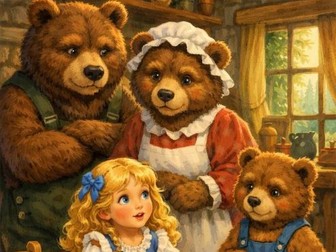
Reading Comprehension sheets for Goldilocks and the Three Bears. Each pack comes with the story, a bank of questions and an answer sheet.
Available in Support, Standard and Challenge difficulty level.
This bundle has a total of 8 lessons to do with the history of the World Cup with links to Health and Wellbeing. Some lessons include activities in the PowerPoint. The 8 lessons include:
The Three Host Nations
The History of the World Cup
Scotland vs North America - a look into culture differences
Participating Nations and Global Identities
National Anthems
Influential icons of the World Cup
Fuel for the World Cup - Nutrition and Physical Performance
Footballs, Kits and Boots - What’s Changed?
Total price separately - £13.60
Bundle price - £7.70
save 43% by buying the bundle!
Discover the diverse traditions, languages, and climates of the 2026 host nations.
Compare Scottish landmarks and customs with those in North American cities.
Identify similarities and differences in how we celebrate major sporting events.
Locate the three host nations on a map: Canada, Mexico, and the USA.
Calculate flight distances and times from different countries.
Analyse the environmental impact of all this travel.
Explore how teams and fans move across such a huge continent.
Investigate the unique culture of top nations in the 2026 tournament.
Discover what different countries are famous for around the world.
Create a cultural profile for a nation, including their symbols and celebrations
The World Cup started in 1930 in Uruguay.
It has grown from a small competition to a huge global event.
1966 was a special year for England.
Rules like yellow cards keep the game fair and safe.
Identify legendary players like Pelé and Maradona, as well as modern icons expected to shine in 2026.
Evaluate why these players are influential beyond just playing football, looking at their charity work and leadership.
Present findings on how a chosen player has impacted their national identity and the global growth of the game.
Analyse what professional footballers eat to stay fit and recover muscles.
Compare a ‘match day’ meal for elite athletes with our own daily diet.
Design a balanced meal plan packed with the right energy for a big tournament.
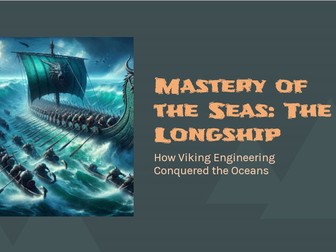
Explain how the clinker-built design helped Vikings travel fast on rivers and rough seas.
Compare the Langskip (warship) with the Knarr (trading ship) and their different uses.
Describe how Vikings navigated using sun compasses and landmarks.
Understand the teamwork and physical strength needed to row a longship.
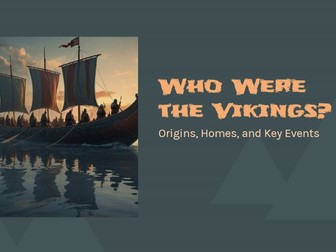
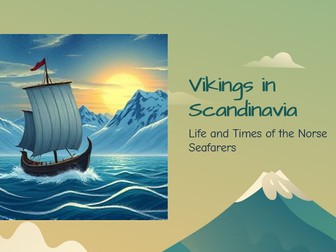
Identify the Scandinavian countries where the Vikings came from.
Plot key events on a timeline from the first raid to the end of the Viking Age.
Examine evidence of longhouses to understand how Viking families lived.
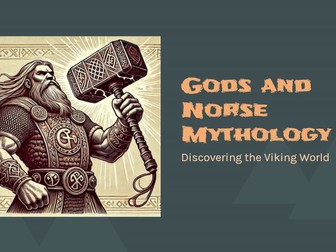
Describe the main Viking gods and their roles.
Explain the story of Yggdrasil and the Nine Realms.
Understand why Valhalla was so important to Viking warriors.
Identify how Viking gods influence the days of the week.
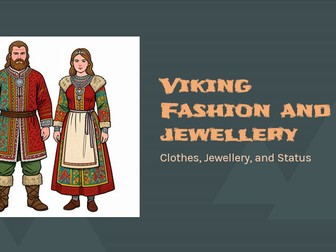
Discover how Vikings made woollen and linen textiles using drop spindles and looms.
Identify key garments like tunics, trousers, and apron dresses.
Investigate silver jewellery and tortoise brooches as status symbols.
Explore natural dyes and metalwork techniques used for decoration
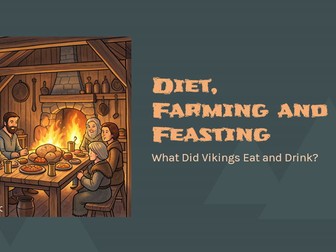
Identify seasonal food sources like preserved fish and dairy, and understand why farming was crucial to Viking settlements.
Explore traditional cooking methods using iron cauldrons and clay ovens, comparing daily meals to special feasts.
Examine utensils like wooden bowls and drinking horns, linking their craftsmanship to Viking metalwork skills.
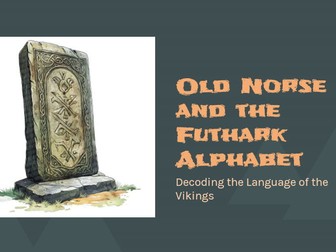
Discover the Younger Futhark alphabet and how runes were carved into stone and wood.
Investigate Old Norse words that we still use in Scots today.
Decode simple runic inscriptions to learn about Viking history and gods.
Write our own names using runes to compare them with our modern alphabet.
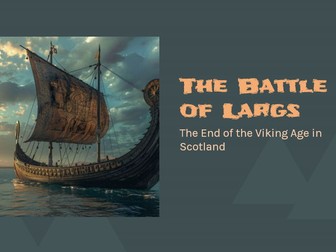
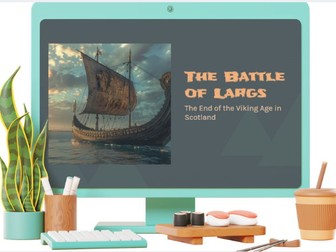
Discover why King Haakon of Norway invaded Scotland in 1263.
Investigate how the weather and the Clyde coast changed history.
Explore the outcome of the Battle of Largs and the Treaty of Perth.
Understand how life in Scotland changed after the Vikings left.
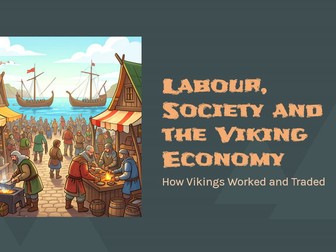
The different jobs Vikings did, like blacksmiths and weavers.
How women and men had different roles on the farmstead.
How Vikings bought and sold things using silver instead of coins.
Why Vikings stopped raiding and started trading more.
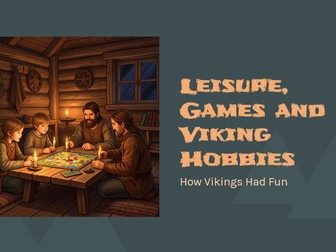
Master the rules of Hnefatafl, a game of attack and defence.
Compare winter sports like skiing with modern activities.
Investigate storytelling and music at community feasts.
Discuss how sports helped train Vikings for combat.
Find a whole unit of lessons about the Vikings for KS1/KS2.
Bundle includes:
Who were the Vikings?
Viking Society
Vikings in Scandinavia
Viking Myths and Legends
Viking Clothes and Jewellery
The Battle or Largs
Old Norse Language and the Futhark Alphabet
Mastery of the Sea: The Longship
Leisure, Games and Hobbies
Labour, Society and Economy
Gods and Goddesses - Norse Mythology
Diet, Farming and Feasting.
Total price before bundle: £20.40
Bundle Price: £10
**Save 51% on bundle!! **
Find out about what life was like in Scandinavia for the Vikings. It includes elements of climate, landscape, timeline, where Scandinavia is, jobs and homes.