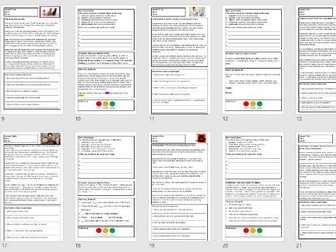
A short booklet revising simple sentence structures, conjunctions and compound sentences. Also includes articles about space and astronauts with comprehension/ information retrieval activities.
(Cross- curricular: Science.)
Curriculum & Culture: The Mega Educational Quiz
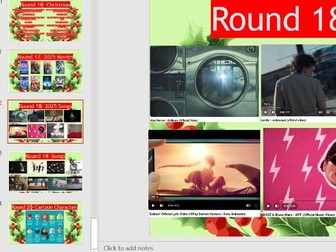
Brand new and ready-to-use, this Mega Quiz is perfect for schools, youth groups, classes, and assemblies. With an impressive 20 rounds of General Knowledge and Pop Culture content, it is suitable for delivery online, virtually, or in-person. Test your students with rounds covering History, Science, Maths, Geography (including Capital Cities), and Literature (Books & Quotations). The quiz also features highly engaging current topics like Netflix, Video Games, Celebrities, Sports, and the very latest 2025 Songs and Movies, ensuring it’s a fun quiz that appeals to all students. Suitable for schools, youth groups, classes, in person, online and assemblies
Rounds:
1, Word events
2. Celebrities
3. Music trivia
4. The movies
5. History
6. Capital cities
7. Science
8. Maths
9. Netflix
10. Sports
11. Books
12. National dishes
13. Video games
14. Animals
15. Quotations
16. Christmas trivia
17. Movies
18. 2025 songs
19. Songs
20. Cartoon characters.
This was put together for a low ability KS3 literacy group (approx level 3) and was used after the Space Sentences resource.
Students study a short science fiction story and its elements. They write a news report based on the story. Students then write their own science fiction stories.
Engaging Grammar Intervention for Key Stage 3 & EAL Learners
This resource offers 20 thoughtfully designed grammar intervention lessons, perfect for Key Stage 3 students and English as an Additional Language (EAL) learners.
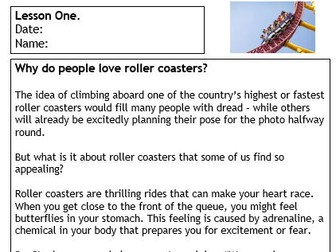
Each lesson is anchored in a high-interest topic—like roller coasters, K-pop, or wildfires—paired with clear reading passages, vocabulary support, and targeted grammar practice. Students develop foundational literacy and grammar skills while building confidence and real-world language proficiency.
Accessible texts and questions tailored for EAL and lower-literacy learners
Step-by-step grammar instruction with scaffolded practice
Engaging, contemporary topics to boost motivation
Vocabulary building in every lesson
Ready to use for interventions, small groups, HOMEWORK or independent studY
Roller Coasters: Capitalising names and the first word in a sentence
Scary Movies: Ending sentences with a full stop.
K-Pop: Using question marks for questions
Dogs: Recognising and writing basic nouns
Baking: Recognising and writing basic verbs
Phones: Recognising and writing basic adjectives
Banksy: Using “a” and “an” correctly
Labubus: Using “I” as a capital letter
Rats: Matching simple subjects and verbs
Lab Grown MeatL Using simple plurals.
Space: Sentence Types. Identifying and writing simple, compound, and basic complex sentences.
AI: Subject-Verb Agreement: Matching singular/plural subjects with correct verb forms.
Wildfires: Verb Tenses: Using past, present, and future tense verbs accurately.
Moon Landing: Punctuation Basics: Using capital letters, full stops question marks, exclamation marks, and commas in lists.
Kidfluencers: Pronoun Use: Selecting appropriate pronouns and ensuring pronoun- agreement.
Hair: Using Compound Sentences: using coordinating conjunctions (and, but, or, so) in compound sentences.
Animal’s Mental Health: Apostrophes: Using apostrophes for contractions and possessives.
Music: Adjectives and Adverbs: Understanding the difference and using both to describe nouns and verbs.
Feelings: Prepositional Phrases: Recognising and using prepositions and simple prepositional phrases.
Mental Imagery: Common Homophones : Distinguishing between words like their/there/they’re, to/too/two, your/you’re.
This booklet is a structured reading intervention designed to help students master essential grammar and writing skills in an engaging, topic-based format. Each section uses high-interest subjects like roller coasters, scary movies, K-pop, and more to introduce and practice key concepts such as sentence types, punctuation, verb tenses, pronouns, plurals, apostrophes, adjectives, adverbs, prepositions, and common homophones. The activities are scaffolded to build confidence and reinforce understanding, with clear examples and practice tasks woven throughout. Teachers can use the booklet flexibly for whole-class instruction, small groups, or individual support, making it a practical resource for boosting reading, writing, and language skills in students who need extra intervention.
Skills:
Capitalising names and the first word in a sentence
Ending sentences with a full stop.
Using question marks for questions
Recognising and writing basic nouns
Recognising and writing basic verbs
Recognising and writing basic adjectives
Using “a” and “an” correctly
Using “I” as a capital letter
Matching simple subjects and verbs
Using simple plurals.
Sentence Types. Identifying and writing simple, compound, and basic complex sentences.
Subject-Verb Agreement: Matching singular/plural subjects with correct verb forms.
Verb Tenses: Using past, present, and future tense verbs accurately.
Punctuation Basics: Using capital letters, full stops question marks, exclamation marks, and commas in lists.
Pronoun Use: Selecting appropriate pronouns and ensuring pronoun- agreement.
Using Compound Sentences: using coordinating conjunctions (and, but, or, so) in compound sentences.
Apostrophes: Using apostrophes for contractions and possessives.
Adjectives and Adverbs: Understanding the difference and using both to describe nouns and verbs.
Prepositional Phrases: Recognising and using prepositions and simple prepositional phrases.
Common Homophones : Distinguishing between words like their/there/they’re, to/too/two, your/you’re.
Here are 31 literacy games. The are suitable for a range of abilities, although some are easier than others. Click on the first slide to get to games for the topic of your choice. Some games need miniwhite board but most can be used with little/ no equipment.
A resource revising and practising simple/compound/ complex sentences using examples from chapters 12&13 ofThe Hunger Gamers.
Students do not need to have read/be reading the book to use the resource.
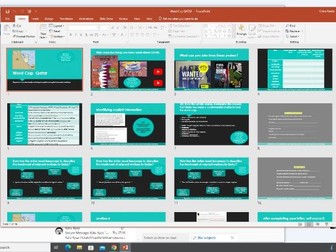
Fully resourced. Powerpoint. Differentiated paper with reading and writing questions. Planning sheet for letter to Fifa. Nver-heard-the-word grid.
Focuses on Guardian article about hosting the world cup in Qatar.
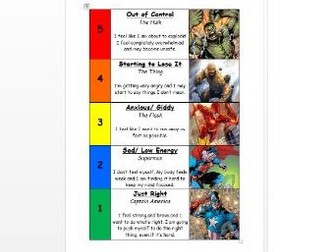
An emotions check in list using superheroes.
Students can check in during lessons or at the start.
Alternatively different emotions can be printed and displayed separately (resource included) for students to stick their names on.
“Go Green” calming down strategies included. Can be printed back to back and laminated for students who need them.
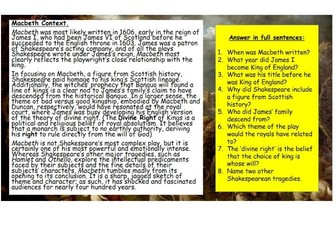
A cover lesson looking at the context of Macbeth and his relationship with James I.
Includes vocabulary, comprehension and thinking tasks. (could be used as an introduction lesson or revision)
A one off lesson made to coincide with the BBC series being released. Could be used as part of a dystopian scheme or as a stand alone lesson on inference.
Round One: 2024 Films
Round Two: 2024 Music
Round Three: Music Through The Years
Round Four: Famous Faces
Round Five: Netflix
Round Six: Video Games
Round Seven: Sports
Round Eight: Maths
Round Nine: World Geography
Round Ten: General Knowledge
A worksheet to be printed A3 and annotated with one quote each for: Jack, Ralph, Piggy, Roger, Simon The Best
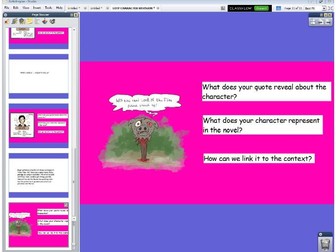
Flipchart gives questions for each character to use as discussion: What does your quote reveal about the character? What does your character represent in the novel? How can we link it to the context?
Includes an extract, dictionary task, comprehension questions, revision of some writers techniques (colour and alliteration) a writing task and peer assessment.
Two worksheets, one is a summary of Macbeth and one is the historical story of Macbeth.
Both have comprehension questions suitable as homework assignments.
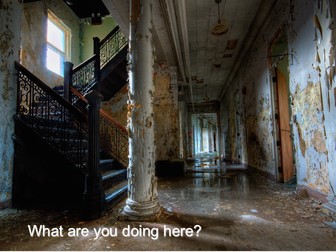
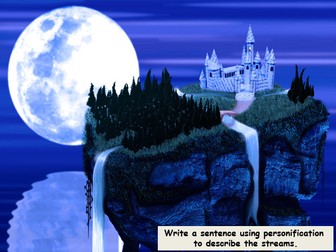
A powerpoint revising the following language devices using picture prompts.
Students practise using each device in a sentence inspired by the picture and then can expand one into a piece of extended writing.
Alliteration
Simile
Rule of three
Senses
Adjective
Interesting verb
Sentence starting with an adverb
Colour
Pathetic fallacy
Personification
Onomatopoeia
(Can use as starter, revision or whole lesson)