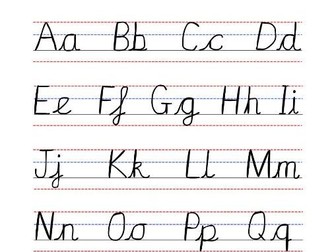
I’m a private tutor and use handwriting stuff all the time! Check out this pack I’ve put together, ALL my worksheet resources here
This comprehensive handwriting pack is designed to build confident, independent writers through clear structure, consistent routines and child-friendly resources. Perfect for classroom use, interventions or home learning, the pack supports pupils in developing correct letter formation, fine motor control and pride in their writing.
My resources are carefully scaffolded to promote independence - so important with these early steps! I’ve found it really useful for KS2 students who have developed lazy habits too
Ideal for EYFS and KS1 (and lower KS2 where needed), I’ve used this for
Daily handwriting practice
Morning work or early finishers
Targeted intervention groups
SEND support
Home learning and tutoring
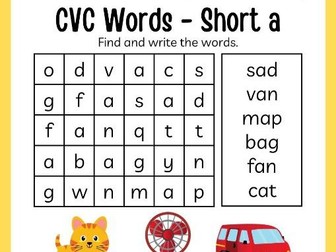
I’m a private tutor - I use this for early KS1 - a bright, engaging short A CVC Phonics Pack designed to help young learners master early reading skills. This pack focuses on short a CVC words (like cat, hat, map) through fun, hands-on activities that build phonemic awareness, blending, and confidence. Perfect for classroom use, interventions, or home learning - feel free to use!
Here’s a few resources I’ve been using lately! A bright, engaging 2D Shapes Pack that I’m currently using in my classroom to help young learners recognise and describe common shapes. The activities are hands-on and child-friendly, supporting shape identification, sorting, and real-world connections. Perfect for classroom use, small groups, or home learning, this pack builds confidence while making early geometry fun and accessible.
Short a sound for presenting - I use with my classes. A bright, engaging Short A CVC Phonics Pack which has helped my young learners master early reading skills. This pack of resources focuses on short a CVC words (like cat, hat, map) through fun, hands-on activities that build phonemic awareness, blending, and confidence. Perfect for classroom use or interventions
A bright, engaging Short A CVC Phonics Pack designed to help young learners master early reading skills. This pack focuses on short e CVC words through bright activities that build phonemic awareness, blending, and confidence. Perfect for classroom use, interventions, or home learning - thats what im using it for at the moment!
Hope this is helpful! Here’s some bright, engaging 2D Shapes that I’m currently using in my classroom to help young learners recognise and describe common shapes. The activities are hands-on and child-friendly, supporting shape identification, sorting, and real-world connections. Perfect for classroom use, small groups, or home learning or interventions
Here’s some fun, no-stress 3D Shapes things that I’m using in my classroom right now to help little learners wrap their heads around cubes, spheres, cones and more (without the tears!). The activities are hands-on, simple, and actually keep children engaged while they spot shapes, talk about their features, and find them in the real world. Perfect for lessons, small groups, or interventions help too
In these lesson, I had students calculating the area of parallelograms and triangles. They are in line with White Rose outcomes. Kiddos will recognise triangles and parallelograms and then solve for the area with plenty re-capping of the formulas. Challenge - plant growing project - included too!
Some quick resources I’ve always fallen back on as reminders about which triangle is which, naming them correctly etc. Always useful to have somewhere to hand!
These are a few lessons I did with my P7/Y6 class. First few lessons about diary writing as an evacuee using BBC video clips as prompts. Works through rationing also. Then moves onto a few lessons about letter writing using BBC case studies as prompts. Visual supports and steps to success included in slides, can be copied and pasted into word documents to print out for workbooks if needed. NOTE: Inverurie is included as town name on one of the visual prompts - change as necessary! ALSO I used several copies of actual diaries (Diary of a Wimpy Kid, DORK diaries) for one of the starter tasks, can be removed from slides.
In this intro lesson, I’ve let students become word detectives, sniffing out relationships between words by exploring synonyms, antonyms, and analogies. They’ll start hunt down exciting synonyms and sneak them into their writing to show off their growing vocabulary muscles. To top it off, they’ll sharpen their writing skills by spotting antonyms and using them to create sentences that prove opposites really do attract! I’ve only got an intro activity on the slides at the moment, the last class I did this with we made display posters in groups which worked out well. Access to technology got independent work helped.
Hello,
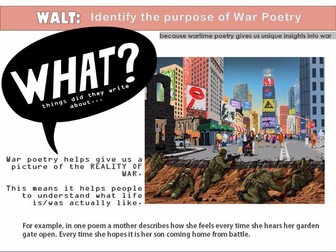
This is a Year 5/KS2 five lesson unit of work with the following WALTS:
WALT: identify the purpose of WW poetry
WALT: analyse the features of a WW2 poem
WALT: compare two poems
WALT: use advanced adjectives
WALT: create our own war poem
Worksheets and resources included
Reading Comprehension for GGM. Chapter by chapter comprehension questions aimed at consolidating knowledge, practicing full sentences etc. Good for lower ability students.
Hello,
This is a Year 5/KS2 four lesson unit of work with the following WALTS:
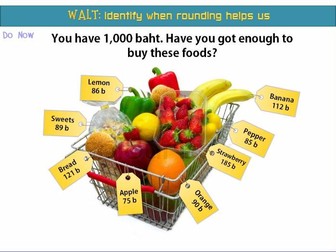
WALT: round numbers
WALT: use rounding to help us calculate
WALT: identify when rounding helps us*
WALT: apply our knowledge of rounding
*Note, lesson 3 starter currency is THB
Hello
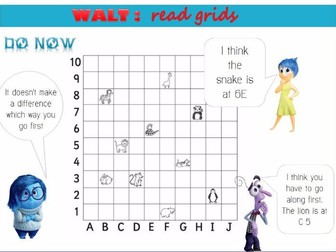
WALT: read grids
WALT: translate coordinates
This is 2 lessons I did with my Year 5/P6’s as our intro lessons into coordinates.
The first one we looked at plotting coordinates on a four quadrant grid.
Second one was our first lesson on translating. I found differentiated worksheets online quite easily, however I found for all abilities a blank grid with some challenge plot these points (join them up for HA) was fine.
Thanks!
5-10 lessons plus resources on Fractions.
An activeinspire flipchart about fractions - looking at:
1. equivalent fractions
2. multiplying fractions
3. converting fractions to decimals
4. problem solving
5. fractions of amounts


 Quick View
 Quick View
 Quick View
 Quick View
 Quick View
 Quick View
 Quick View