Christmas Visual Timetable Pack - Autism SENQuick View
FrogLogic

Christmas Visual Timetable Pack - Autism SEN

(0)
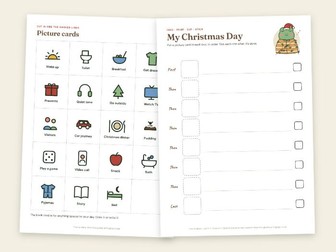
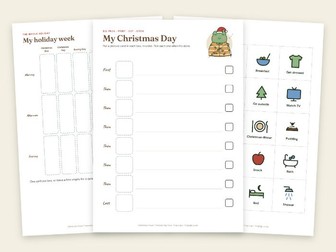
An 8-page printable Christmas visual timetable pack for autistic children and pupils with SEN: 60 picture cards, a now-and-next board and a holiday week planner. The holidays throw the usual routine out of the window. Seeing the day, and the week, in pictures takes a lot of the worry out of it. What’s inside (8 pages, A4 and US Letter): My Christmas Day - a schedule strip with eight boxes (First, Then… Last) to put picture cards in and tick off. Now and next board - one thing at a time. My holiday week - a week planner for the whole break, so the days in between don’t feel shapeless. 60 picture cards over three pages - 48 drawn cards plus 12 blanks to draw your own. As well as the everyday ones (wake up, breakfast, get dressed, bath, story, bed), there are cards for the holiday: presents, visitors, car journey, train, plane, grandparents’ house, church, shopping, party, crackers, decorate the tree, stocking, write cards, baking, crafts, music, photos, video call, wait, finished, help, hug and stop. First, then board with “I need a break” and “help” cards. How to use the pack - a page for the grown-ups. Ideas for using it: Send it home before the holidays so families can plan the break the same way school does. Use the week planner to show the days between Christmas and going back. Laminate the cards and use Velcro dots so they can be moved when plans change. Simple, low-clutter pictures with a thick outline, drawn in the Frog Logic frog style. Made by Sam at Frog Logic, who makes gentle printables for neurodivergent people and the people around them. Just want to try it first? The free Christmas Visual Timetable in my shop has the day schedule and 20 cards.
Sensory Profile Worksheet: Autism & ADHDQuick View
FrogLogic

Sensory Profile Worksheet: Autism & ADHD

(0)
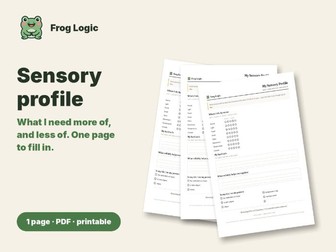
A one-page sensory profile worksheet for autistic, ADHD and sensory-sensitive pupils and adults: what I need more of, and less of. A simple avoid-to-seek scale for sound, light, touch, smell, taste, movement, temperature and crowds, then space for hard no’s, what reliably helps them regulate, and what to keep in their kit. Good for one-page profiles, EHCP and SEN support conversations, transition to a new class or setting, and older students who want to explain themselves. Written by a neurodivergent author, in plain words that respect the person it’s about. Printable PDF, A4. Print as many copies as you need for your own teaching and support work.
How To Help Me: One-Page Profile (Autism)Quick View
FrogLogic

How To Help Me: One-Page Profile (Autism)

(0)
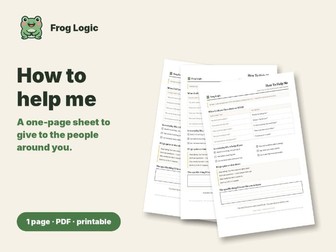
A one-page “how to help me” profile for autistic and ADHD young people and adults, written to be handed to the people around them: new teachers, tutors, mentors, employers or family. It covers what not to say and what to say instead, everyday things that help, what to do if they go quiet or shut down, and the one specific thing they’d most like you to know. Fill in the blanks, or hand it over as it is. A kind, practical starting point for pupil passports, transition and one-page profiles. Written by a neurodivergent author, in plain words that respect the person it’s about. Printable PDF, A4. Print as many copies as you need for your own teaching and support work.
Task Breakdown Sheet: Executive FunctionQuick View
FrogLogic

Task Breakdown Sheet: Executive Function

(0)
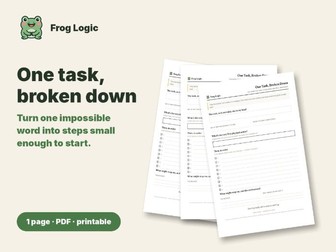
A one-page task breakdown worksheet for ADHD, autistic and executive-function-tired students and adults: for when the task is one word and still impossible. “Tidy your room” or “revise for the test” isn’t a task, it’s a category. This sheet turns one of those into steps small enough to actually start: the task as it sits in your head, why it matters, when it really needs doing, the very first physical action, the steps in order, and what might get in the way. Useful for study skills, coursework, revision and independence work with secondary and college students. Written by a neurodivergent author, in plain words that respect the person it’s about. Printable PDF, A4. Print as many copies as you need for your own teaching and support work.
Access Needs Cards for Autistic & ADHD PeopleQuick View
FrogLogic

Access Needs Cards for Autistic & ADHD People

(0)
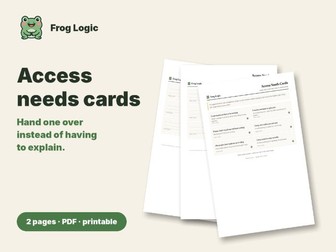
Printable access needs cards for autistic, ADHD and otherwise neurodivergent students and adults: hand one over instead of having to explain. Cards such as “I communicate better in writing”, “I need a moment to process”, “Please don’t touch me without asking”, “I may not make eye contact” and “I may need to step outside”, each with a short line of explanation, plus blank cards to write their own. For appointments, new classes or workplaces, exams and placements, or any moment where saying it out loud is the hardest part. Written by a neurodivergent author, in plain words that respect the person it’s about. Printable PDF, A4. Print as many copies as you need for your own teaching and support work.
Communication Cards for When Words GoQuick View
FrogLogic

Communication Cards for When Words Go

(0)
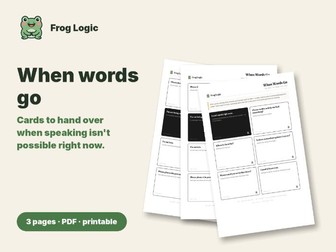
Printable communication cards for autistic and neurodivergent young people and adults who sometimes lose speech under stress (shutdown or situational mutism). Short, clear cards to hand over, such as “I can’t speak right now”, sized to fit a wallet, phone case or a standard lanyard card holder. Laminate them to make them last, or hole-punch a corner for a keyring. Useful for secondary pupils, college students and staff alike: they give someone a way to ask for what they need without having to say it. Written by a neurodivergent author, in plain words that respect the person it’s about. Printable PDF, A4. Print as many copies as you need for your own teaching and support work.
Say What You Need: Sensory & Needs PackQuick View
FrogLogic

Say What You Need: Sensory & Needs Pack

(0)
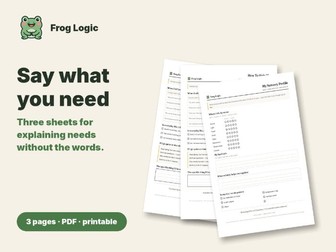
Three printable sheets that help autistic and ADHD young people and adults explain what they need without having to find the words in the moment. Included: My Sensory Profile (what I need more of and less of), How To Help Me (a one-page profile to hand to new adults), and Appointment Prep (for getting through appointments and reviews). Good for pupil passports, transition, annual reviews and older students learning to self-advocate. My Sensory Profile and How To Help Me are also available on their own. Written by a neurodivergent author, in plain words that respect the person it’s about. Printable PDF, A4. Print as many copies as you need for your own teaching and support work.
SEN Handover Sheet: Pupil Profile for TripsQuick View
FrogLogic

SEN Handover Sheet: Pupil Profile for Trips

(0)
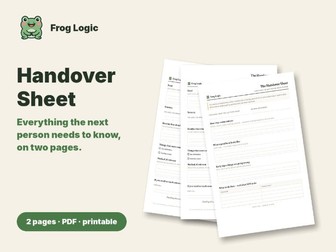
A two-page handover sheet for an autistic or SEN child or young person: everything a new adult needs to know, for school trips, supply cover, respite, clubs or a hospital stay. Fill it in once with the family, photocopy it, and it’s done. Written to be understood by someone who has never met them. Page one: what they like to be called, how they communicate (speech, device, signs, pointing, writing, and what changes under stress), what a good hour looks like, early signs things are going wrong, and what to do then, and not do. Page two: practical detail: food (safe foods, absolute no’s, textures), sensory triggers and what reliably helps, and more. Written by a neurodivergent author, in plain words that respect the person it’s about. Printable PDF, A4. Print as many copies as you need for your own teaching and support work.
Autism, ADHD, Dyslexia & PDA Parent GuidesQuick View
FrogLogic

Autism, ADHD, Dyslexia & PDA Parent Guides

(0)
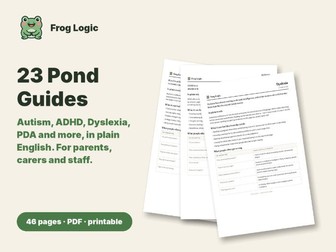
23 plain-English, two-page guides to autism, ADHD, dyslexia, PDA, dyspraxia and more. Kind, jargon-free and printable, to hand to parents, carers and staff. Each guide explains the condition in plain words, what it can feel like from the inside, what people often get wrong (with a “the assumption / what’s actually going on” table), the strengths that often come with it, and what actually helps. Useful for SENCOs, pastoral teams and teachers who need something gentle to give a family after a diagnosis or a referral, to share with grandparents, or to use in staff CPD. Included (46 pages, PDF): ADHD, AuDHD, Autism, PDA, Dyslexia, Dyspraxia, Dyscalculia, Dysgraphia, Auditory Processing Disorder, Sensory Processing, Selective Mutism, Tourette’s, Anxiety, OCD, Misophonia, Alexithymia, Aphantasia, Prosopagnosia, Synaesthesia, Depression, Bipolar, BPD and CPTSD. Written by a neurodivergent author. These are friendly explainers, not diagnostic tools or medical advice. All 23 guides in one file. Print as many copies as you need for your own teaching and support work. Only need one? Each guide is also free on its own in my Tes shop.
Christmas Visual Timetable - Autism and SENQuick View
FrogLogic

Christmas Visual Timetable - Autism and SEN

(0)
A free printable Christmas visual timetable for autistic children and pupils with SEN: a picture schedule for the day, 20 picture cards and a first/then board. Christmas throws the usual routine out of the window, at school and at home. Seeing the day in pictures, in order, takes a lot of the worry out of it. What’s inside (3 pages, A4 and US Letter): My Christmas Day - a schedule strip with eight boxes (First, Then… Last). Put a picture card in each box and tick each one off when it’s done. 20 picture cards - Wake up, Toilet, Breakfast, Get dressed, Presents, Quiet time, Go outside, Watch TV, Visitors, Car journey, Christmas dinner, Pudding, Play a game, Video call, Snack, Bath, Pyjamas, Story, Bed, plus a blank card to draw your own. First, then board and an “I need a break” card, for when it gets a bit much. Ideas for using it: Send it home with families before the holidays, so the day can be gone through the night before and again in the morning. If plans change, change the cards. A surprise on paper is easier than a surprise out loud. Laminate the cards and use Blu Tack or Velcro dots so they can be moved. Simple, low-clutter pictures with a thick outline, drawn in the same style as the Frog Logic frogs. Made by Sam at Frog Logic, who makes gentle printables for neurodivergent people and the people around them. Want more cards? The Christmas Visual Timetable Pack in my shop has 60 picture cards, a now-and-next board and a holiday week planner.
Auditory Processing Disorder (APD) GuideQuick View
FrogLogic

Auditory Processing Disorder (APD) Guide

(0)
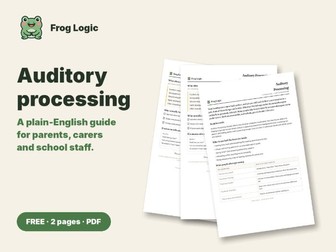
A free, two-page, plain-English guide to auditory processing disorder (APD), kind and jargon-free, to hand to parents, carers, grandparents and staff. Your hearing test comes back perfect, and yet you still can’t follow a conversation in a pub. Both of those things can be true. Page one explains it in plain words, what it can feel like from the inside, and what people often get wrong, with a “the assumption / what’s actually going on” table. Page two covers the strengths that often come with it and what actually helps. Useful for SENCOs, pastoral teams and teachers who want something gentle to give a family, or for staff CPD. Written by a neurodivergent author. A friendly explainer, not a diagnostic tool or medical advice. Free to print, copy and share. This is one of 23 Pond Guides; all 23 in one file are also in my Tes shop.
Aphantasia Explained: Plain-English GuideQuick View
FrogLogic

Aphantasia Explained: Plain-English Guide

(0)
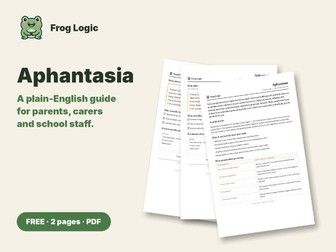
A free, two-page, plain-English guide to aphantasia, kind and jargon-free, to hand to parents, carers, grandparents and staff. Some people picture an apple and see an apple. Some see nothing at all, and only discover in adulthood that ‘picture it in your mind’ was never a figure of speech. Page one explains it in plain words, what it can feel like from the inside, and what people often get wrong, with a “the assumption / what’s actually going on” table. Page two covers the strengths that often come with it and what actually helps. Useful for SENCOs, pastoral teams and teachers who want something gentle to give a family, or for staff CPD. Written by a neurodivergent author. A friendly explainer, not a diagnostic tool or medical advice. Free to print, copy and share. This is one of 23 Pond Guides; all 23 in one file are also in my Tes shop.
Autism Explained: Guide for ParentsQuick View
FrogLogic

Autism Explained: Guide for Parents

(0)
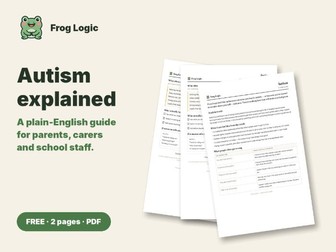
A free, two-page, plain-English guide to autism, kind and jargon-free, to hand to parents, carers, grandparents and staff. If you’ve picked this up because someone you love is autistic — or because you’ve started to wonder about yourself — welcome. There’s nothing here that will make you feel got at. Page one explains it in plain words, what it can feel like from the inside, and what people often get wrong, with a “the assumption / what’s actually going on” table. Page two covers the strengths that often come with it and what actually helps. Useful for SENCOs, pastoral teams and teachers who want something gentle to give a family, or for staff CPD. Written by a neurodivergent author. A friendly explainer, not a diagnostic tool or medical advice. Free to print, copy and share. This is one of 23 Pond Guides; all 23 in one file are also in my Tes shop.
AuDHD (Autism + ADHD) Explained: A GuideQuick View
FrogLogic

AuDHD (Autism + ADHD) Explained: A Guide

(0)
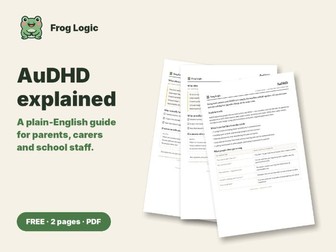
A free, two-page, plain-English guide to AuDHD (being both autistic and ADHD), kind and jargon-free, to hand to parents, carers, grandparents and staff. Being both autistic and ADHD isn’t simply the two lists added together. It’s two nervous systems asking for opposite things at the same time. Page one explains it in plain words, what it can feel like from the inside, and what people often get wrong, with a “the assumption / what’s actually going on” table. Page two covers the strengths that often come with it and what actually helps. Useful for SENCOs, pastoral teams and teachers who want something gentle to give a family, or for staff CPD. Written by a neurodivergent author. A friendly explainer, not a diagnostic tool or medical advice. Free to print, copy and share. This is one of 23 Pond Guides; all 23 in one file are also in my Tes shop.
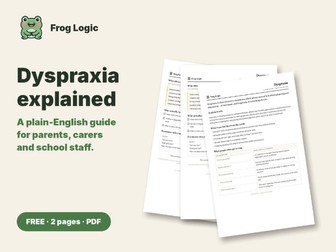
Dyspraxia (DCD) Explained: Parent GuideQuick View
FrogLogic

Dyspraxia (DCD) Explained: Parent Guide

(0)
A free, two-page, plain-English guide to dyspraxia (DCD), kind and jargon-free, to hand to parents, carers, grandparents and staff. Dyspraxia is often reduced to clumsiness, which misses most of it. It affects planning and sequencing — of movement, and frequently of everything else too. Page one explains it in plain words, what it can feel like from the inside, and what people often get wrong, with a “the assumption / what’s actually going on” table. Page two covers the strengths that often come with it and what actually helps. Useful for SENCOs, pastoral teams and teachers who want something gentle to give a family, or for staff CPD. Written by a neurodivergent author. A friendly explainer, not a diagnostic tool or medical advice. Free to print, copy and share. This is one of 23 Pond Guides; all 23 in one file are also in my Tes shop.
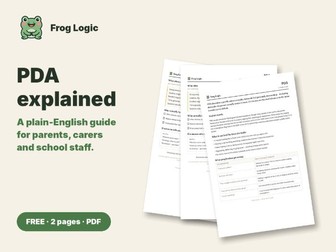
PDA (Pathological Demand Avoidance) GuideQuick View
FrogLogic

PDA (Pathological Demand Avoidance) Guide

(0)
A free, two-page, plain-English guide to PDA (Pathological Demand Avoidance), kind and jargon-free, to hand to parents, carers, grandparents and staff. PDA describes a profile where everyday demands feel genuinely threatening — including demands the person actually wants to meet. It’s the one on this shelf where even the name is under active debate. Page one explains it in plain words, what it can feel like from the inside, and what people often get wrong, with a “the assumption / what’s actually going on” table. Page two covers the strengths that often come with it and what actually helps. Useful for SENCOs, pastoral teams and teachers who want something gentle to give a family, or for staff CPD. Written by a neurodivergent author. A friendly explainer, not a diagnostic tool or medical advice. Free to print, copy and share. This is one of 23 Pond Guides; all 23 in one file are also in my Tes shop.
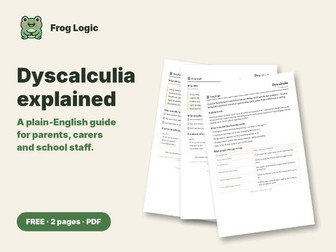
Dyscalculia Explained: Guide for ParentsQuick View
FrogLogic

Dyscalculia Explained: Guide for Parents

(0)
A free, two-page, plain-English guide to dyscalculia, kind and jargon-free, to hand to parents, carers, grandparents and staff. Dyscalculia is dyslexia’s much less famous sibling, and it gets far less patience — because being bad at maths is treated as a personality quirk rather than a difference in wiring. Page one explains it in plain words, what it can feel like from the inside, and what people often get wrong, with a “the assumption / what’s actually going on” table. Page two covers the strengths that often come with it and what actually helps. Useful for SENCOs, pastoral teams and teachers who want something gentle to give a family, or for staff CPD. Written by a neurodivergent author. A friendly explainer, not a diagnostic tool or medical advice. Free to print, copy and share. This is one of 23 Pond Guides; all 23 in one file are also in my Tes shop.
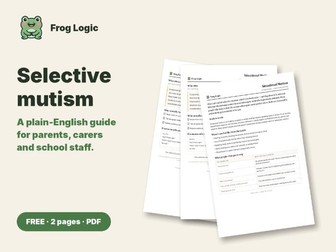
Selective (Situational) Mutism GuideQuick View
FrogLogic

Selective (Situational) Mutism Guide

(0)
A free, two-page, plain-English guide to selective (situational) mutism, kind and jargon-free, to hand to parents, carers, grandparents and staff. Often still called selective mutism, which is unfortunate — nothing about it is selected. Page one explains it in plain words, what it can feel like from the inside, and what people often get wrong, with a “the assumption / what’s actually going on” table. Page two covers the strengths that often come with it and what actually helps. Useful for SENCOs, pastoral teams and teachers who want something gentle to give a family, or for staff CPD. Written by a neurodivergent author. A friendly explainer, not a diagnostic tool or medical advice. Free to print, copy and share. This is one of 23 Pond Guides; all 23 in one file are also in my Tes shop.
Anxiety in Neurodivergent People: A GuideQuick View
FrogLogic

Anxiety in Neurodivergent People: A Guide

(0)
A free, two-page, plain-English guide to anxiety in neurodivergent people, kind and jargon-free, to hand to parents, carers, grandparents and staff. Anxiety is often the result of being neurodivergent in a world that isn’t built for you, rather than a separate thing. Page one explains it in plain words, what it can feel like from the inside, and what people often get wrong, with a “the assumption / what’s actually going on” table. Page two covers the strengths that often come with it and what actually helps. Useful for SENCOs, pastoral teams and teachers who want something gentle to give a family, or for staff CPD. Written by a neurodivergent author. A friendly explainer, not a diagnostic tool or medical advice. Free to print, copy and share. This is one of 23 Pond Guides; all 23 in one file are also in my Tes shop.
Sensory Processing Differences: A GuideQuick View
FrogLogic

Sensory Processing Differences: A Guide

(0)
A free, two-page, plain-English guide to sensory processing differences, kind and jargon-free, to hand to parents, carers, grandparents and staff. Most people know about the five senses. Sensory processing differences involve eight — and any of them can arrive far too loud, far too quiet, or unpredictably both. Page one explains it in plain words, what it can feel like from the inside, and what people often get wrong, with a “the assumption / what’s actually going on” table. Page two covers the strengths that often come with it and what actually helps. Useful for SENCOs, pastoral teams and teachers who want something gentle to give a family, or for staff CPD. Written by a neurodivergent author. A friendly explainer, not a diagnostic tool or medical advice. Free to print, copy and share. This is one of 23 Pond Guides; all 23 in one file are also in my Tes shop.
Tourette's & Tics Explained: A GuideQuick View
FrogLogic

Tourette's & Tics Explained: A Guide

(0)
A free, two-page, plain-English guide to Tourette’s and tics, kind and jargon-free, to hand to parents, carers, grandparents and staff. Almost everything most people think they know about Tourette’s comes from one rare symptom being used as a punchline for forty years. Page one explains it in plain words, what it can feel like from the inside, and what people often get wrong, with a “the assumption / what’s actually going on” table. Page two covers the strengths that often come with it and what actually helps. Useful for SENCOs, pastoral teams and teachers who want something gentle to give a family, or for staff CPD. Written by a neurodivergent author. A friendly explainer, not a diagnostic tool or medical advice. Free to print, copy and share. This is one of 23 Pond Guides; all 23 in one file are also in my Tes shop.