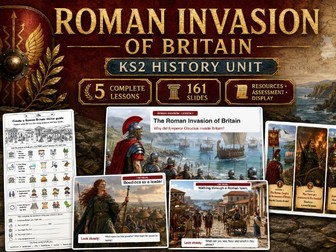
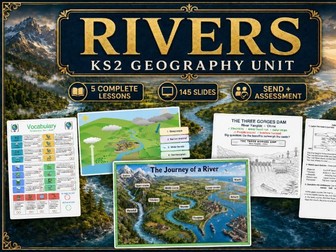
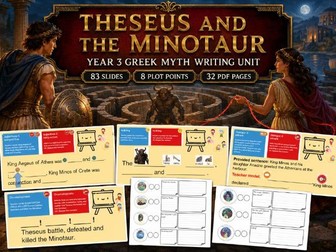
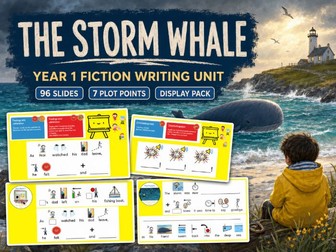
 Quick View
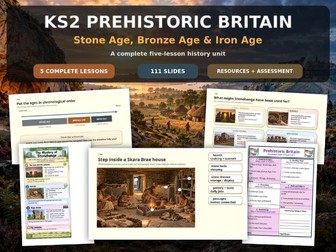
KS2 Prehistoric Britain history unit exploring the Stone Age, Bronze Age and Iron Age
Complete KS2 Prehistoric Britain history unit exploring the Stone Age, Bronze Age and Iron Age through five carefully sequenced lessons.
PPTs, Resources, Assessments and Displays.
This ready-to-teach unit guides pupils through the development of prehistoric Britain while building important historical enquiry skills. Children explore chronology, settlement, archaeology, artefacts and historical interpretations.
The complete pack contains 111 slides across two editable PowerPoints:
81-slide teaching PowerPoint
30-slide resource, title-page and assessment PowerPoint
Five complete history lessons
Printable pupil activities and scaffolds
Lesson-by-lesson knowledge checker
15-question end-of-unit assessment
Big enquiry: How did life in Britain change during prehistory?
**Lesson sequence
**
1 - Prehistoric Ages
Introduce the Stone Age, Bronze Age and Iron Age. Pupils place the three periods in chronological order, examine their approximate dates and consider how the materials used for tools changed over time.
**2 -Settling Down
**Explore the transition from a hunter-gatherer lifestyle to farming and permanent settlements. Children investigate why water, fertile soil, animals, woodland and community made particular locations suitable for settlement.
**3 - Skara Brae
**Become archaeologists and use evidence from the Stone Age settlement of Skara Brae. Pupils examine houses, hearths, stone beds, dressers, pottery and tools to make careful deductions about prehistoric life.
**4 -Tools and Objects
**Investigate prehistoric artefacts including flint handaxes, pottery, bone needles and grinding stones. Children learn how historians examine objects and distinguish an evidence-based deduction from an invented story.
**5 -Stonehenge
**Explore why Stonehenge is an important prehistoric monument. Pupils examine evidence connected with the Sun, seasons, burials, gathering and teamwork before developing their own historical interpretation.
Each lesson includes:
-A clear learning goal
-Two explicitly taught vocabulary words
-Retrieval and review activities
-Teacher modelling through I Do slides
-Guided We Do activities
-Independent You Do tasks
-Dual-coded explanations and visual prompts
-Sentence stems and word banks
-Model outcomes
-Adapted support for pupils who need additional scaffolding
-Deeper-thinking questions
-Exit tickets
All resources are supplied in editable PowerPoint format, allowing teachers to change the wording, activities and level of support for their class. As well as in PDF to give choice of viewing.