 Quick View
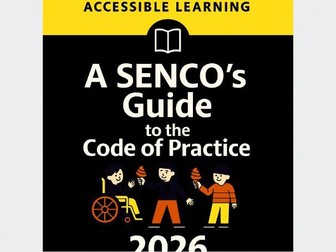
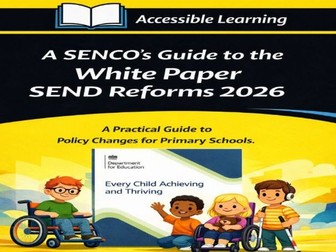
A SENCO's Guide to The White Paper SEND reforms 2026
A SENCO’s Guide to the White Paper SEND Reforms 2026 – Primary Schools Edition is an essential leadership handbook for Special Educational Needs Coordinators navigating the most significant structural reform of SEND in over a decade.
In February 2026, the Department for Education published Every Child Achieving and Thriving, setting out a ten-year vision for education reform in England. For primary schools, this White Paper marks a decisive shift: inclusive mainstream is no longer an aspiration. It is the default expectation.
This book moves beyond policy summary. It is a practical implementation guide written specifically for primary SENCOs who must translate reform into classroom reality.
Inside, you will find clear, strategic guidance on:
• Designing and embedding the new Individual Support Plan framework
• Strengthening early identification systems in Reception and Key Stage 1
• Navigating EHCP thresholds and Specialist Provision Packages
• Integrating SEND with attendance, behaviour and engagement strategies
• Adapting a knowledge-rich curriculum without lowering ambition
• Building staff confidence through structured workforce development
• Implementing costed provision mapping and sustainable funding models
• Demonstrating measurable impact through robust data systems
• Rebuilding parental trust within a less adversarial system
Grounded in the realities of primary leadership, this guide recognises the pressures SENCOs face: increasing demand, accountability scrutiny, budget constraint and complex family dynamics. It provides clarity, structure and long-term strategic planning tools to help schools phase reform without overwhelm.
This is not a theoretical overview. It is a leadership manual.
If you are a primary SENCO, Assistant Head for Inclusion, Headteacher, trust-level SEND lead or local authority professional preparing for the 2026 reforms, this book will equip you to move from reactive coordination to strategic system design.
Inclusive mainstream will not succeed by policy alone. It will succeed because primary schools build it intentionally.
This guide shows you how.